Being told you have knee arthritis in your 40s or 50s can be unsettling. Especially when the pain is getting worse, but you're not ready to think about knee replacement.
Perhaps you've noticed that walking for longer distances has become uncomfortable. The inside of your knee hurts after standing for hours, or you've started avoiding stairs because of the pain.
Now comes an unexpected possibility. What if the surgeon could change how your knee carries weight instead of replacing the joint?
For selected patients, a procedure called knee osteotomy, or knee realignment surgery, may help reduce pressure on the damaged side of the knee while preserving the natural joint surfaces.
It isn't suitable for everyone. The location of arthritis, leg alignment, cartilage condition and overall knee function all influence whether it is worth considering.
Can Surgery Help One-Sided Knee Arthritis Without Replacing the Joint?
Yes. Some people with arthritis mainly affecting one side of the knee may benefit from an operation that changes the alignment of the leg rather than replacing the joint. This procedure, called osteotomy, shifts part of the body weight away from the damaged area towards a healthier section.
It may be considered when:
- Arthritis is concentrated in one part of the knee.
- Bow-legged or knock-kneed alignment contributes to uneven loading.
- Other parts of the joint remain relatively healthy.
- Knee movement and ligament stability are suitable.
- Symptoms remain troublesome despite appropriate non-surgical treatment.
The first step is finding out exactly where the damage is and whether changing the alignment would help.
Patients looking into the available treatments for knee osteoarthritis should understand that surgery is only one part of care. Exercise-based rehabilitation, weight management where appropriate and other non-surgical measures remain important.
Why Does Arthritis Sometimes Damage Only One Side of the Knee?
Your knee doesn't always carry weight evenly.
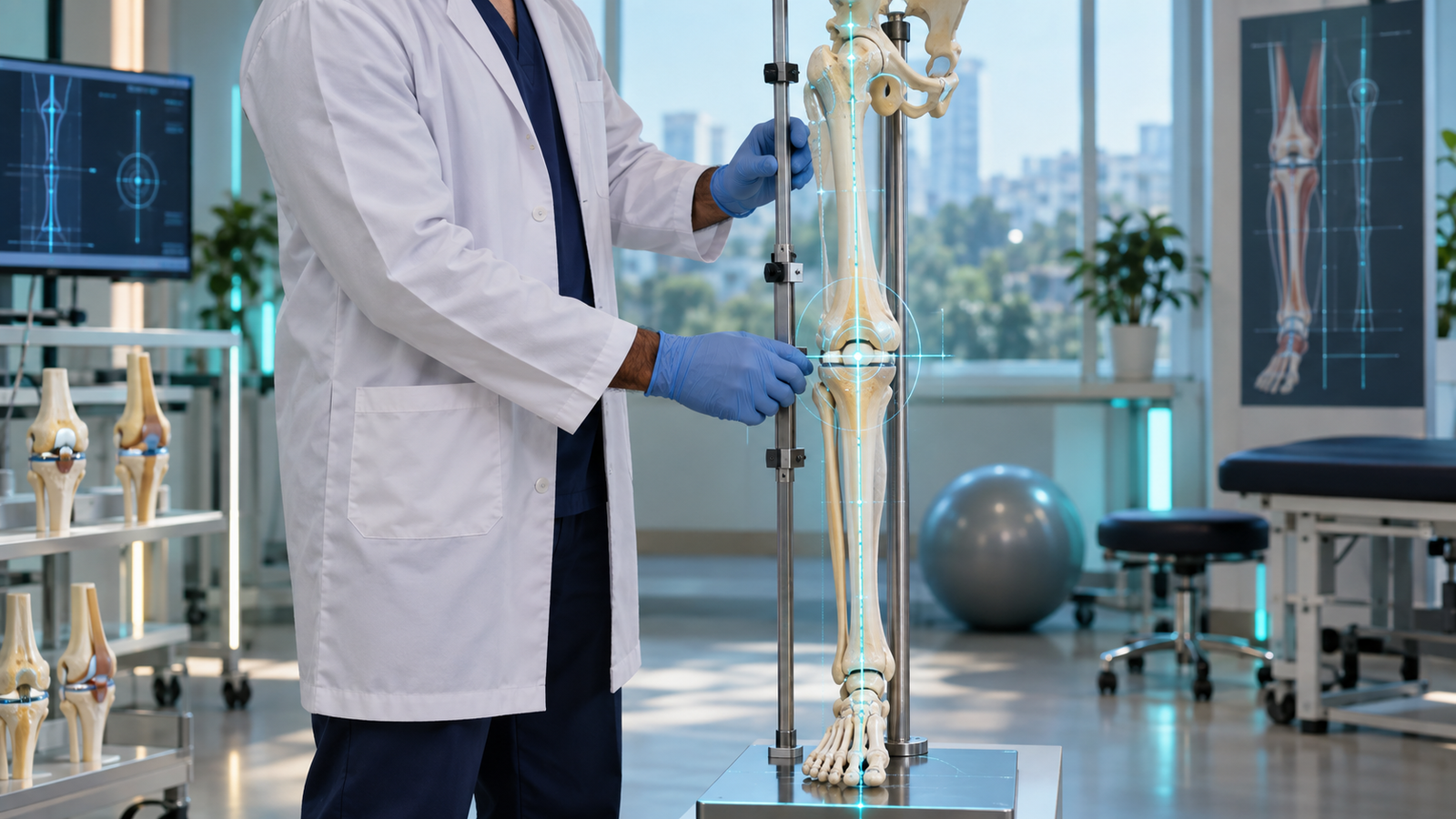
When you stand or walk, the force passing through your leg is influenced by the alignment of the hip, knee and ankle.
In a relatively straight leg, weight is distributed across the knee in a particular pattern. But when someone has pronounced bow-legged alignment, more loading may pass through the inner compartment.
Over time, this can contribute to cartilage damage on that side.
The opposite can happen with certain knock-kneed deformities, where increased loading affects the outer compartment.
Consider a hypothetical patient in their late 40s who experiences pain mainly along the inside of the right knee. Their standing X-rays show bow-legged alignment, with most of the joint-space narrowing on the inner side.
The concern isn't just that arthritis exists. It's that the damaged area continues to carry a substantial share of the mechanical load.
In the right circumstances, changing the alignment may reduce this pressure.
That is the principle behind osteotomy.
How Does Knee Realignment Surgery Work?
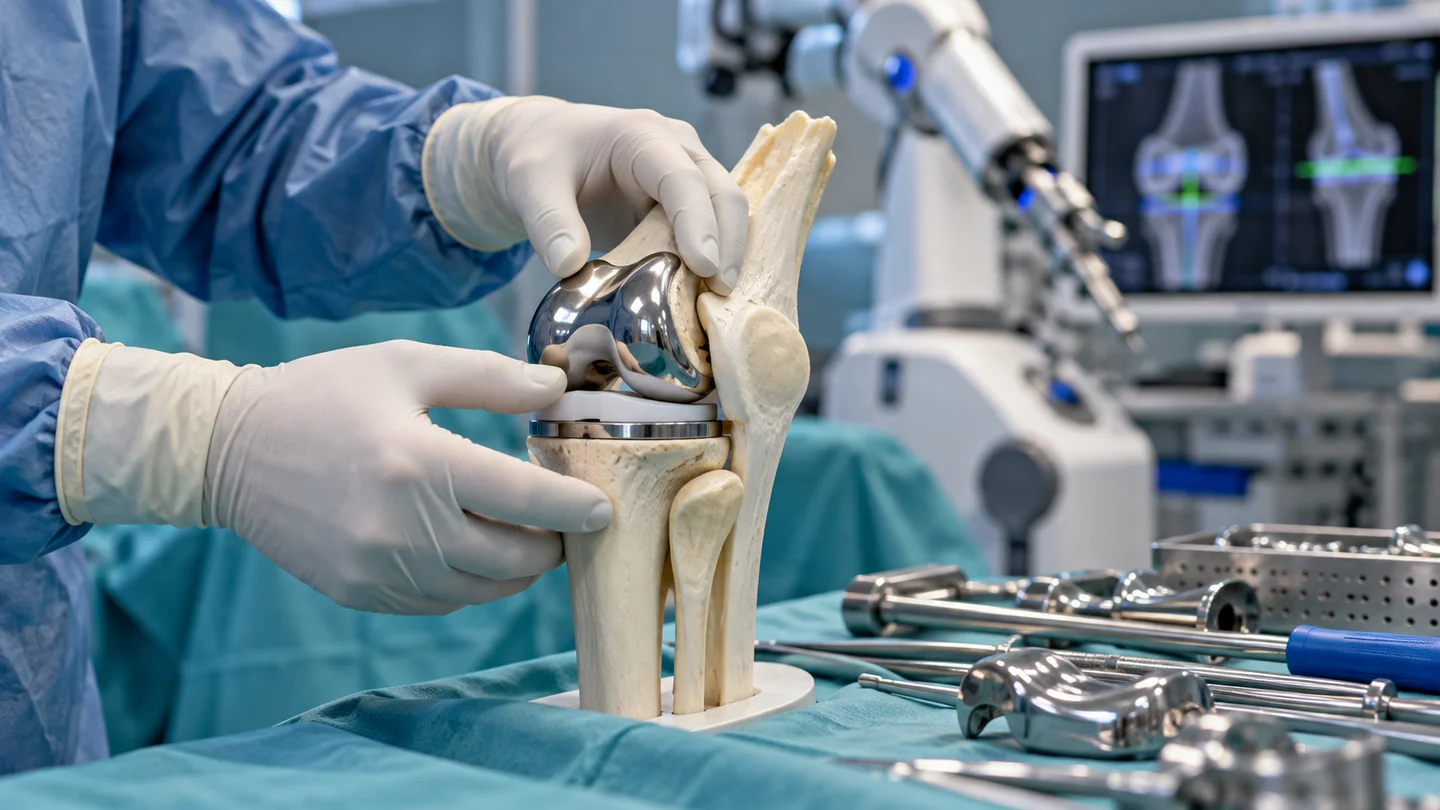
An osteotomy involves carefully cutting and repositioning a bone to change how weight passes through the knee.
The surgeon does not remove and replace the entire joint. Instead, the operation changes the angle of the leg so that less force travels through the arthritic compartment.
Think of a table that leans heavily on one leg. Adjusting its alignment changes how the weight is shared.
The knee is far more complex, of course, but the principle of redistributing load is similar.
When the inner side of the knee is damaged
A procedure called high tibial osteotomy may be considered when bow-legged alignment is contributing to inner-compartment arthritis.
The surgeon makes a planned cut near the upper part of the shinbone and adjusts its position. A plate and screws may be used to hold the correction while the bone heals.
The objective is to reduce the load passing through the affected inner compartment.
When the outer side is affected
For selected patients with knock-kneed alignment and arthritis mainly affecting the outer compartment, the surgeon may consider a correction involving the lower part of the thighbone.
This is called a distal femoral osteotomy.
The exact procedure depends on which bone contributes to the deformity and how much correction is needed.
The American Academy of Orthopaedic Surgeons' explanation of knee osteotomy describes how realignment can reduce pressure on the damaged portion of a joint in appropriately selected patients.
There is an important limitation: osteotomy does not replace lost cartilage or cure arthritis. It changes the forces passing through the knee.
Who Might Benefit From This Type of Surgery?
Age often starts the conversation, but it shouldn't make the final decision.
A physically active person in their 40s with arthritis restricted to one compartment may be considered for osteotomy. So might an older individual with suitable knee anatomy and functional requirements.
On the other hand, a younger patient with extensive damage throughout the joint may not be an appropriate candidate.
The surgeon needs to evaluate more than age or activity level.
The location of cartilage damage: Realignment is most relevant when there is a reasonably preserved part of the knee towards which loading can be shifted.
The degree of deformity: The alignment problem must be suitable for surgical correction.
Knee movement: Significant stiffness or difficulty fully straightening the knee may affect suitability.
Ligament condition: The surgeon must assess whether the joint is stable enough for the proposed correction.
General health and rehabilitation needs: Bone healing, physical demands, smoking status and other health conditions can influence the risks and recovery plan.
A patient who enjoys walking, cycling or recreational sport may understandably value preserving the natural joint. But the operation still needs to be supported by the clinical findings.
Being young doesn't make osteotomy automatically preferable.
Does the Grade of Osteoarthritis Matter?
Patients often encounter terms such as Grade 2, Grade 3 or advanced osteoarthritis on their reports.
It's natural to assume that the grade determines which operation is needed.
It doesn't work quite that simply.
Different grading systems describe different findings. For example, the commonly used Kellgren–Lawrence system classifies osteoarthritis on X-rays, while cartilage grading during other assessments may use different terminology.
A Grade 2 finding on an X-ray does not automatically mean someone needs surgery. Nor does it establish whether osteotomy would be beneficial.
The surgeon needs to understand where the cartilage damage is located and whether it corresponds with the patient's symptoms and alignment.
What about advanced arthritis?
When arthritis affects several compartments, there may be too little healthy joint surface left to make realignment worthwhile.
Shifting weight away from one damaged area could place additional loading on another area that is already affected.
This is one reason extensive arthritis may make joint replacement a more appropriate surgical discussion.
The distribution of damage matters as much as its severity.
Osteotomy vs Partial Knee Replacement vs Total Knee Replacement
Patients often hear about these procedures together, but they are designed to address different problems.
| Factor | Knee Osteotomy | Partial Knee Replacement | Total Knee Replacement |
|---|---|---|---|
| Main purpose | Changes leg alignment to redistribute loading | Replaces damaged surfaces in one compartment | Replaces the main damaged joint surfaces |
| Natural joint surfaces | Preserved | Unaffected compartments are preserved | Major weight-bearing surfaces are replaced |
| Usually considered for | Localized arthritis with suitable malalignment | Arthritis limited to an appropriate compartment | More extensive arthritis or other suitable indications |
| Does it restore damaged cartilage? | No | Damaged compartment surfaces are replaced | Damaged joint surfaces are replaced |
| Recovery consideration | Bone healing is required | Rehabilitation follows implant surgery | Rehabilitation follows larger joint reconstruction |
| Future surgery | Replacement may still be needed | Further replacement may become necessary | Revision may eventually be necessary |
The important difference is what the surgeon is trying to correct.
Osteotomy addresses how weight passes through the joint.
Replacement surgery addresses damaged joint surfaces.
Neither should be chosen simply because it appears more modern or offers an attractive promise about recovery.
When Might Knee Replacement Be a Better Option?
Preserving the natural knee can sound appealing, particularly to someone who wants to stay active for many years.
But preserving a joint that is already extensively damaged may not provide meaningful relief.
If arthritis affects the inner and outer compartments, or if there is substantial stiffness, deformity or loss of function, replacement may deserve consideration.
The same applies when pain remains severely limiting despite appropriate non-surgical treatment.
The NICE guideline on osteoarthritis management advises considering joint replacement referral when symptoms substantially affect quality of life and non-surgical care is ineffective or unsuitable.
It also makes an important point: people should not be excluded from replacement referral simply because of their age.
Someone in their 40s may need replacement. Someone in their 60s might still be evaluated for a joint-preserving procedure.
The decision must fit the knee, not an arbitrary age limit.
How Does a Surgeon Check Whether Realignment Could Help?
A standard knee X-ray can show joint-space narrowing, but planning an osteotomy usually requires a more detailed assessment of alignment.
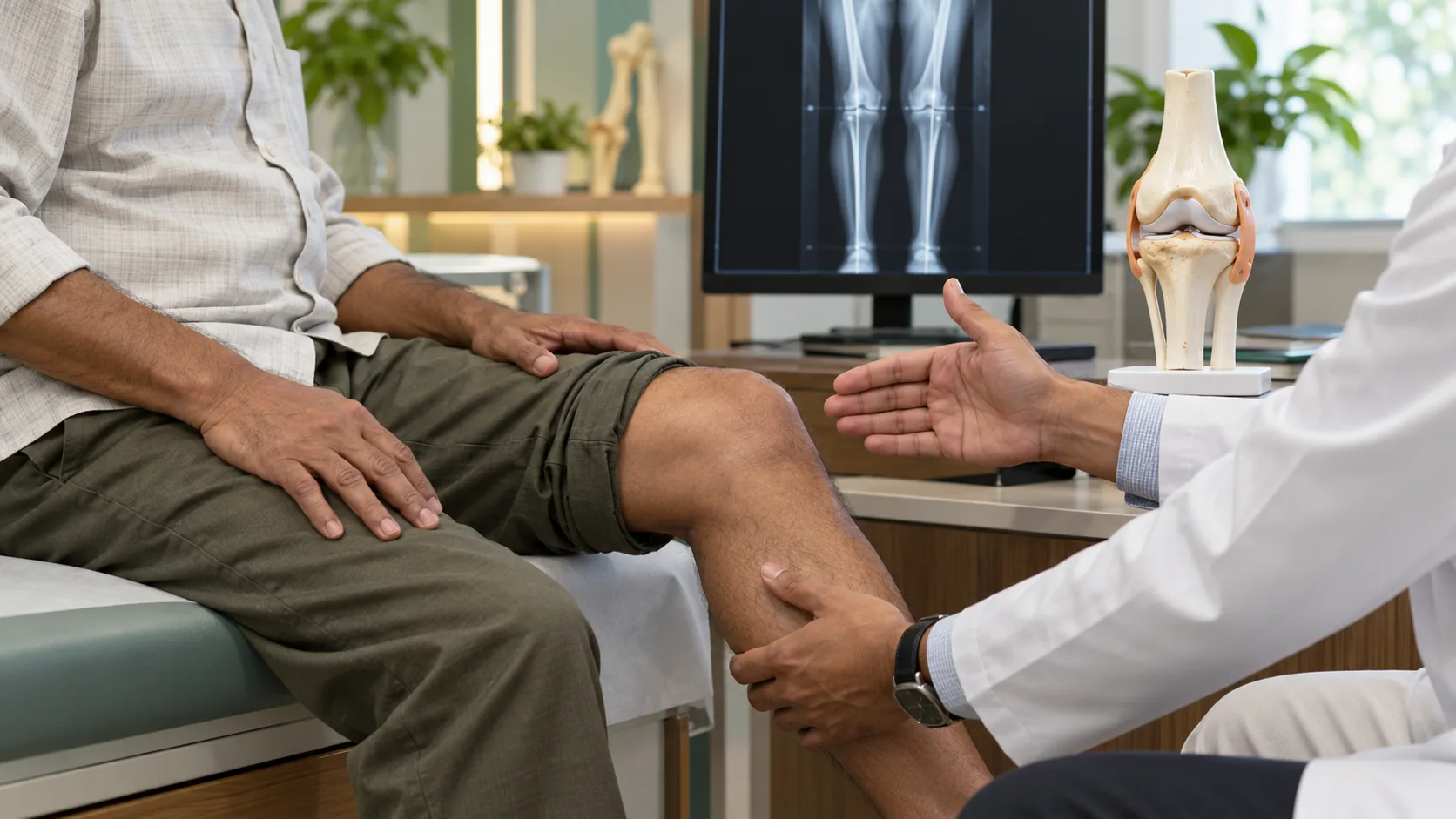
The surgeon may request a full-length, standing X-ray extending from the hip to the ankle.
This helps show where the body's weight-bearing axis passes through the knee.
It also helps determine whether the deformity mainly comes from the thighbone, shinbone or both.
A physical examination provides information that an image cannot capture by itself.
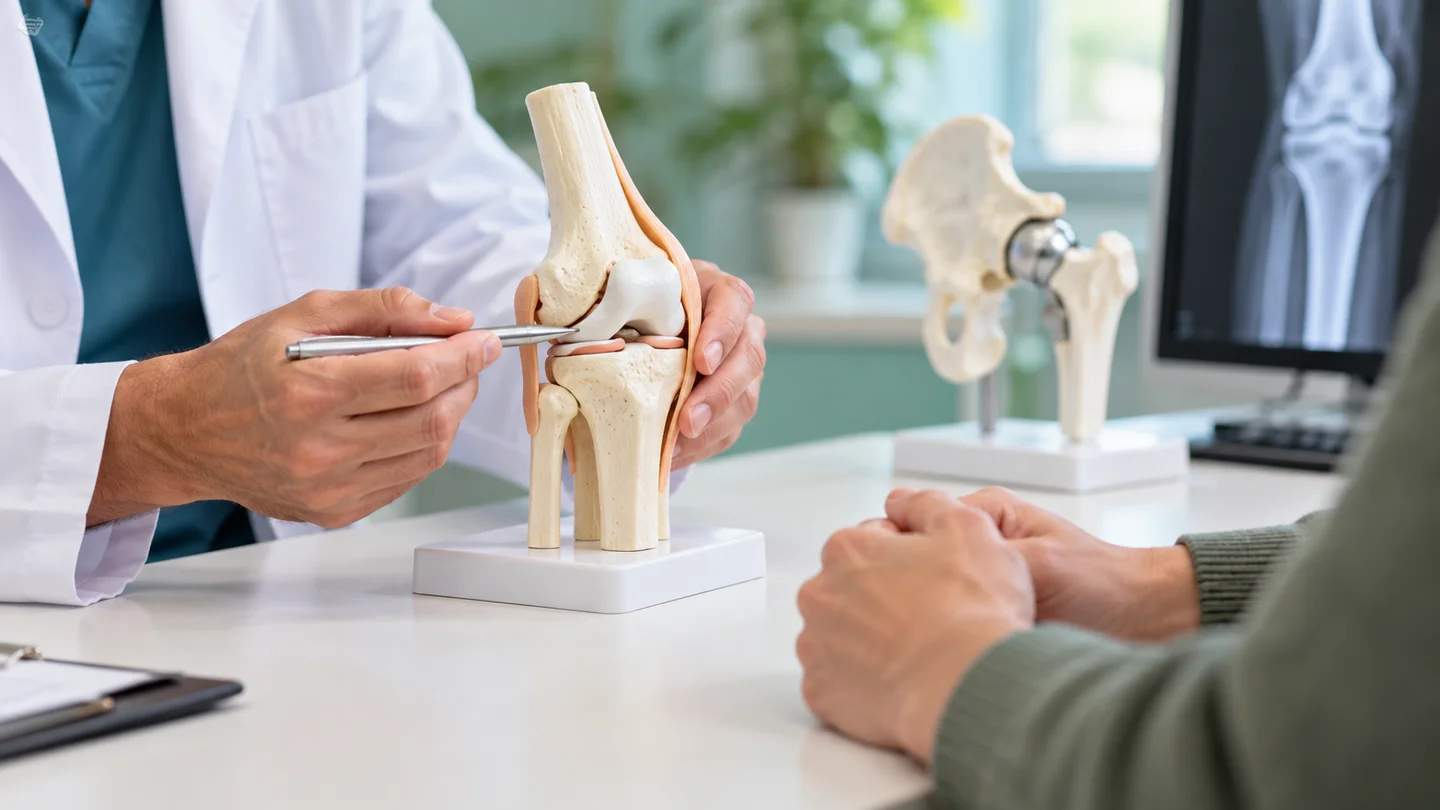
The surgeon checks knee movement, ligament stability, pain location, walking pattern and functional limitations.
Additional imaging may be considered when cartilage, meniscus or ligament findings could affect the surgical plan.
For example, two people may both have pain on the inner side of the knee, but one may have substantial deformity while the other has relatively normal alignment.
They should not automatically receive the same recommendation.
The diagnosis needs to explain both the symptoms and the mechanical problem that surgery is intended to address.
What Is Recovery Like After Knee Osteotomy?
The idea of keeping your natural knee may sound reassuring. The recovery, however, should not be underestimated.
Because osteotomy involves cutting and repositioning bone, the corrected area needs time to heal.
Patients may need crutches and temporary limits on weight-bearing. The exact restrictions depend on the surgical technique, fixation and individual healing.
Physiotherapy typically focuses on restoring movement, maintaining muscle strength and gradually returning to daily activities.
Bone healing takes weeks, while rebuilding strength and returning to more demanding activities can take several months.
There are also potential complications, including infection, blood clots, nerve or blood-vessel injury, delayed healing, failure of the bone to unite, overcorrection, undercorrection and irritation from plates or screws.
Pain relief is not guaranteed.
Some patients eventually require knee replacement even after an initially successful osteotomy. Previous realignment surgery can sometimes make a later replacement technically more complex.
These possibilities belong in the decision-making conversation before surgery, not as an afterthought.
Frequently Asked Questions (FAQs)
Can one-sided knee arthritis be treated without knee replacement?
Yes. Some patients with arthritis affecting one side of the knee may be considered for knee realignment surgery, also called osteotomy. The procedure shifts pressure away from the damaged compartment while preserving the natural joint surfaces. Suitability depends on cartilage condition, leg alignment, knee stability and an orthopaedic assessment.
Is knee osteotomy suitable for someone in their 40s or 50s?
Knee osteotomy may be suitable for selected adults in their 40s or 50s, particularly when arthritis affects one compartment and correctable leg misalignment is present. Age alone does not determine eligibility. A surgeon must also assess joint damage, remaining cartilage, ligament stability and overall health.
Can Grade 2 osteoarthritis be treated without surgery?
Yes. Grade 2 knee osteoarthritis is often managed initially with appropriate exercise, physiotherapy, weight management where relevant, and other non-surgical treatments. An X-ray grade alone does not determine whether surgery is necessary. Treatment should reflect the patient's symptoms, examination findings and functional limitations.
Can knee osteotomy permanently cure osteoarthritis?
No. Osteotomy cannot reverse existing cartilage damage or permanently cure osteoarthritis. It may reduce pressure on the affected compartment and improve symptoms in appropriately selected patients, but arthritis can continue to progress. Some patients may eventually require knee replacement.
When is knee replacement better than osteotomy?
Knee replacement may be more appropriate when arthritis affects multiple compartments, joint damage is extensive, or realignment is unlikely to provide sufficient benefit. Significant stiffness, deformity and limitations in daily activities may also influence the recommendation. The decision requires an assessment of knee alignment, symptoms, imaging findings and previous treatment.
How long does recovery take after knee osteotomy?
Recovery after knee osteotomy generally takes several months, although timelines vary. Bone healing usually requires several weeks, and patients may need crutches, temporary weight-bearing restrictions and physiotherapy. Returning to work, sports or demanding activities depends on the procedure, healing progress and rehabilitation plan.
When should I consult an osteoarthritis doctor in Kolkata?
Consider consulting a qualified orthopaedic specialist if knee pain persists, walking becomes difficult, or stiffness and reduced mobility begin affecting daily life. Patients with one-sided knee pain or noticeable bow-legged or knock-kneed alignment may benefit from an assessment of joint damage and alignment. The specialist can recommend suitable non-surgical care or discuss operative options when clinically appropriate.
When Should You Consult an Osteoarthritis Specialist in Kolkata?
Persistent knee pain deserves assessment when it begins to change how you live.
You may be walking less, avoiding stairs or finding it difficult to stand comfortably at work. Perhaps your leg has gradually become more bowed, or the pain consistently affects one side of the knee.
These changes do not automatically mean surgery is necessary. They do suggest that the cause and extent of the problem should be evaluated.
Dr. Manoj Kumar Khemani provides orthopaedic and osteoarthritis consultations in Kolkata through HealMyBones.
An assessment can help determine the distribution of arthritis, whether leg alignment is contributing to symptoms, and which treatment options warrant discussion.
For readers whose symptoms continue despite non-surgical treatment, the HealMyBones article on knee pain that returns despite injections offers additional context about reassessing persistent symptoms.
A consultation should give patients a clear explanation of their findings, realistic treatment choices, potential risks and expected rehabilitation.
Your Next Step: Find Out Which Part of the Knee Is Damaged
A diagnosis of knee arthritis doesn't automatically mean replacement is your only option.
For some people, the problem involves substantial damage throughout the joint. For others, arthritis is concentrated in one compartment, with an alignment problem that may be suitable for correction.
That difference can change the treatment discussion.
If one-sided knee pain is interfering with your daily activities, an orthopaedic assessment can help clarify whether continued non-surgical care, realignment or replacement deserves consideration.
You don't need to choose an operation based on your age or an X-ray grade alone.
You need to understand where the damage is, how your knee carries weight and which treatment is most appropriate for your circumstances.
Medical Disclaimer
This article is intended for general educational and informational purposes only. It does not constitute medical advice, diagnosis or a recommendation for any specific surgical procedure.
Knee osteotomy, partial knee replacement and total knee replacement are not suitable for every patient. Treatment decisions depend on individual symptoms, examination findings, imaging results, overall health and professional clinical assessment. Surgical outcomes and recovery times vary, and no procedure guarantees pain relief or prevents future joint replacement.
Readers should consult a qualified orthopaedic surgeon before making treatment decisions. Do not delay or discontinue prescribed treatment based on information provided in this article. Seek prompt medical attention for sudden severe knee pain, significant swelling, fever, a hot or red joint, or an inability to bear weight.