Many patients think knee replacement means one thing: make the leg perfectly straight. That sounds logical, especially when arthritis has caused a visible bow or knock-knee shape. But in advanced knee replacement surgery Kolkata, alignment planning is not only about one straight line on an X-ray. The surgeon also has to think about natural anatomy, arthritis deformity, ligament balance, stiffness, implant position, and how the knee should move after surgery.
Should every knee replacement aim for a perfectly straight leg?
Not every knee replacement is planned by forcing the leg into one identical straight line. Modern alignment planning studies the patient’s original anatomy, arthritis pattern, ligament tension, deformity, stiffness, and movement goals before deciding the safest correction.
Patients exploring digital planning for advanced knee replacement should ask how AR guidance, alignment axes, implant positioning, ligament balance, and surgeon judgment are combined before the final surgical plan is made.
| Planning factor | Why it matters |
|---|---|
| Natural leg shape | Some people were never perfectly neutral before arthritis |
| Arthritis deformity | Cartilage wear can shift the weight-bearing line |
| Ligament balance | Tight or stretched ligaments affect stability |
| Knee stiffness | A stiff knee may need different correction planning |
| Implant position | Small changes can affect movement and tracking |
| Walking goals | The knee must work during standing, stairs, and turning |
| Digital/AR information | Data can support planning, but it must be interpreted |
| Surgeon judgment | The final plan has to fit the real knee, not only the screen |
The target is not a perfect-looking line.
The target is a knee that works.
The patient's concern: “Will my knee be made straight?”
This question comes up often before knee replacement.
A patient may notice that the knee has slowly bowed outward. Someone else may feel the knees coming closer together while walking. Sometimes family members point out the change first: “You are limping more now.” In other cases, the patient sees the X-ray and finally understands why the leg no longer looks the same.
So the question is natural: Will surgery make the knee straight again?
The answer is not a simple yes or no.
A severely deformed arthritic knee often needs correction. But the surgeon is not only correcting appearance. The knee has to stand, bend, straighten, turn, and carry body weight. If correction is planned only by chasing one angle, the knee may look straight but feel tight, unstable, or unnatural.
Heal My Bones explains this topic because many patients hear the word “alignment” and imagine a fixed rule. In real surgical planning, alignment is more personal than that.
What is knee alignment?
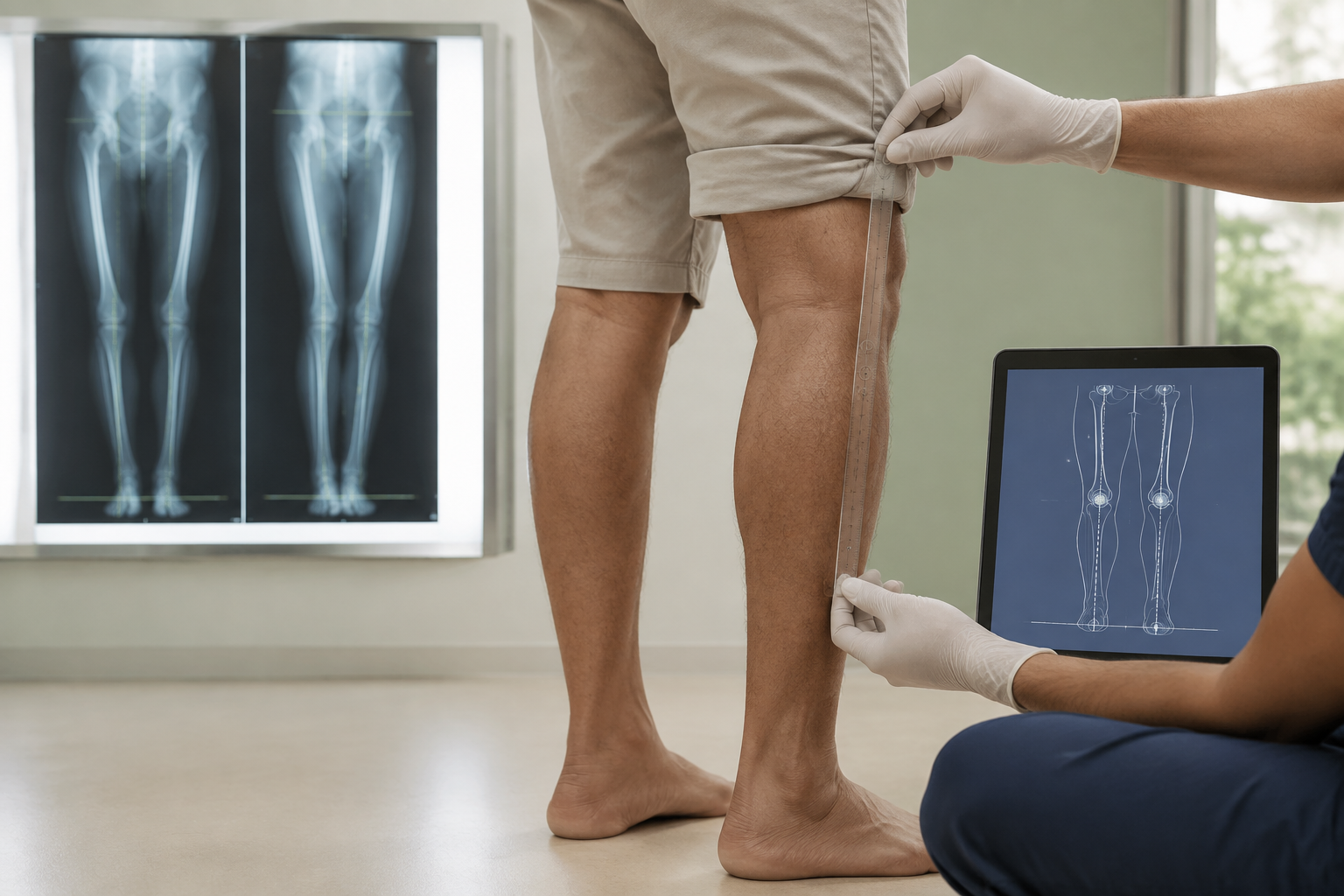
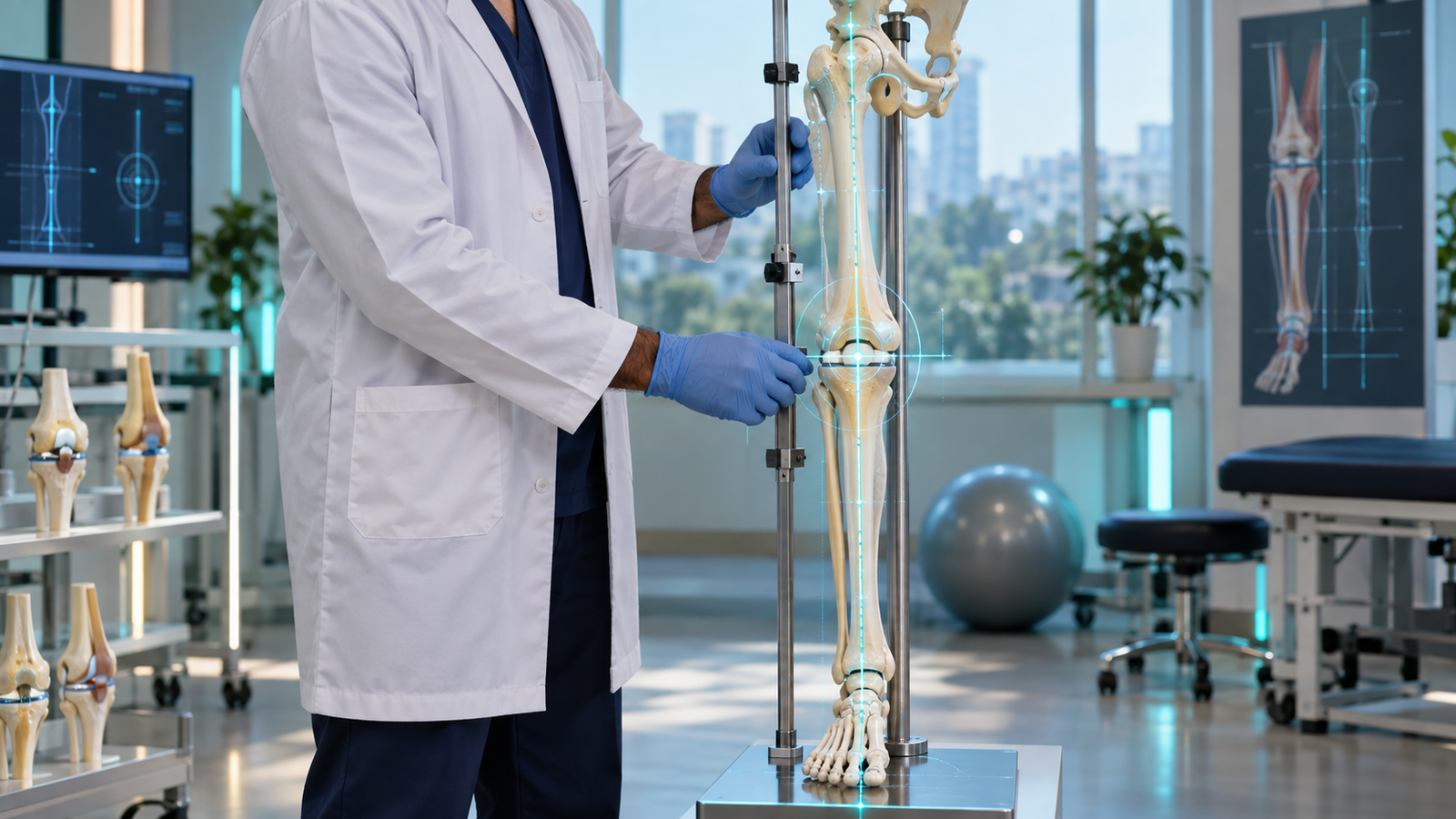
Knee alignment means how the hip, knee, and ankle line up when a person stands and walks. It affects how body weight passes through the leg.
In knee arthritis, cartilage often wears more on one side of the joint. Over time, that uneven wear can create a bow-leg or knock-knee pattern. The patient may feel one-sided pain, reduced balance, difficulty walking long distances, or loss of confidence on stairs.
Doctors may assess:
- standing X-rays
- deformity pattern
- joint-space loss
- hip-knee-ankle axis
- ligament tightness
- knee movement
- walking difficulty
- stability during examination
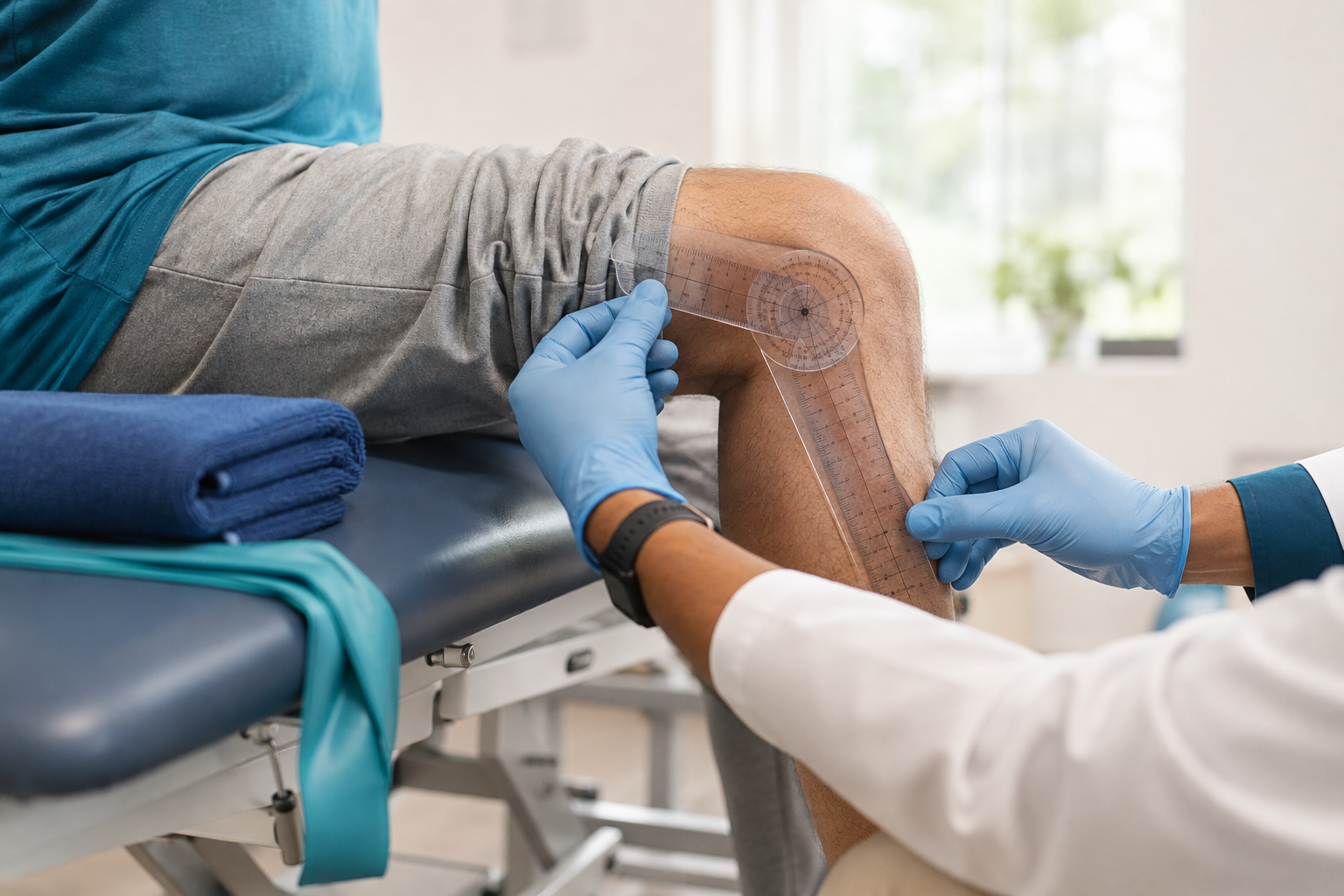
AAOS notes that total knee replacement evaluation includes knee motion, stability, strength, overall leg alignment, and X-rays. That is the key point: alignment is important, but it is checked with movement and stability, not as an isolated number.
What does mechanical alignment mean?
Mechanical alignment is a traditional knee replacement planning concept. It generally aims to place the leg in a neutral weight-bearing axis.
For many years, this was one of the main reference points in knee replacement surgery. It still matters. A severely tilted or uneven leg can place stress on the implant and surrounding tissues. Correcting deformity can help improve how weight passes through the knee.
But modern planning has become more patient-specific.
Some patients naturally had a slightly bowed or slightly knock-kneed leg before arthritis. Some have soft tissues that do not behave well if the knee is forced too far from its natural pattern. Some have severe deformity that must be corrected carefully, not aggressively.
That is why surgeons may discuss mechanical alignment, anatomical alignment, kinematic alignment, restricted kinematic alignment, or functional alignment. Patients do not need to memorise these terms. They only need to understand the practical meaning:
The surgeon is planning the knee for function, not just for a ruler-straight X-ray.
Why can natural anatomy differ from a perfect straight line?
Not every leg starts from the same shape.
Some people have had a slight bow in the legs for years. Others may naturally stand with the knees a little closer together. Many never notice it because it does not trouble them in daily life. The problem becomes more visible when arthritis starts wearing one side of the knee faster than the other.
This is why two patients with similar X-ray reports can still need different planning.
One knee may be very stiff. Another may still bend fairly well. One patient may have tight tissues on the inner side of the knee. Another may have ligaments that have stretched over time. Someone may have lived with a bowed knee for ten years, while another person may have developed deformity quickly as the cartilage wore down.
The surgeon has to respect those differences.
If the correction is too mild, the old deformity may remain. If the correction is pushed too far, the knee may become hard to balance. The leg may look straighter, but the patient may still feel tightness, discomfort, or instability if ligament tension, implant position, and movement are not planned together.
That is where personalised alignment planning becomes useful.
The surgeon is not asking only, “Can this leg be made straight?”
The better questions are:
- How much correction is safe for this knee?
- How much correction will actually help this patient walk better?
- Will the ligaments accept the new position?
- Will the knee feel stable when it bends, straightens, and carries weight?
Those questions matter more than forcing every knee into the same template.
Where does AR/VR knee replacement surgery in Kolkata fit into alignment planning?
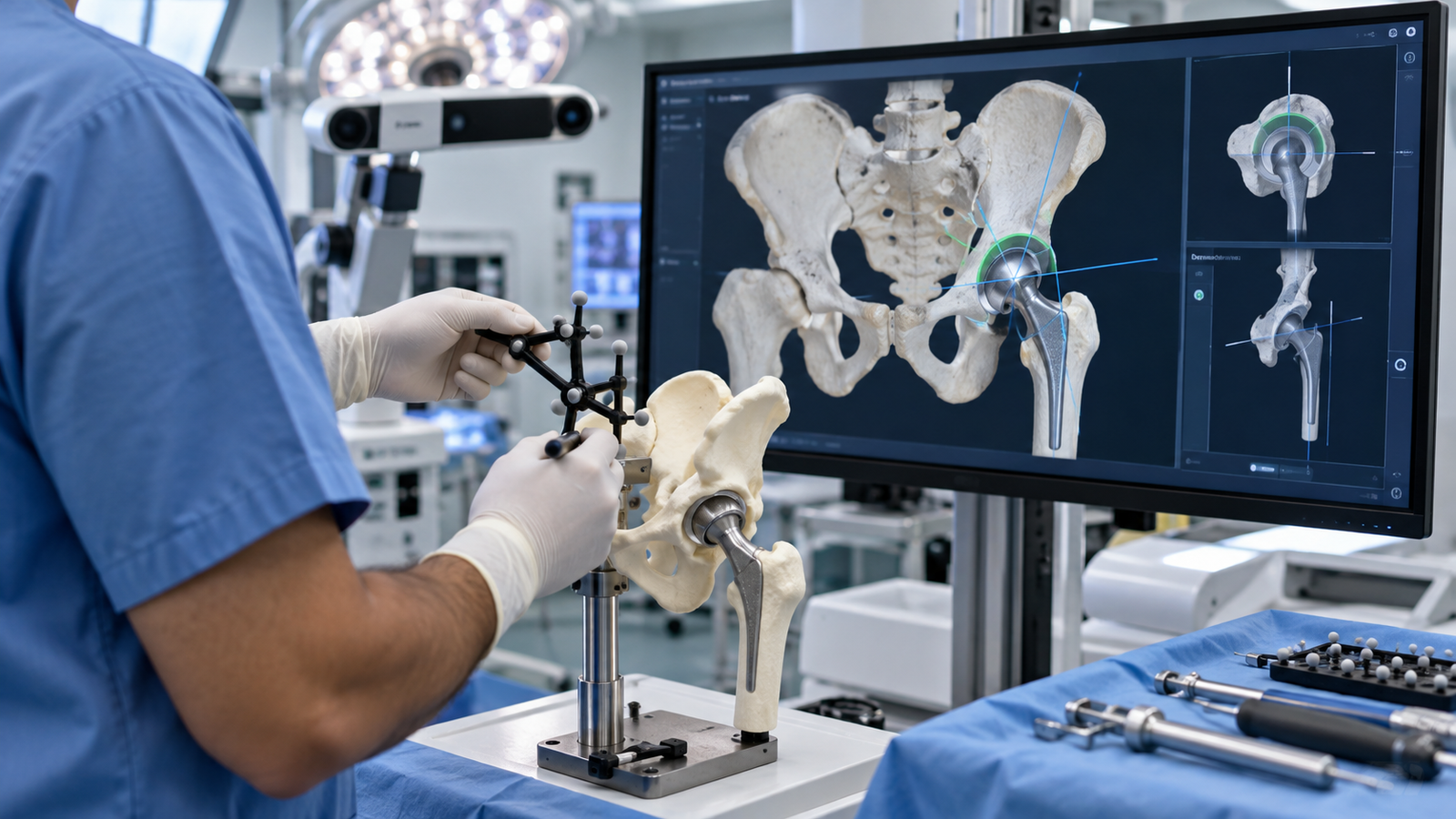
AR/VR knee replacement surgery Kolkata should be understood as a technology-supported planning and guidance workflow, not as a separate type of implant.
In selected cases, AR or digital information may help the surgeon visualise alignment references, implant position, and navigation-style cues during surgery. This may support accuracy, orientation, and decision-making during specific steps of the procedure.
But the value depends on the patient’s knee anatomy, deformity, ligament balance, surgical plan, and the surgeon’s interpretation.
This is where patients need clear expectations. AR or digital guidance may show useful information. It may help display planned references. It may support the surgeon’s workflow. But it does not decide the final correction by itself.
The surgeon still has to judge the knee in real time.
Is AR/VR knee replacement a new type of knee replacement?
AR/VR knee replacement is not a new implant or a separate category of knee replacement.
A patient may hear the term and think it means a different artificial knee is being used. That is not the right way to understand it. AR/VR is better seen as a planning and guidance layer that may help the surgeon view alignment references, implant-position information, and surgical cues during selected knee replacement procedures.
This matters because many patients searching for new knee replacement technology in 2026 are not really looking for a technical label. They are trying to understand whether the technology can make surgery planning clearer, safer, or more personalized for their knee.
AR/VR guidance is also different from choosing partial knee replacement, total knee replacement, or a particular implant brand. Those decisions depend on arthritis pattern, bone quality, deformity, ligament condition, and the surgeon’s assessment. AR/VR may support the planning workflow, but it does not replace the clinical decision about which procedure or implant is suitable.
Where does ligament balance fit into alignment?
Ligament balance is one of the biggest reasons alignment cannot be reduced to one line.
The knee has important soft-tissue structures on the inner and outer sides. In arthritis, these tissues may become tight, stretched, scarred, or uneven. A bowed knee often behaves differently from a knock-knee. A stiff knee behaves differently from a flexible knee.
During knee replacement, the surgeon checks whether the knee feels stable:
- when straight
- when bent
- on the inner side
- on the outer side
- during trial movement
- while assessing kneecap tracking
A knee can look straight but still feel loose. It can also look corrected but feel too tight. That is why advanced knee surgery is not only about bone cuts. It is about bone position, ligament tension, implant tracking, and movement together.
How can digital and AR information help?
Digital and AR-supported systems may help surgeons visualise information during planning or surgery. Depending on the platform, this may include alignment references, instrument guidance, implant-position information, and navigation-style visual cues.
The FDA explains that AR/VR medical devices can support healthcare delivery, but also notes possible risks such as display errors, depth or location issues, information overload, dizziness, fatigue, or visual effects. That is why these technologies should be used carefully and interpreted by trained clinicians. FDA AR/VR medical devices
In knee replacement, augmented reality knee replacement planning may help make surgical information more visible. But visibility is not the same as decision-making.
AR information can be supported.
Digital measurements can help.
Navigation-style cues may guide.
The surgeon still has to decide what the knee needs.
Technology support vs surgeon responsibility
| Technology may support | Surgeon remains responsible for |
|---|---|
| Showing alignment references | Deciding the final alignment goal |
| Displaying visual guidance | Controlling the surgical steps |
| Supporting implant-position checks | Choosing the implant plan |
| Showing navigation-style cues | Interpreting real knee movement |
| Helping visualise axes | Assessing ligament balance |
| Documenting measurements | Managing unexpected findings |
| Improving planning consistency | Explaining risks, recovery, and follow-up |
A better way to understand it is simple: technology gives information; the surgeon gives judgment.
Why surgeon judgment still leads modern alignment planning
A planning screen cannot fully understand a patient’s knee.
It cannot feel tight ligaments.
It cannot judge the patient’s walking confidence.
It cannot understand years of limping.
It cannot know how the knee will feel after final trial movement unless the surgeon evaluates it properly.
That is why surgeon judgment remains central.
Dr. Manoj Kumar Khemani may be relevant for patients who need evaluation for advanced knee arthritis, deformity correction, alignment planning, AR-supported knee replacement discussions, and implant-position decisions. The useful consultation is one where the patient understands not just which technology may be used, but why a particular alignment plan is being considered.
For patients searching for advanced knee replacement surgery in Kolkata or augmented reality knee replacement, the better question is not only, “Will my knee be made straight?”
The better question is:
How will my alignment, ligament balance, and movement be planned together?
When should patients ask about alignment planning?
Patients should ask about alignment planning when the knee shape has visibly changed or daily function is reducing.
This includes:
- bowed knee appearance
- knock-knee appearance
- worsening limp
- one-sided cartilage wear on X-ray
- difficulty straightening the knee
- stair pain
- feeling unstable while walking
- severe stiffness
- long-standing arthritis
- previous fracture or deformity around the knee
Patients should carry standing X-rays, previous reports, medicine lists, and details of walking difficulty. A good discussion should connect the imaging with symptoms and daily movement.
FAQ
Should every knee replacement make the leg perfectly straight?
Not every knee replacement is planned by forcing the leg into one identical straight line. The surgeon considers deformity, natural anatomy, ligament balance, knee stiffness, implant position, and safe correction limits. Patients should ask how their specific alignment target is being planned before surgery.
What is AR/VR knee replacement in simple words?
AR/VR knee replacement refers to technology-supported visual guidance or planning used during selected knee replacement workflows. It may help show alignment references, implant-position information, or navigation-style cues, depending on the system used. Patients should ask what the technology will actually support in their specific case.
Is AR/VR knee replacement a new type of knee implant?
AR/VR knee replacement is not a separate knee implant type. It is a planning or guidance technology that may be used with selected knee replacement procedures, while implant choice depends on diagnosis, anatomy, bone quality, and surgeon assessment. Patients comparing new knee replacement technology should ask whether the system helps with alignment planning, implant positioning, or surgical guidance.
Why does ligament balance matter if the knee looks straight?
A straight-looking knee can still feel stiff, loose, or unstable if the ligaments are not balanced properly. Balance has to be checked while the knee bends, straightens, and moves through trial positioning. Persistent instability, stiffness, or giving-way after surgery should be assessed by a qualified orthopedic surgeon.
Practical next step
A knee replacement plan should make sense beyond the X-ray.
A straight line may look reassuring on a report, but patients live with the knee during walking, turning, climbing stairs, sitting, and standing up again. That is where alignment, ligament balance, implant position, muscle strength, and surgical planning all come together.
Digital tools and AR information can add useful guidance in selected cases. They may help the surgeon see alignment references more clearly or plan implant positions with better visual support. But technology is only part of the process.
The real value comes from connecting the data with the patient’s actual knee.
For someone with a bowed knee, stiff joint, long-standing arthritis, or reduced walking confidence, the planning should feel personal. The aim is not simply to create a perfect-looking leg. The aim is to create a knee that feels stable, balanced, and useful in everyday life.
That is the conversation patients should expect before surgery.
Medical Disclaimer
This article is for general educational purposes only and should not be taken as personal medical advice, diagnosis, or treatment recommendation. Knee replacement planning, alignment strategy, augmented reality guidance, implant positioning, ligament balance, surgery suitability, recovery, and rehabilitation vary from patient to patient. Please consult a qualified orthopedic surgeon with symptoms, standing X-rays, medical history, current medicines, and physical examination findings before making any treatment decision.