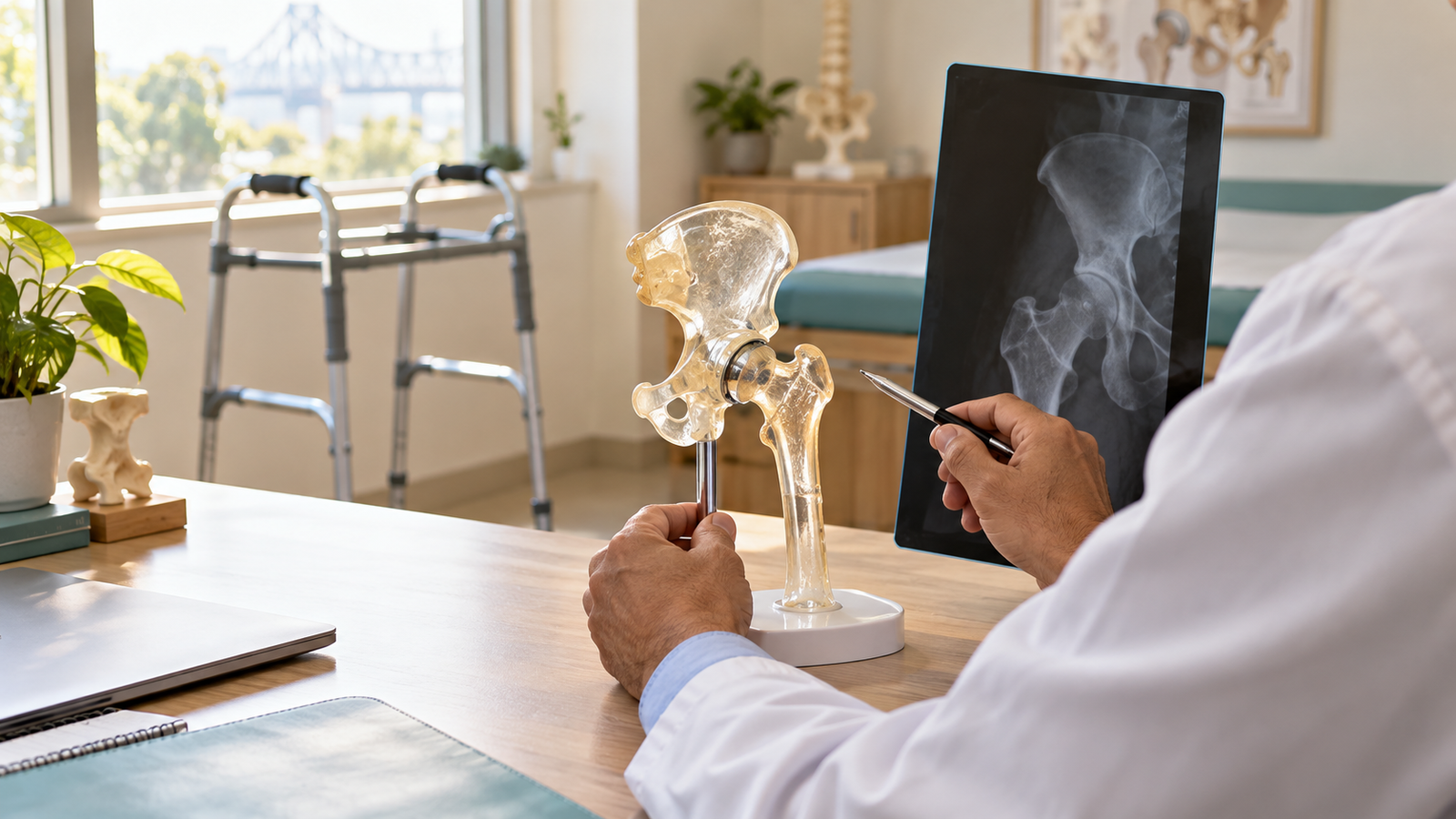
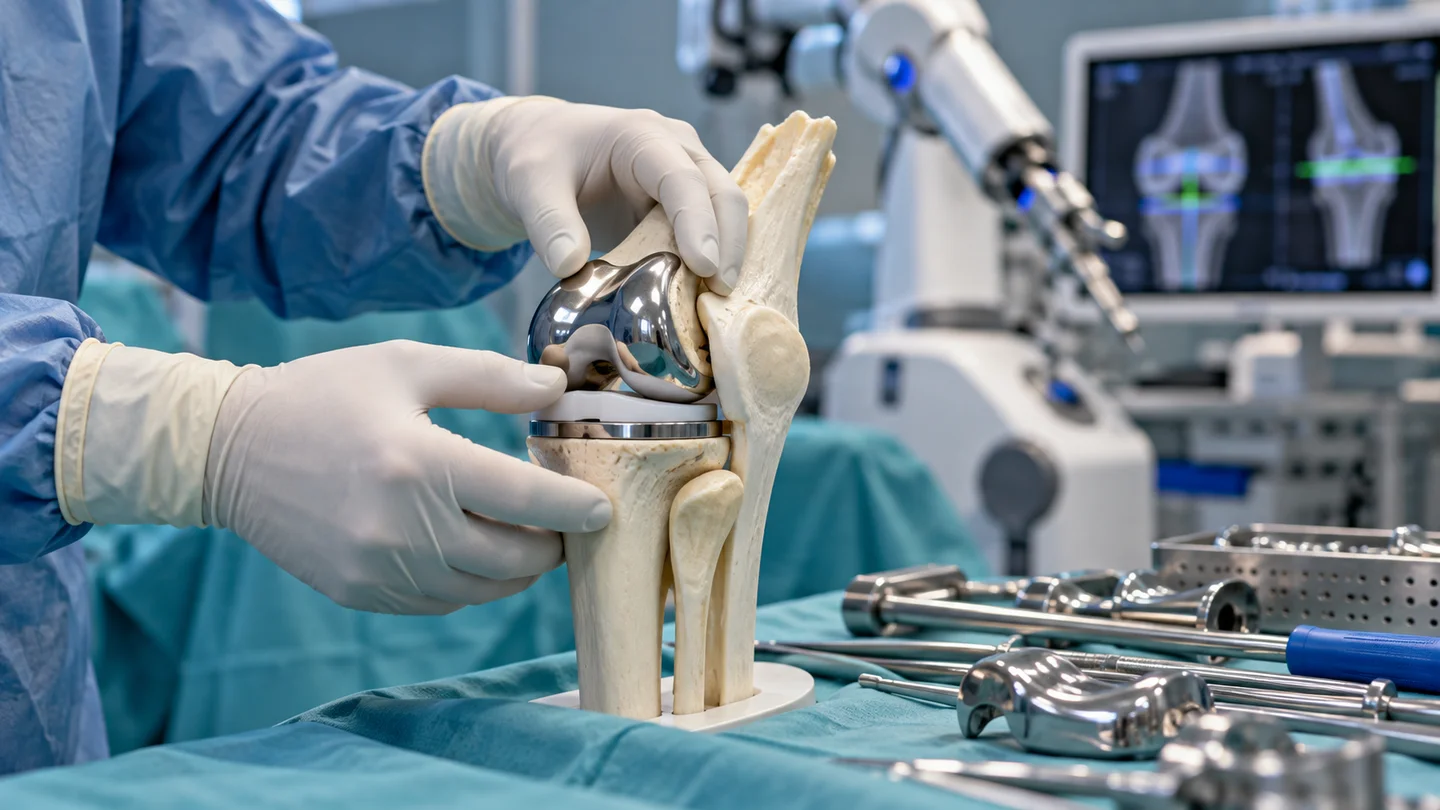
Once a patient enters the operating room, robotic knee replacement moves from planning to execution. A robotic knee replacement surgeon in Kolkata uses a structured sequence after anaesthesia: positioning, sterile preparation, knee exposure, live measurement checks, robotic or computer-assisted guidance, controlled bone preparation, trial implant testing, stability assessment, and final implantation.
At Heal My Bones, patients often ask what happens after the operating-room doors close. This article explains the workflow in clear language so patients understand where technology helps, where the surgeon leads, and why robotic knee replacement is not an automatic or machine-only procedure.
Patients exploring surgeon-led robotic knee replacement workflow should know that the robot does not perform surgery alone; it supports a surgeon-controlled process built around anatomy, measurements, alignment, implant fit, and knee stability.
What does a robotic knee replacement surgeon in Kolkata do after anaesthesia?
After anaesthesia, the surgeon and operating-room team prepare the knee, expose the joint, confirm anatomical landmarks, use robotic or computer-assisted guidance where suitable, and test the knee before placing the final implant. The surgeon remains responsible for bone preparation, soft-tissue handling, implant decisions, and final stability checks.
A simplified operating-room workflow looks like this:
| OR Stage | What Happens |
|---|---|
| Anaesthesia and positioning | Patient is prepared, positioned, and monitored |
| Sterile preparation | Skin is cleaned and the knee is draped |
| Knee exposure | The joint is opened in a controlled way |
| Registration and measurement | Bone landmarks and movement references are confirmed |
| Robotic guidance | System feedback supports planned bone preparation |
| Bone preparation | Surgeon performs controlled cuts or preparation |
| Trial implant check | Temporary components are tested |
| Stability testing | Balance, movement, and fit are checked |
| Final implantation | Final components are placed and closure begins |
AAOS explains that robotic-assisted joint replacement may involve 3D planning, tracking devices, navigation pins, and surgeon-controlled robotic tools. Patients can review this patient guide to robotic-assisted joint replacement for a neutral reference.
The patient's concern: “What happens after I am taken inside?”
For many patients, the fear is not only surgery itself. It is the feeling of not knowing what happens after the operating-room doors close.
That anxiety is understandable.
The patient has already gone through diagnosis, X-rays, consultation, planning, and anaesthesia discussion. But the actual surgical sequence still feels hidden. This is why a clear explanation helps.
After anaesthesia, the patient is positioned carefully. The operating side is confirmed. The knee area is cleaned with antiseptic solution. Sterile drapes are placed. Monitoring continues throughout the surgery.
From there, the operation moves step by step.
It is not random.
It is not fully automated.
It is not controlled by the robot alone.
The surgeon leads the process, while technology supports measurement, alignment feedback, and controlled execution depending on the platform used.
How is the knee exposed?
The knee has to be opened carefully so the surgeon can reach the damaged joint surfaces.
In knee replacement, the incision gives access to the joint. The surgeon moves through soft tissues in a planned manner, protects important structures, and exposes the worn surfaces of the femur and tibia. In some cases, the back of the kneecap may also be assessed depending on the surgical plan.
Even with robotic support, the basics still matter: the knee has to be exposed safely and clearly.
Robotic guidance cannot replace proper exposure, tissue handling, and surgical visibility. Good exposure allows the surgeon to assess deformity, stiffness, joint damage, bone quality, and soft-tissue tension before final decisions are made.
This is one reason robotic knee surgery still depends heavily on surgical judgment.
How are measurements confirmed during surgery?
Pre-operative planning gives a roadmap. The operation confirms how the knee behaves in real time.
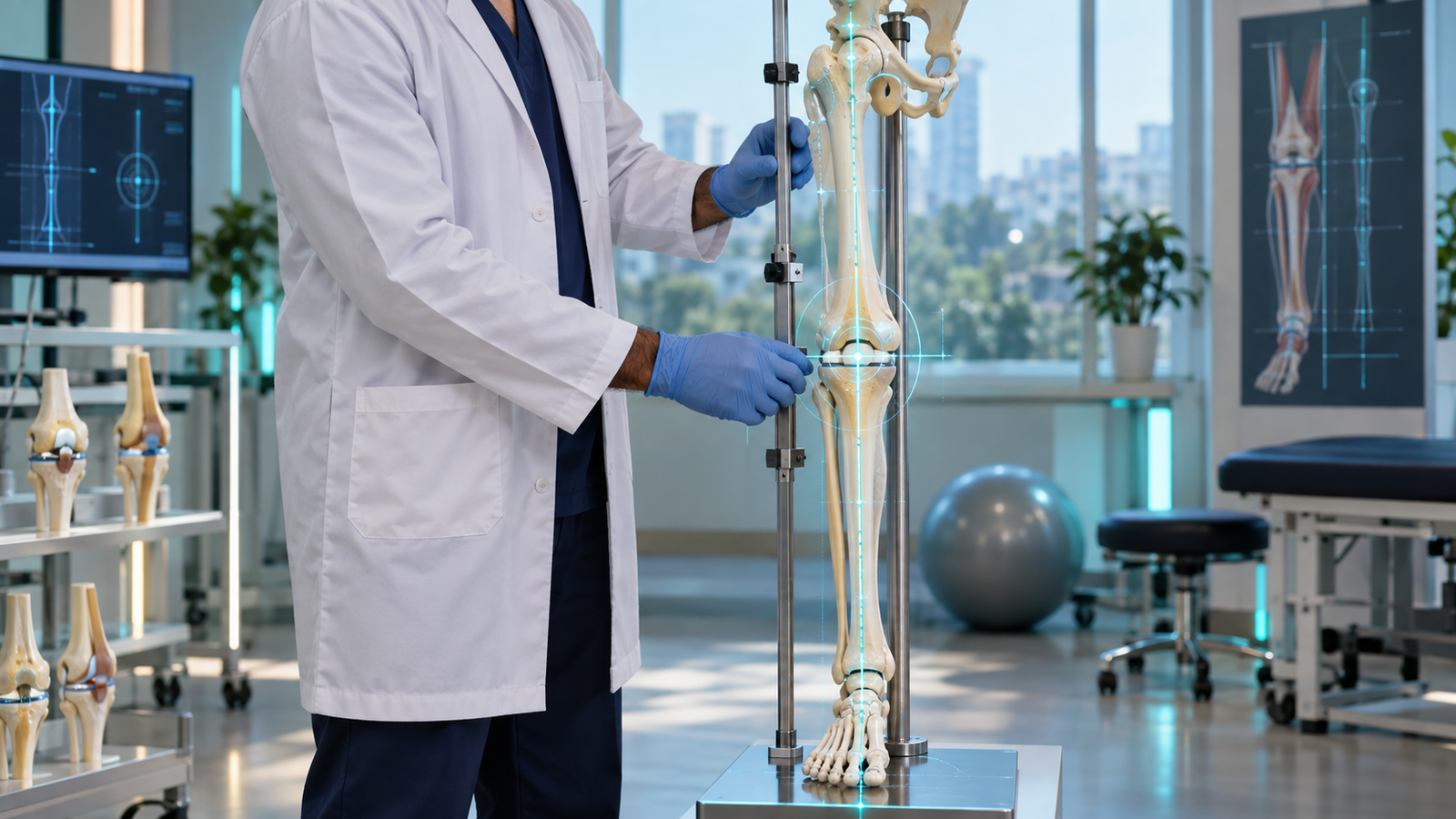
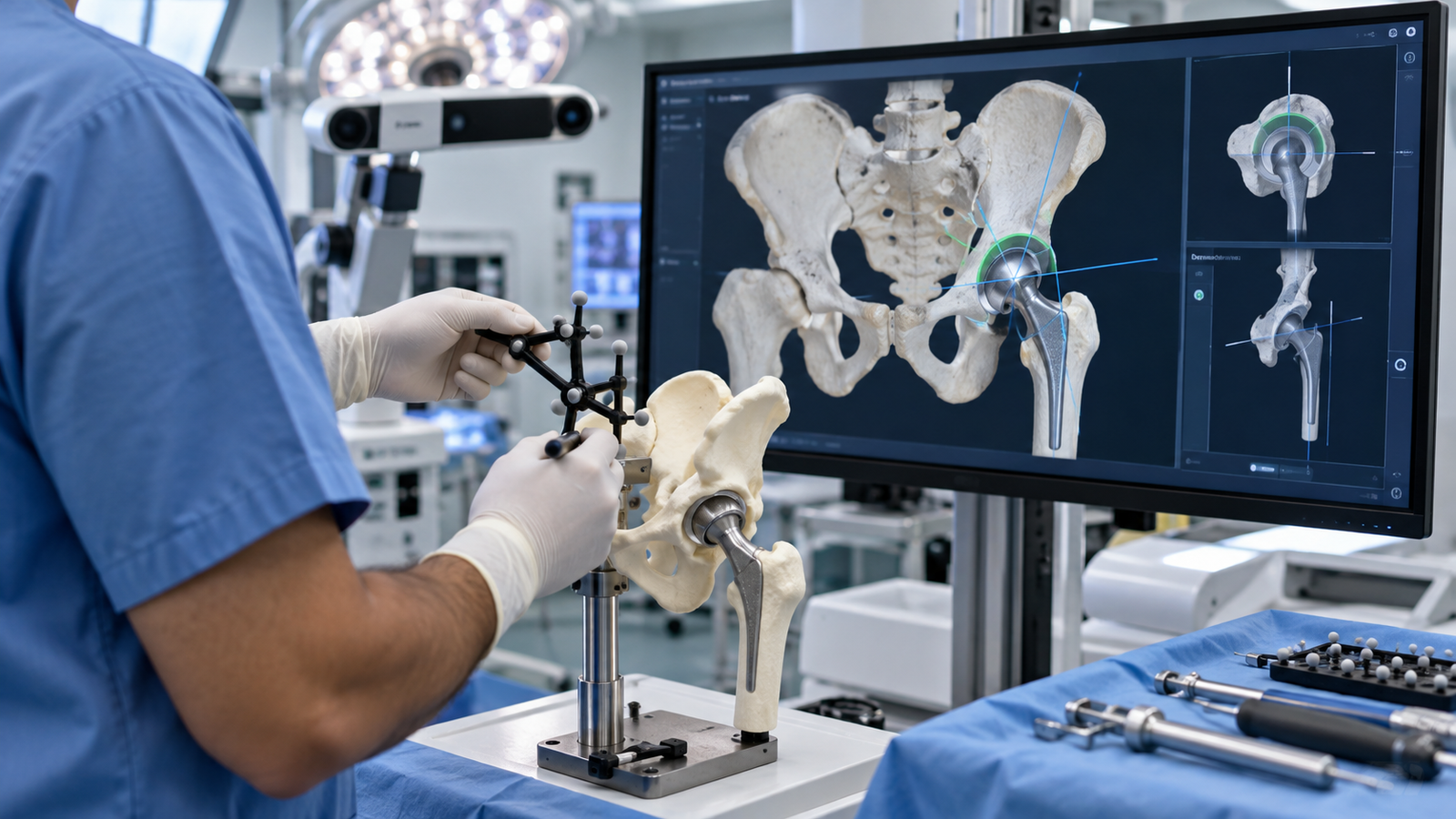
Once the knee is exposed, the surgical team confirms anatomical references. In robotic or computer-assisted systems, this may involve registering the patient’s bone landmarks so the system can understand the knee’s position during the operation.
This may include checking:
- femur and tibia landmarks
- knee movement
- deformity pattern
- alignment references
- gap balance
- soft-tissue tension
- planned implant position
- bone-cut references
A stiff knee behaves differently from a loose knee. A bowed knee behaves differently from a straight knee. A knee with tight inner soft tissues may need a different balance strategy from one with outer-side tightness.
That is why intra-operative confirmation matters.
The screen may show numbers, but the surgeon still has to match those numbers with the real knee on the table.
Where does robotic assistance enter the surgery?
Robotic assistance usually enters after exposure and registration.
The system may help the surgeon assess alignment, planned bone cuts, implant position, and how the femur and tibia are moving in relation to each other. Depending on the platform, the surgeon may receive visual feedback, navigation data, guarded cutting limits, or robotic-arm support.
This does not mean the robot takes over.
The surgeon decides whether the plan should stay the same or be adjusted. If the knee is tighter than expected, if ligament balance needs refinement, or if bone quality raises concern, the surgeon may modify the plan within safe surgical boundaries.
Patients comparing robotic joint replacement surgery in Kolkata or computer-navigated knee replacement should understand that the value is not only in the machine. The stronger discussion is about how the surgeon uses live measurements, alignment references, soft-tissue feedback, and implant-position data to make intra-operative decisions.
Who makes the final bone-cut and implant decisions?
The surgeon makes the final decisions.
Robotic systems support planning and execution, but they do not replace the orthopedic surgeon’s responsibility. Bone preparation, implant sizing, implant positioning, ligament balance, and final stability depend on the surgeon’s interpretation of both the data and the live surgical situation.
A knee replacement plan has to respect several things at once:
- damaged cartilage and bone
- leg alignment
- knee deformity
- ligament tension
- implant size
- joint-line position
- bone quality
- knee bending and straightening
AAOS explains that total knee replacement involves removing damaged bone and cartilage and replacing them with prosthetic components. Patients can read this patient guide to total knee replacement for broader medical context.
The robot may help guide the plan. The surgeon still decides whether that plan fits the patient’s knee.
How is stability checked before final implantation?
Before the final implant is placed, the surgeon usually tests the knee with trial components.
Trial components are temporary parts used to check how the knee behaves before the final implant is fixed. The surgeon bends and straightens the knee, checks alignment, assesses soft-tissue tension, and looks for stability through movement.
This step is not cosmetic. It is functional.
A knee should not only look aligned on a screen. It should move in a controlled way, feel balanced in bending and straightening, and remain stable through the expected range of motion.
If the knee feels too tight, too loose, unstable, or poorly balanced, the surgeon may adjust the plan before placing the final components.
This is one of the clearest examples of why robotic knee replacement remains surgeon-led.
Operating-room workflow diagram
A simple workflow can help patients picture the sequence:
Anaesthesia and positioning
↓
Sterile preparation
↓
Knee exposure
↓
Anatomy registration and measurement confirmation
↓
Robotic or computer-assisted guidance
↓
Surgeon-controlled bone preparation
↓
Trial implant placement
↓
Stability and movement checks
↓
Final implant placement
↓
Closure and recovery-room transfer
This is an educational model. Actual steps may vary depending on the patient’s anatomy, deformity, stiffness, implant system, robotic platform, bone quality, and surgical plan.
Why Dr. Manoj Kumar Khemani’s role still matters
Robotic knee replacement is not only about having technology in the operating room.
The value comes from how the surgeon uses the technology. The surgeon handles exposure, registration, bone preparation, implant decisions, ligament balance, and final stability checks. The robotic system may provide guidance, but the surgery remains surgeon-directed.
Dr. Manoj Kumar Khemani may be relevant for patients who want to understand robotic planning, intra-operative checks, alignment decisions, and stability testing during knee replacement. Heal My Bones explains these steps because patients should not feel that robotic surgery is mysterious or automatic.
A useful consultation should make the operating-room sequence easier to understand before the patient reaches that stage.
What patients should understand before choosing robotic knee surgery
Robotic knee replacement should not be chosen only because the word “robotic” sounds advanced.
A patient should understand why the technology is being considered, how it fits the knee’s arthritis pattern, what the surgeon will verify during surgery, and what recovery may realistically involve.
For someone searching for a robotic surgeon in Kolkata or a knee replacement surgeon in Kolkata, the practical focus should stay on the full process: diagnosis, X-ray findings, clinical examination, patient-specific planning, intra-operative confirmation, stability testing, and rehabilitation.
The operating room is where planning, technology, anatomy, and surgical experience meet.
FAQ
Does the robot perform knee replacement surgery by itself?
No, the robot does not perform knee replacement surgery by itself. Robotic systems assist the surgeon with planning, measurement, alignment guidance, and controlled execution depending on the platform. The surgeon remains responsible for exposure, bone preparation, implant decisions, soft-tissue balance, and final stability checks.
What happens immediately after anaesthesia in robotic knee replacement?
After anaesthesia, the patient is positioned, the knee area is cleaned and draped, and the surgical team confirms the operative side before exposure begins. The surgeon then opens the knee, confirms anatomy, and proceeds with measurement and robotic registration steps where applicable. The exact sequence can vary based on the robotic platform and patient anatomy.
Is robotic knee replacement more accurate than normal knee replacement?
Robotic knee replacement may help the surgeon plan and execute bone preparation with added measurement and guidance support. Accuracy still depends on registration, anatomy, soft-tissue balance, bone quality, implant selection, and surgeon decision-making. Patients should ask how robotic assistance fits their specific knee problem rather than assuming every case needs the same approach.
How does the surgeon check if the knee is stable during surgery?
The surgeon checks stability by moving the knee through bending and straightening with trial components in place. Ligament tension, gap balance, alignment, implant fit, and movement are assessed before final implantation. If the knee is too tight, too loose, or unstable, the surgeon may adjust the plan before placing the final components.
Practical Next Step
Robotic knee replacement is not a button-press operation.
Inside the operating room, the surgeon exposes the knee, confirms live measurements, uses robotic or computer-assisted guidance where suitable, prepares the bone, tests trial components, checks stability, and places the final implant.
The technology supports the process. It does not replace the surgeon’s responsibility.
For patients, the most useful next step is understanding the sequence before surgery. That clarity reduces fear and helps patients have a more informed consultation.
Medical Disclaimer
This article is for general educational purposes only and should not be taken as personal medical advice, diagnosis, surgical assurance, or treatment recommendation. Robotic knee replacement surgery, implant choice, anaesthesia, surgical technique, intra-operative measurements, recovery, risks, and suitability vary from patient to patient. Please consult a qualified orthopedic surgeon with symptoms, reports, X-rays, medical history, and examination findings before making any treatment decision.