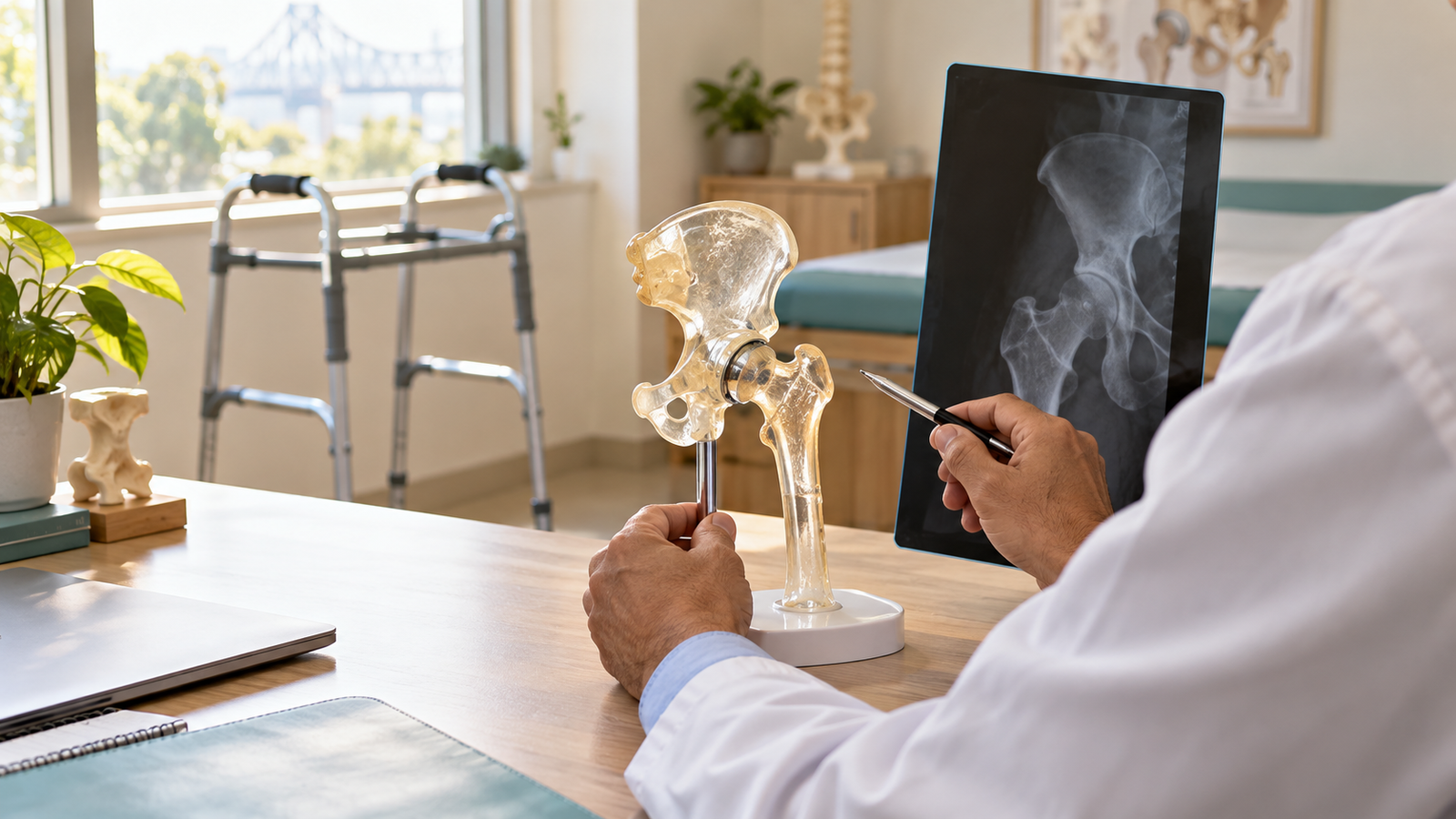
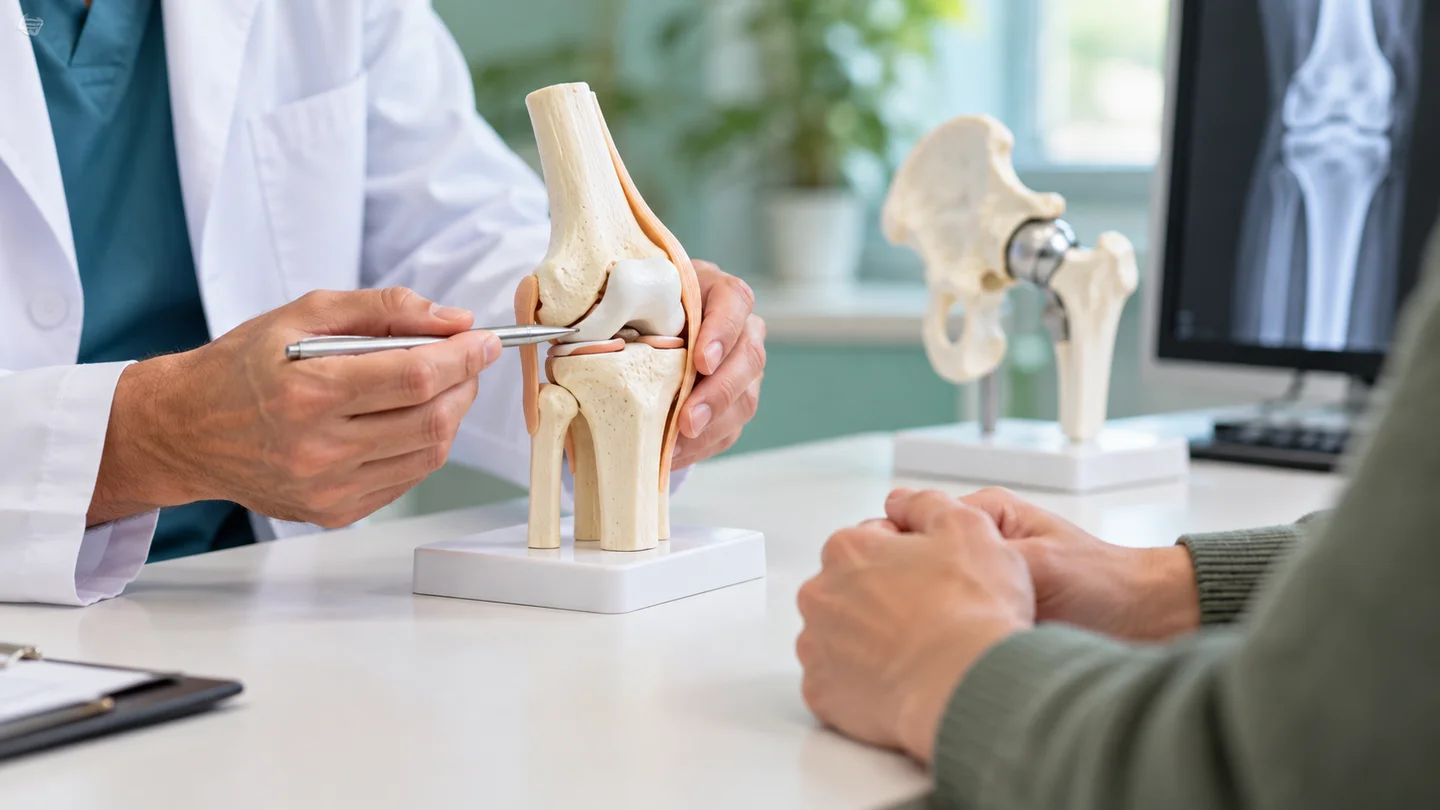
Many patients visit an orthopedic clinic with one fear: “Will I be told to have surgery?” The answer is no. An orthopedic surgeon in Kolkata does not only operate; the role also includes diagnosis, non-surgical treatment planning, physiotherapy guidance, injections in selected cases, bracing, follow-up, and surgery only when the problem truly justifies it.
Patients looking for a structured orthopedic evaluation in Kolkata often need clarity because bone and joint pain can come from very different problems. A fracture, ligament tear, arthritis, tendon rupture, deformity, or implant-related issue cannot be handled with one standard answer.
What surgeries does an orthopedic surgeon in Kolkata perform?
Orthopedic surgeons operate on selected bone, joint, ligament, tendon, cartilage, and trauma-related problems. Surgery is considered when the diagnosis is clear, function is affected, and the expected benefit is stronger than the risk of leaving the problem untreated.
A practical way to understand orthopedic surgery:
- Bone problems may need fixation when alignment or stability is lost.
- Joint problems may need replacement when damage is advanced.
- Ligament injuries may need reconstruction when instability affects function.
- Tendon ruptures may need repair when movement or strength is lost.
- Trauma cases may need urgent surgery when the injury is unstable or joint-threatening.
- Failed previous treatments may need revision when pain, deformity, or non-healing continues.
- Severe deformity or stiffness may need correction when daily movement becomes limited.
AAOS explains that orthopedic surgeons are trained in both non-surgical and surgical treatment of bones, joints, ligaments, tendons, and muscles. Patients who want a neutral reference can read the AAOS overview on what an orthopedic surgeon does.
Surgery is not the first step. Diagnosis is.
A good orthopedic decision starts with finding the real source of the problem.
Knee pain may come from cartilage wear, ligament instability, meniscus injury, kneecap tracking, swelling, referred pain, or previous trauma. Shoulder pain may come from tendon problems, stiffness, arthritis, or repeated dislocation. A fracture may be stable enough for plaster, or unstable enough to need fixation.
That is why the first consultation should not feel like a rush toward surgery.
A useful orthopedic review connects symptoms, examination findings, X-rays or scans, movement, walking ability, pain pattern, and the patient’s daily routine. Only then does the treatment plan become meaningful.
Patients searching for an orthopedic doctor in Kolkata often need this clarity first. They need to know whether the problem is mechanical, inflammatory, traumatic, degenerative, or related to a previous injury.
7 problems that may need orthopedic surgery
| Problem | Possible surgical pathway |
|---|---|
| Displaced or unstable fracture | Plate, screw, nail, wire, or external fixation |
| Severe joint arthritis | Partial or total joint replacement in selected cases |
| Torn ligament with instability | Ligament reconstruction or repair |
| Meniscus, cartilage, or loose body problem | Arthroscopy in suitable cases |
| Tendon rupture with loss of function | Tendon repair or reconstruction |
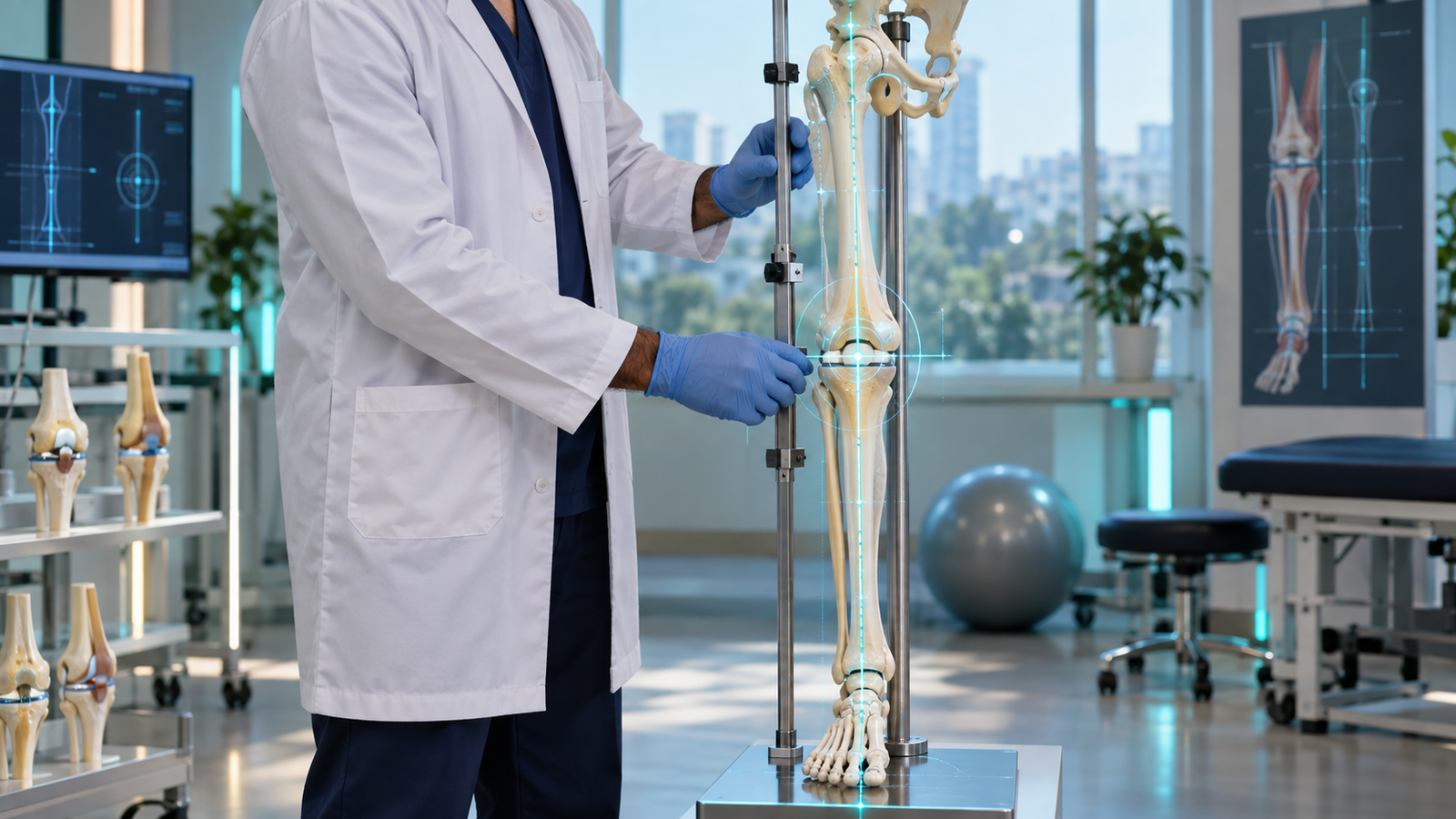
| Bone or joint deformity | Corrective surgery when function is affected |
| Infection, failed implant, or non-healing fracture | Debridement, revision, staged treatment, or fixation |
This table should be read as a guide, not a treatment decision. The actual plan depends on the diagnosis, age, bone quality, activity level, medical history, imaging, and expected recovery.
How should patients choose an orthopedic doctor?
Patients searching for the best orthopedic doctor in Kolkata should not judge only by one phrase or ranking label. A useful consultation should explain the diagnosis, whether the problem is mechanical or inflammatory, what non-surgical options are still reasonable, and when surgery may genuinely help.
For bone, joint, ligament, fracture, or arthritis problems, the right doctor is usually the one who connects symptoms, examination findings, imaging, and day-to-day function before recommending treatment.
At Heal My Bones, patient education is treated as part of care because an informed patient can ask better questions, understand realistic recovery, and avoid unnecessary fear.
Which bone problems may need surgery?
Bone surgery is usually considered when a fracture, deformity, infection, non-healing bone, or implant-related problem affects stability or function.
A fracture may need surgery when the bone ends are displaced, the joint surface is involved, the fracture is unstable, or alignment cannot be maintained safely with plaster or splinting alone. Around joints such as the hip, knee, ankle, shoulder, elbow, or wrist, poor alignment can affect movement long after the bone heals.
Not every fracture needs an operation.
Some stable fractures heal well with immobilization, follow-up X-rays, and protected movement. Others need fixation because the bone position, joint surface, or soft tissue condition makes non-surgical care less suitable.
The aim is not simply to “join the bone.”
The aim is to restore alignment, stability, and useful movement.
Which joint problems may need replacement?
Joint replacement may be discussed when a joint is severely damaged and daily life is affected despite appropriate non-surgical care.
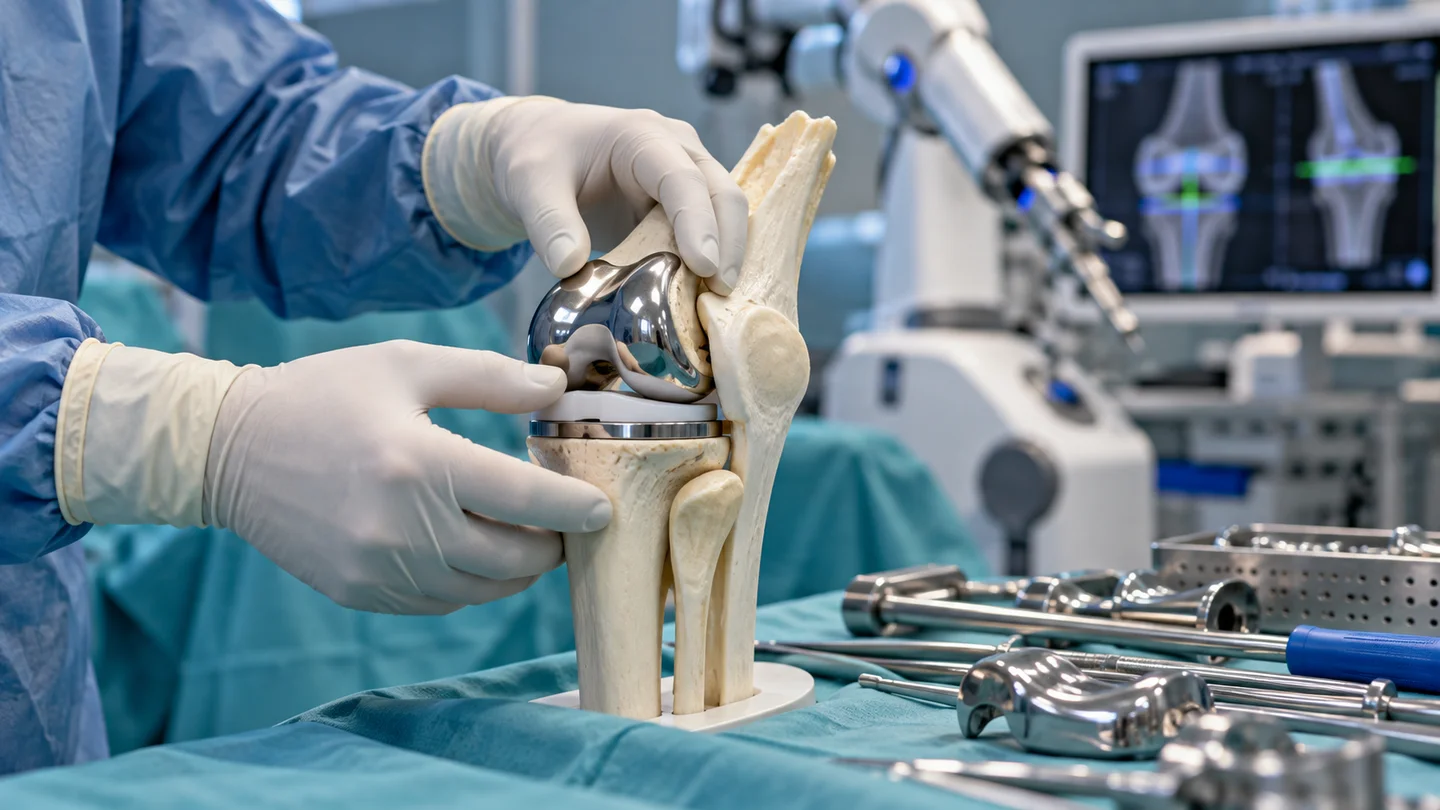
Advanced arthritis is one of the common reasons. In the knee or hip, cartilage loss can make walking, climbing stairs, sitting, standing, and sleeping difficult. Medicines, physiotherapy, weight management, and injections may reduce symptoms in some cases, but they cannot rebuild a badly damaged joint surface.
AAOS explains that total joint replacement involves removing damaged parts of a joint and replacing them with metal, plastic, or ceramic components. A patient-friendly reference is available on total joint replacement.
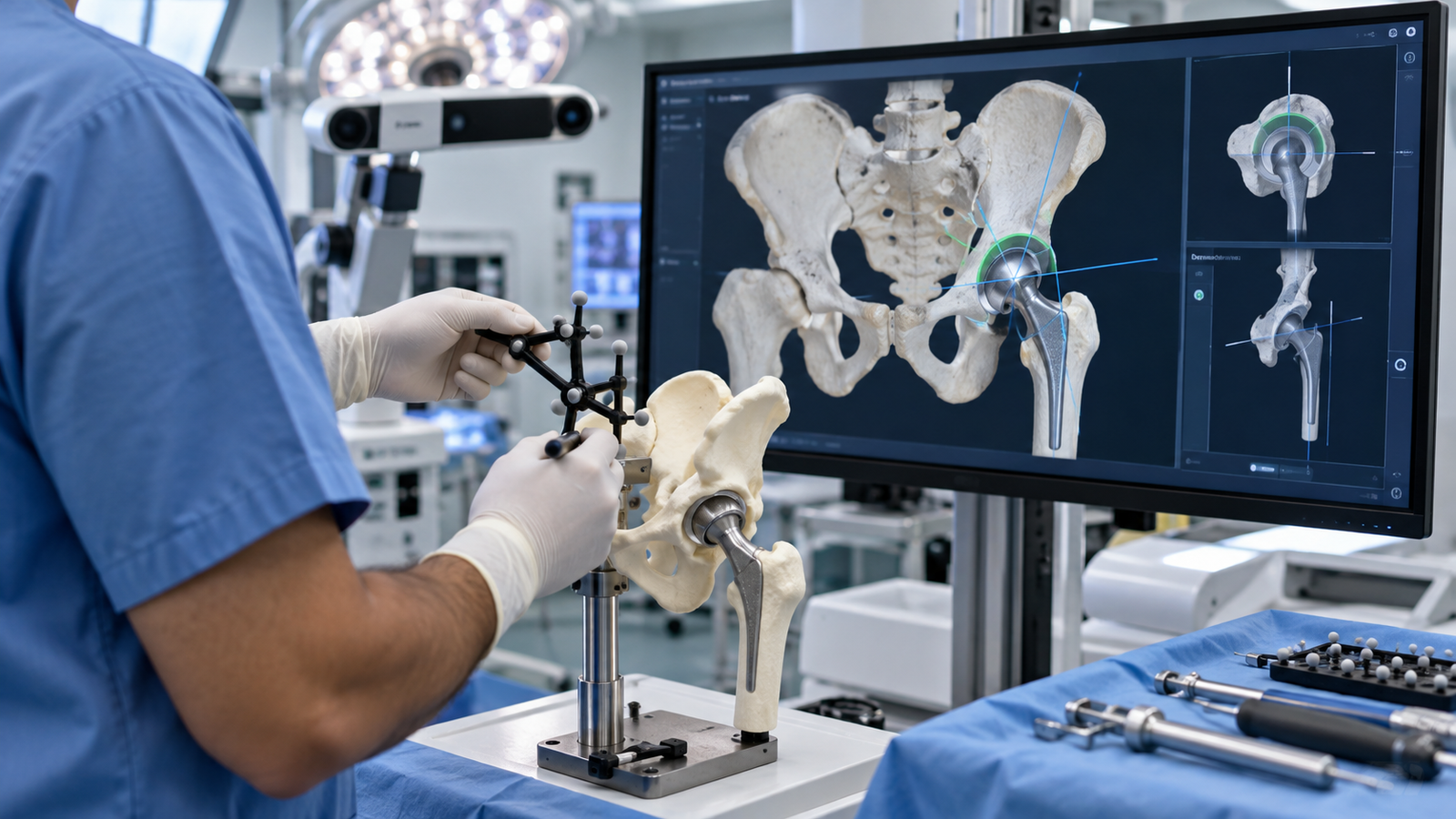
In selected knee or hip replacement cases, robotic joint replacement planning may be discussed to support implant positioning, alignment decisions, and surgeon-led planning. Replacement surgery is not only about changing the joint surface; it also needs planning around stability, movement, pain relief goals, and safe rehabilitation.
In selected knee or hip replacement cases, robotic or computer-assisted planning may be discussed to support implant positioning and alignment decisions. Patients searching for a robotic surgeon in Kolkata should still ask whether the technology is suitable for their specific joint problem, because the final decision depends on diagnosis, bone quality, deformity, and surgeon judgment.
When are arthroscopy or ligament reconstruction used?
Arthroscopy is a keyhole technique used to look inside a joint and treat selected problems through small incisions. It may be discussed for certain meniscus tears, loose bodies, cartilage issues, shoulder problems, or some ligament-related conditions.
But arthroscopy is not a shortcut for every painful joint.
A young patient with a locked knee after a meniscus tear is different from an older patient with advanced arthritis and general knee pain. The treatment logic changes because the source of pain changes.
In ligament injuries, stability often decides the seriousness of the problem. A partial sprain may improve with bracing and rehabilitation. A complete ligament tear with repeated giving-way may need reconstruction, especially when the patient’s work, walking, sports, or daily confidence is affected.
This is where a knee surgeon in Kolkata may evaluate movement, instability, swelling, MRI findings, and activity demand before discussing surgery.
When does trauma require fixation?
Trauma may require fixation when a broken bone or injured joint cannot remain stable in a safe position on its own.
This can happen after a fall, road accident, workplace injury, sports injury, or twisting injury. Fixation means the surgeon uses implants such as plates, screws, rods, nails, pins, or external frames to hold the bone while it heals.
Surgical fixation may be discussed when the fracture is displaced, unstable, joint-involving, open, severely fragmented, or associated with poor limb alignment. It may also be needed when early movement is important to reduce stiffness and protect long-term function.
For patients, the word “implant” can sound frightening. The implant is not the goal. The goal is to hold the bone in a position where healing and movement have a better chance.
Other orthopedic problems that may need surgery
Some orthopedic problems do not fit neatly into one category.
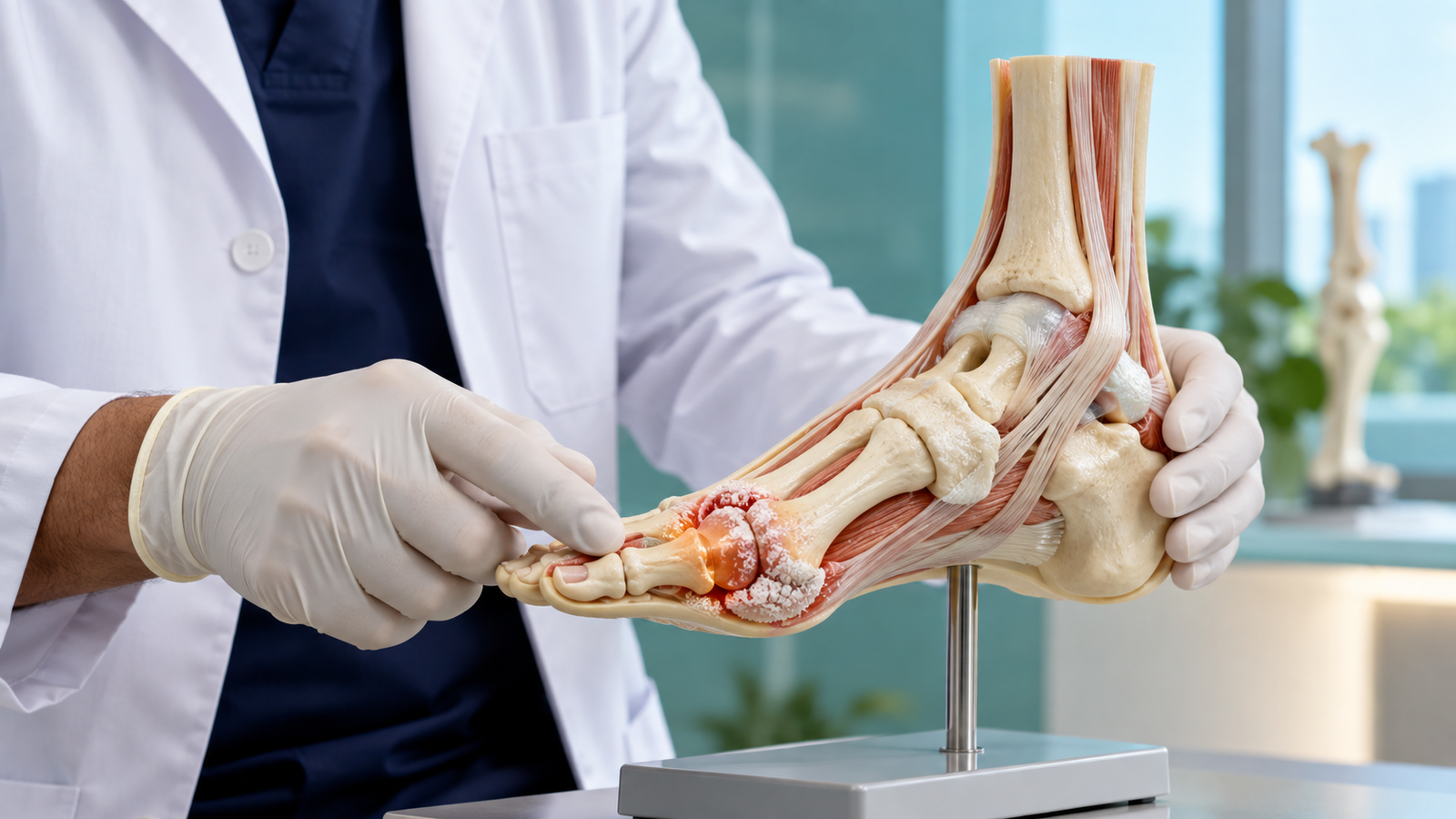
A tendon rupture may need repair if the tendon has pulled away and the patient has lost movement or strength. A severe deformity may need correction if walking, balance, shoe wear, or joint loading becomes difficult. A non-healing fracture may need revision fixation or bone grafting in selected cases.
Infection inside a joint or around an implant can become urgent. Failed implants, repeated dislocations, severe stiffness after injury, and painful hardware may also need specialist review.
These decisions need time, imaging, and a clear explanation. The patient should understand why surgery is being considered, what the operation is expected to improve, and what recovery may realistically involve.
How Dr. Manoj Kumar Khemani approaches surgical decisions
A patient should not feel pushed toward surgery without understanding the reason.
Dr. Manoj Kumar Khemani’s evaluation focuses on connecting symptoms with examination findings and imaging. The practical question is simple: what problem is affecting movement, stability, pain, or independence, and what treatment offers a reasonable path forward?
Some orthopedic problems heal without surgery. Some need structured rehabilitation. Some need monitoring. Some mechanical problems need repair or reconstruction because the bone, joint, ligament, or tendon cannot function properly on its own.
The truth usually sits in the middle.
Good orthopedic care is not “surgery for everything.” It is the ability to decide when surgery is useful and when it is not.
FAQ
What surgeries does an orthopedic doctor commonly perform?
An orthopedic doctor may perform fracture fixation, joint replacement, arthroscopy, ligament reconstruction, tendon repair, deformity correction, and surgery for selected infections or implant-related problems. The exact procedure depends on diagnosis, imaging findings, joint stability, bone quality, and how much function is affected. A structured orthopedic evaluation helps decide whether surgery is needed or whether non-surgical care is still suitable.
Does visiting an orthopedic surgeon mean I will need surgery?
Visiting an orthopedic surgeon does not automatically mean surgery is needed. Many bone, joint, ligament, tendon, and spine-related problems are first managed with medicines, physiotherapy, bracing, activity changes, injections in selected cases, or observation. Surgery is usually discussed only when the diagnosis and functional problem justify it.
When should knee pain be shown to a knee specialist?
Knee pain should be evaluated when it causes swelling, instability, locking, deformity, walking difficulty, repeated falls, night pain, or poor response to basic care. The doctor may examine ligament stability, cartilage wear, meniscus signs, alignment, and X-ray or MRI findings before suggesting treatment. Persistent symptoms should be reviewed instead of being managed only with repeated painkillers.
What should I carry to an orthopedic surgery consultation?
Carry previous X-rays, MRI or CT reports, blood reports, discharge summaries, operation notes, implant details, medicine list, and details of previous treatment. These records help the doctor understand the injury timeline, current diagnosis, and whether surgery is actually required. If old records are unavailable, explain when the problem started, what worsens it, and how it affects daily activity.
Practical Next Step
Orthopedic surgery is not one single operation. It may involve bones, joints, ligaments, tendons, cartilage, trauma injuries, deformities, and failed previous treatments.
The right decision starts with the right diagnosis.
If pain, swelling, deformity, instability, fracture, stiffness, or walking difficulty is affecting daily life, the next step is a structured orthopedic evaluation. Not because every problem needs surgery, but because the patient deserves to know what is actually wrong, what can be treated without surgery, and when an operation may genuinely help.
Medical Disclaimer
This article is for general educational purposes only and should not be taken as personal medical advice, diagnosis, or treatment recommendation. Orthopedic conditions, surgical suitability, imaging findings, pain patterns, recovery timelines, physiotherapy needs, and treatment options vary from patient to patient. Please consult a qualified orthopedic doctor with your symptoms, medical history, examination findings, and reports before making any treatment decision.