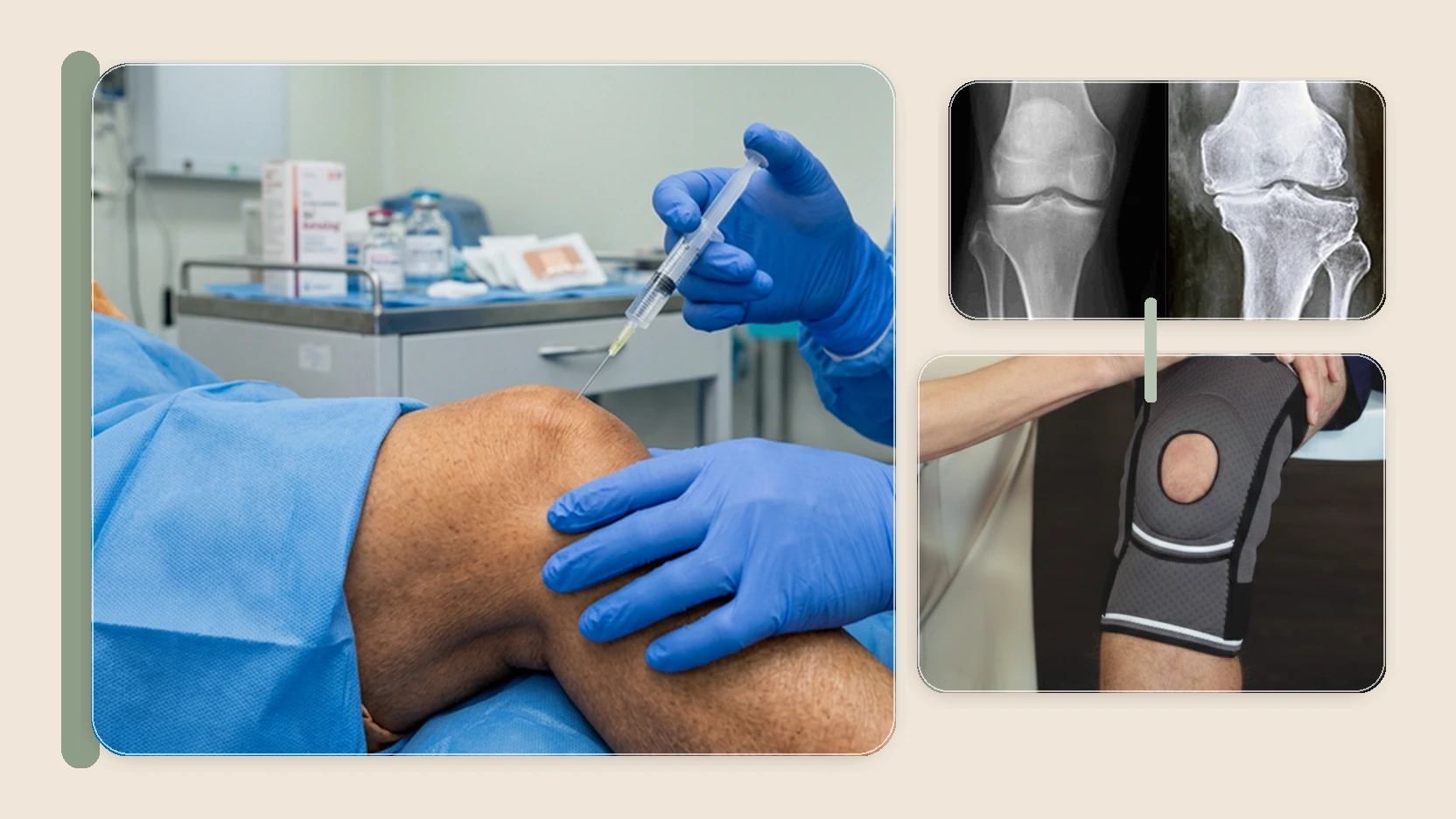
Knee injections may stop helping when arthritis has progressed beyond the stage where temporary pain relief is enough. In many cases, injections can calm inflammation, but they cannot repair advanced cartilage damage, correct joint narrowing, or reverse a badly worn knee.
If your pain is returning faster than before, your knee feels stiff after sitting, swelling keeps coming back, or walking has become difficult, it may be time to reassess the condition properly. For patients whose pain keeps returning after injections, an orthopedic evaluation for osteoarthritis treatment in Kolkata can help identify whether the knee still needs conservative care or whether a replacement-timing discussion is becoming necessary.
This does not mean every patient needs surgery. It means the knee needs a more serious review than simply repeating the same injection again.
"Doctor, the first injection worked. Why is it failing now?"
This is a very common question from patients with knee arthritis.
Many people say the first injection helped for months. They could walk better, climb stairs with less pain, and manage daily work without depending too much on painkillers. But later, the same injection gives relief for only a few weeks. Sometimes the pain comes back even sooner.
Usually, this does not mean the injection was wrong. It often means the knee has changed.
In early or moderate arthritis, pain may come mainly from inflammation inside the joint. At that stage, medicines, physiotherapy, weight control, and selected injections may help the patient stay active. But as arthritis progresses, the problem becomes more mechanical. The cartilage becomes thinner, the joint gap reduces, and the bones start taking more pressure while walking.
That is when injections may feel less useful.
A simple way to understand it is this: if the knee is irritated, an injection may calm it. If the knee is structurally worn out, the relief may not last long.
At Heal My Bones, this is why the focus is not only on pain relief. The focus is on understanding what stage the arthritis has reached.
How osteoarthritis treatment in Kolkata helps when injections stop working
A proper evaluation helps answer the question patients actually care about: "What should I do next?"
Some patients may still benefit from medicines, activity modification, physiotherapy, or another carefully selected injection. Others may have reached a stage where repeated injections are only giving short-term comfort without improving walking, sleep, or daily movement.
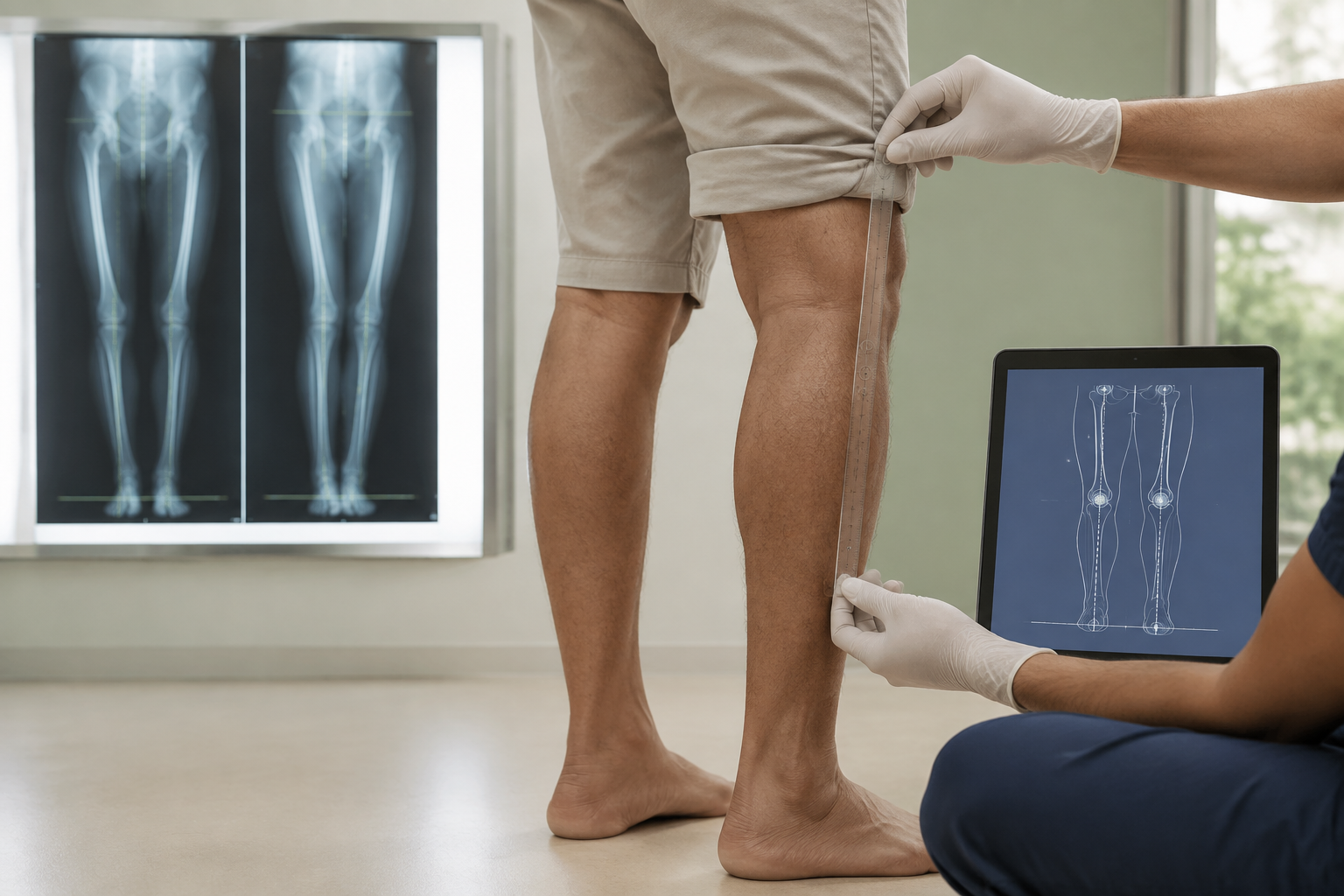
The right treatment depends on a few practical details. How long did the last injection help? Is the pain mainly after activity, or does it come even at rest? Is there swelling after normal walking? Is the knee bending inward or outward? Can the patient climb stairs? Is night pain present?
These details matter more than a generic arthritis label.
For example, a patient who has mild pain after long walks is not in the same situation as someone who avoids stairs, skips market visits, or needs support while getting up from a chair. Both may have knee arthritis, but their treatment stage is different.
That is why a knee arthritis treatment plan should be built around the patient's current function, not only an old prescription.
When repeated injections may not be the best answer
Patients often ask, "Can I take one more injection and delay everything?"
Sometimes, that may be reasonable. But not always.
Knee injections may be useful when arthritis is still in a stage where inflammation is the main source of pain. But if every injection is giving shorter relief than the previous one, the treatment plan should be reviewed. Repeating injections without checking the knee again may delay a more appropriate decision.
The concern is not that injections are always bad. They are not. The concern is using them as a routine answer when the knee has already moved into advanced arthritis.
According to the National Institute of Arthritis and Musculoskeletal and Skin Diseases, osteoarthritis treatment often includes exercise, medicines, weight management, and in some cases joint replacement when damage becomes severe. The American Academy of Orthopaedic Surgeons also notes that steroid injections may offer short-term relief in knee osteoarthritis, while hyaluronic acid injections are not recommended for routine use in symptomatic knee osteoarthritis.
So the real question is not, "Should I take an injection or not?"
The better question is, "Is an injection still the right treatment for my knee at this stage?"
Signs your knee arthritis may be becoming advanced
Knee arthritis is usually becoming more advanced when pain starts controlling daily life.
Many patients do not come to the doctor because the pain is unbearable every minute. They come because the knee has slowly started deciding what they can and cannot do. They stop morning walks. They avoid stairs. They sit down more often while cooking. They think twice before going to the market. Some patients even avoid family outings because they are worried about walking distance.
These changes are important.
Advanced arthritis may show itself through persistent pain, repeated swelling, stiffness after sitting, reduced walking distance, difficulty with stairs, disturbed sleep, or visible bending of the knee. Night pain is especially important because it may suggest that the problem is no longer only activity-related.
X-rays also help. If the joint gap has reduced significantly, the knee alignment has changed, or the bones are rubbing under load, injections may not provide the kind of relief the patient expects.
Only an orthopedic examination and appropriate imaging can confirm whether the pain is due to advanced osteoarthritis or another cause.
Medicines, physiotherapy, injections, or replacement evaluation: what fits where?
There is no single answer for every arthritis patient. Treatment should match the stage of the knee.
| Treatment option | When it may help | When it may not be enough |
|---|---|---|
| Medicines | Short-term pain flare, swelling, daily discomfort | When pain keeps returning or medicines are needed too often |
| Physiotherapy | Muscle strength, balance, stiffness, walking confidence | When severe joint damage limits movement despite exercise |
| Knee injections | Selected early or moderate arthritis with inflammation-driven pain | When relief lasts only a few weeks or the joint is structurally worn |
| Replacement evaluation | Severe pain, deformity, poor walking ability, night pain, failed conservative care | Not needed if symptoms are mild and daily function is still good |
This is why patients should avoid making the next decision only from memory: "Last time the injection worked, so I will repeat it."
Arthritis changes. The treatment plan should change when the symptoms change.
When should knee replacement be discussed?
Knee replacement should be discussed when arthritis pain is severe, persistent, and affecting quality of life despite proper non-surgical treatment.
This is not the same as saying the patient must immediately undergo surgery. A discussion simply means the knee has reached a point where the patient deserves clarity.
A knee replacement conversation becomes more relevant when there is long-standing pain, poor walking ability, repeated swelling, deformity, night pain, or very short relief after injections. If daily activities are shrinking month by month, the issue is no longer just pain. It becomes a mobility and quality-of-life problem.
The NICE osteoarthritis guideline recommends considering referral for joint replacement when joint symptoms such as pain, stiffness, reduced function, or progressive deformity substantially affect quality of life and non-surgical management is ineffective or unsuitable.
For some patients, this discussion actually reduces fear. They understand whether they are too early for surgery, at the right time to consider it, or still suitable for non-surgical treatment.
The goal is not pressure. The goal is a clear decision.
What should a patient ask before taking another knee injection?
Before taking another knee injection, it is important to understand why the previous one did not give lasting relief. A good consultation should not be limited to asking for pain relief. It should help the patient understand the stage of arthritis, the reason for recurring pain, and whether the treatment plan needs to change.
Patients can ask practical questions such as:
"Has my knee arthritis become more advanced?"
"Why did the last injection help for a shorter time than before?"
"Can physiotherapy and medicines still help me at this stage?"
"Is another injection suitable for my knee, or should I consider a different plan?"
"Am I close to needing total knee replacement, or can it still be delayed safely?"
"Could my knee pain be coming from something other than arthritis?"
These questions help the doctor look beyond temporary pain control and understand the bigger picture of joint health. Before visiting a knee pain doctor in Kolkata, patients should carry previous X-rays, MRI reports if available, current medicines, and details of earlier injections. It also helps to note how long each treatment worked, how far they can walk, whether stairs are difficult, and whether knee pain is disturbing sleep.
This information gives the doctor a clearer view of how much arthritis is affecting daily life and helps in planning the next step more accurately.
Why Dr. Manoj Kumar Khemani's evaluation matters in this stage
In knee arthritis, timing is one of the most important parts of treatment.
If surgery is considered too early, the patient may feel pushed before it is truly needed. If treatment is delayed for too long, the patient may spend years with pain, poor walking ability, weak muscles, and reduced confidence.
That middle stage is where careful orthopedic judgment matters.
Dr. Manoj Kumar Khemani's role becomes relevant when patients are confused between another injection, continued conservative care, or a knee replacement evaluation. The decision should not be based only on pain. It should include the patient's age, activity level, X-ray findings, deformity, walking limitation, medical fitness, and previous treatment response.
At Heal My Bones, the aim is to help patients understand where they stand today. Some knees still respond well to non-surgical treatment. Some need closer monitoring. Some need a serious discussion about replacement timing.
That clarity is often more useful than simply prescribing another short-term solution.
If your knee pain keeps coming back, pause before repeating treatment
When knee injections stop helping, it is not something to ignore. It is also not something to panic about.
The sensible step is to pause and reassess.
If your first injection worked for six months and the next one worked for only six weeks, that pattern is important. If pain now appears at night, swelling comes back often, and walking distance has reduced, the knee may need a different plan.
A proper evaluation can help decide whether medicines, physiotherapy, another injection, or replacement evaluation is the right next step. It can also help patients avoid two common mistakes: delaying too long out of fear, or choosing surgery before it is actually needed.
Knee arthritis treatment works best when decisions are made at the right time.
FAQ
Why are my knee injections not working like before?
Knee injections may stop working like before when arthritis has progressed from mainly inflammatory pain to structural joint damage. Relief often becomes shorter when cartilage loss, joint-space narrowing, swelling, deformity, or night pain is present. A fresh orthopedic review can help decide whether injections are still suitable.
Does failed knee injection mean I need knee replacement?
A failed knee injection does not automatically mean you need knee replacement. Surgery is usually discussed when pain, stiffness, poor walking ability, and X-ray changes continue despite proper non-surgical treatment. The right next step is to compare your symptoms, reports, and treatment history with an orthopedic doctor.
How long should a knee injection give relief in arthritis?
A knee injection may give relief for weeks to months, depending on the arthritis stage, inflammation level, weight, activity level, and joint damage. If relief is becoming shorter after each injection, the knee may need reassessment. Tracking how long each injection works can help the doctor plan the next treatment more accurately.
What should I do if knee arthritis pain keeps coming back after injections?
You should get the knee reassessed instead of repeating injections automatically. Recurring pain may mean the treatment plan no longer matches the stage of arthritis. A detailed evaluation can help decide whether conservative care, another injection, or knee replacement timing should be discussed.
Final Word
When knee injections stop helping, your knee may be giving an important signal: the arthritis plan needs to be reviewed.
It does not always mean surgery. It does mean the next step should be based on the current condition of the joint, not only on what worked in the past.
If knee pain is now affecting walking, stairs, sleep, or daily independence, a detailed evaluation with Dr. Manoj Kumar Khemani can help you understand whether continued conservative care is enough or whether it is time to discuss a more lasting solution.