Hip pain can slowly take over daily life. Walking becomes shorter. Stairs feel harder. Sitting for long hours becomes uncomfortable. Sleep may suffer because turning in bed hurts.
For patients considering hip replacement surgery in Kolkata, one common question is whether robotic planning can make the procedure more precise. The answer needs clarity, not hype. Robotic-assisted planning may help the surgeon study hip anatomy, plan implant position, and use structured guidance during surgery, but the surgeon still leads every major decision.
How does robotic planning help in hip replacement surgery in Kolkata?
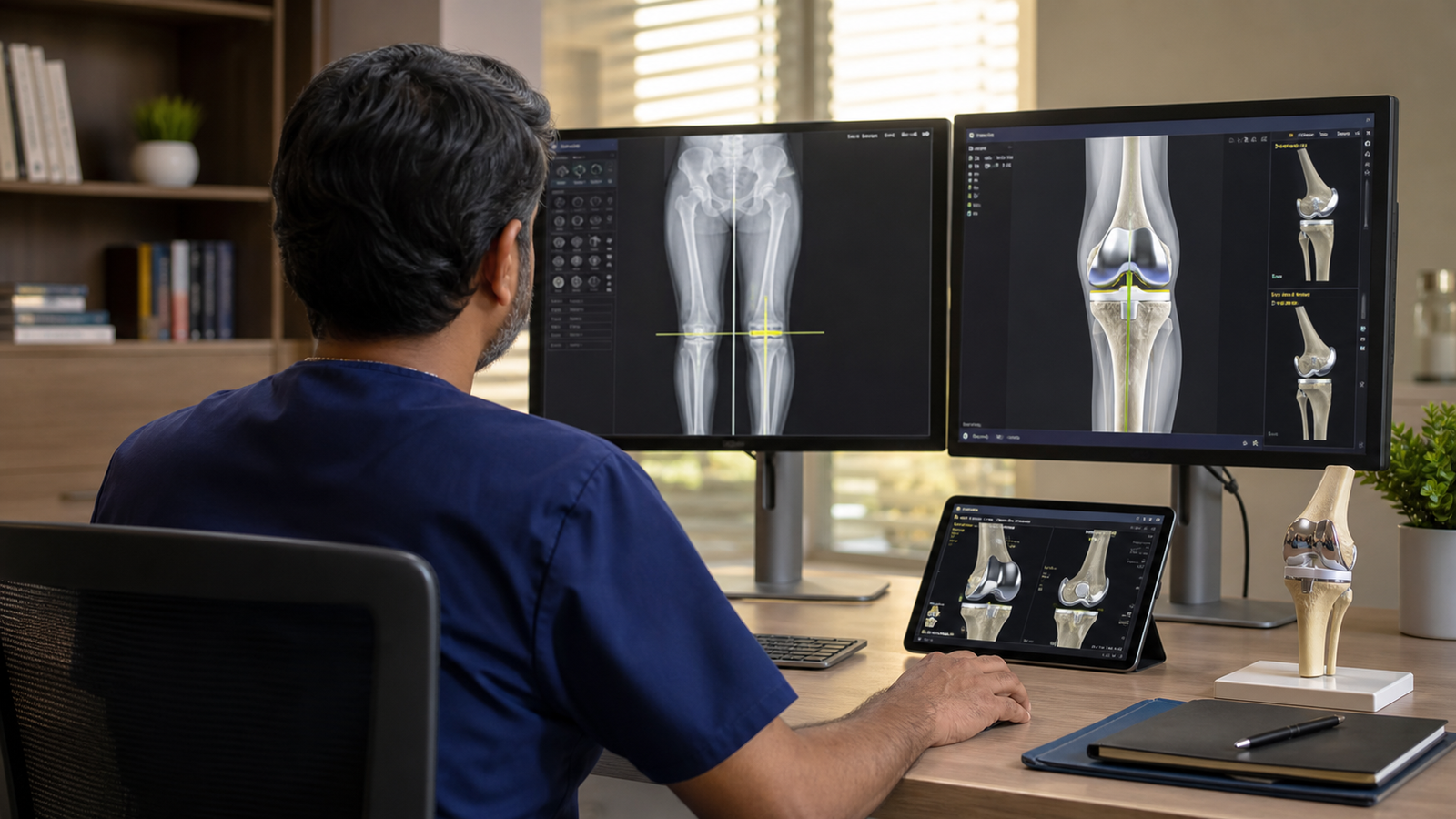
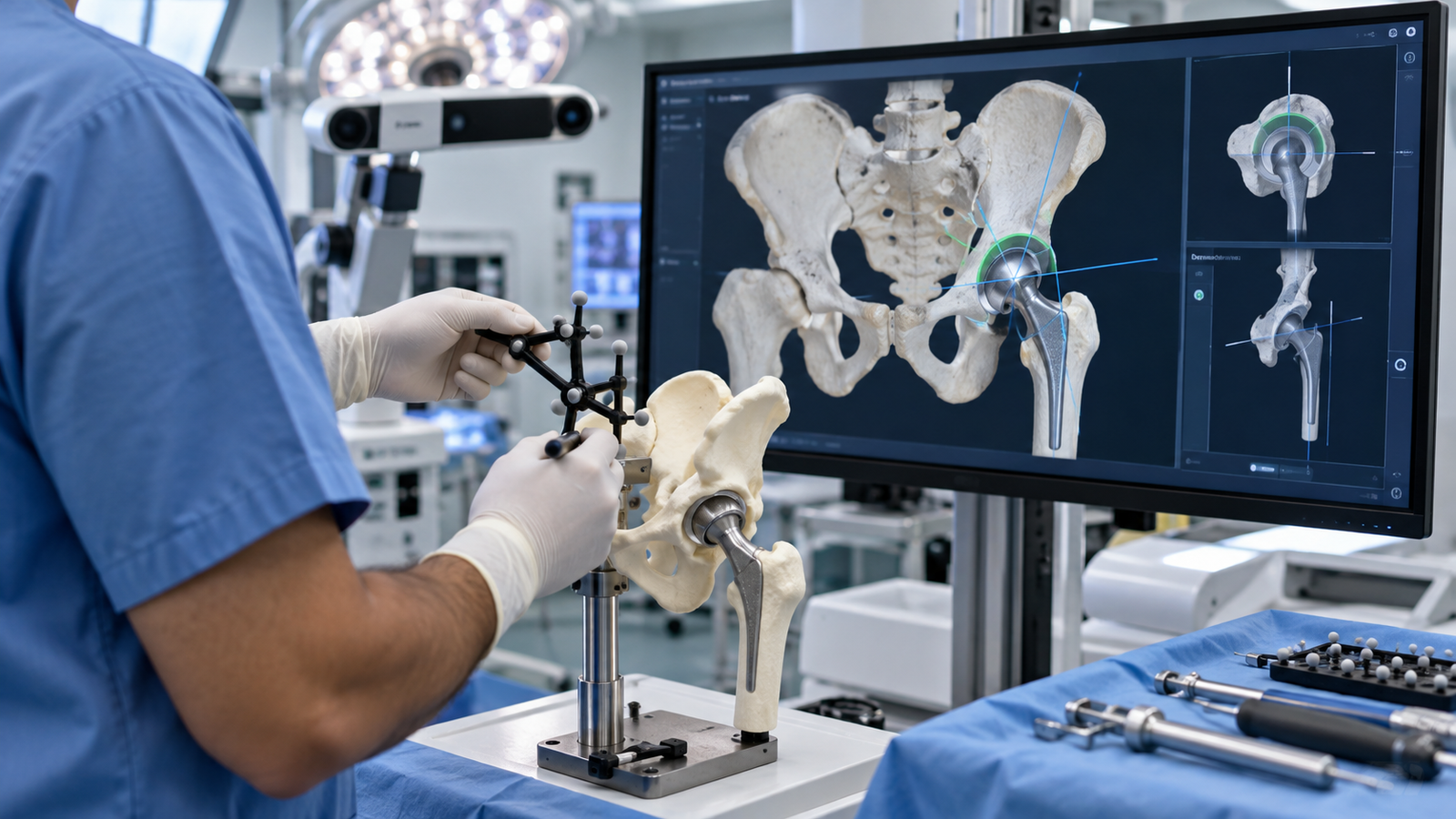
Robotic planning can help the surgeon understand the patient’s hip anatomy in three dimensions and plan implant position before surgery. It does not mean the robot performs the operation independently or chooses the implant on its own.
Patients comparing 3D planning for hip replacement surgery should ask how the surgeon uses hip anatomy, implant sizing, cup position, leg-length planning, stability checks, and intraoperative judgment together.
| Planning area | What robotic planning may support | What remains surgeon-led |
|---|---|---|
| Hip anatomy review | 3D mapping of bone shape and joint structure | Interpreting the findings for that patient |
| Implant sizing | Digital planning and trial options | Final implant selection and fit |
| Cup position | Planned angle and placement support | Adjusting to anatomy and stability |
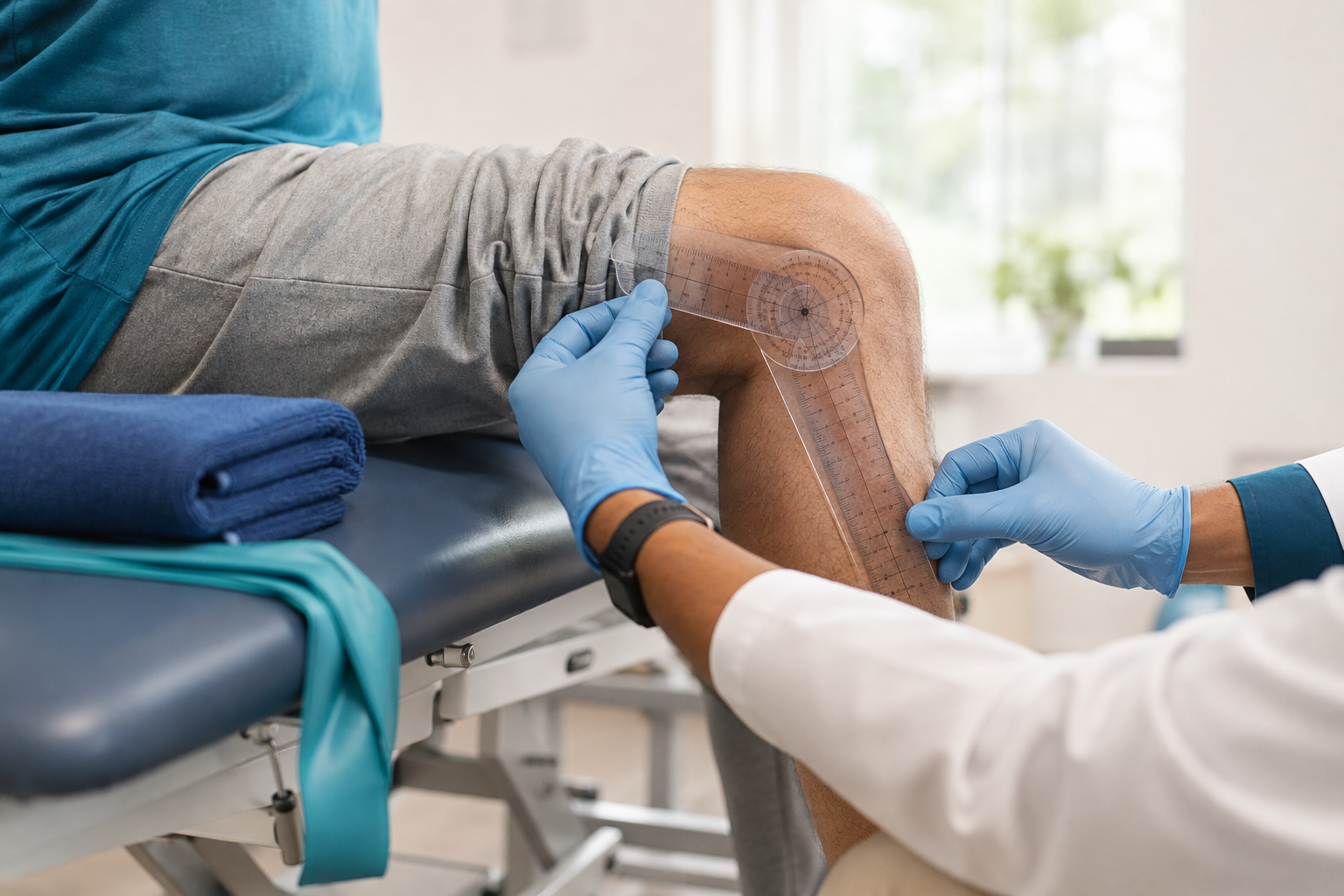
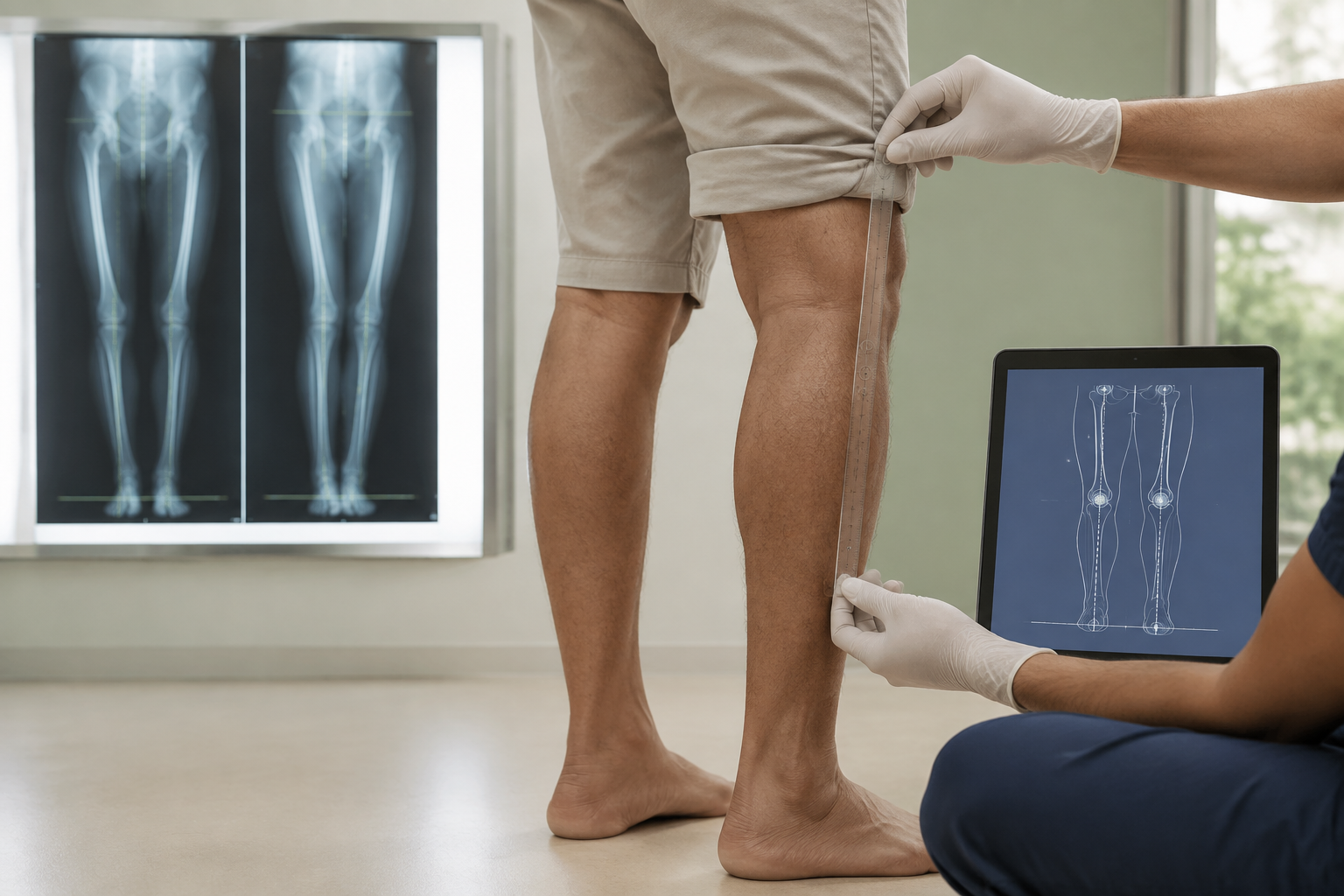
| Leg-length planning | Measurement support | Balancing comfort, function, and safety |
| Hip stability | Movement and impingement review | Final stability judgment during surgery |
| Surgical workflow | Navigation and guided preparation in selected systems | Surgeon control and responsibility |
This is the practical difference patients should understand before choosing surgery.
The real question: “Does the robot actually do the surgery?”
No. The robot does not replace the surgeon.
A robotic system may support planning, measurement, and guided execution depending on the platform. But the surgeon evaluates the patient, confirms whether replacement is needed, plans the approach, prepares the joint, places the implant, checks stability, and manages recovery.
This needs to be clear before surgery: robotic assistance is a tool, not an independent surgeon.
AAOS explains that robotic-assisted joint replacement may use special imaging to create a customized 3D plan before surgery and real-time computer navigation during surgery, depending on the system used. This supports planning, but it does not remove the surgeon’s responsibility.
What can 3D planning measure before hip replacement?
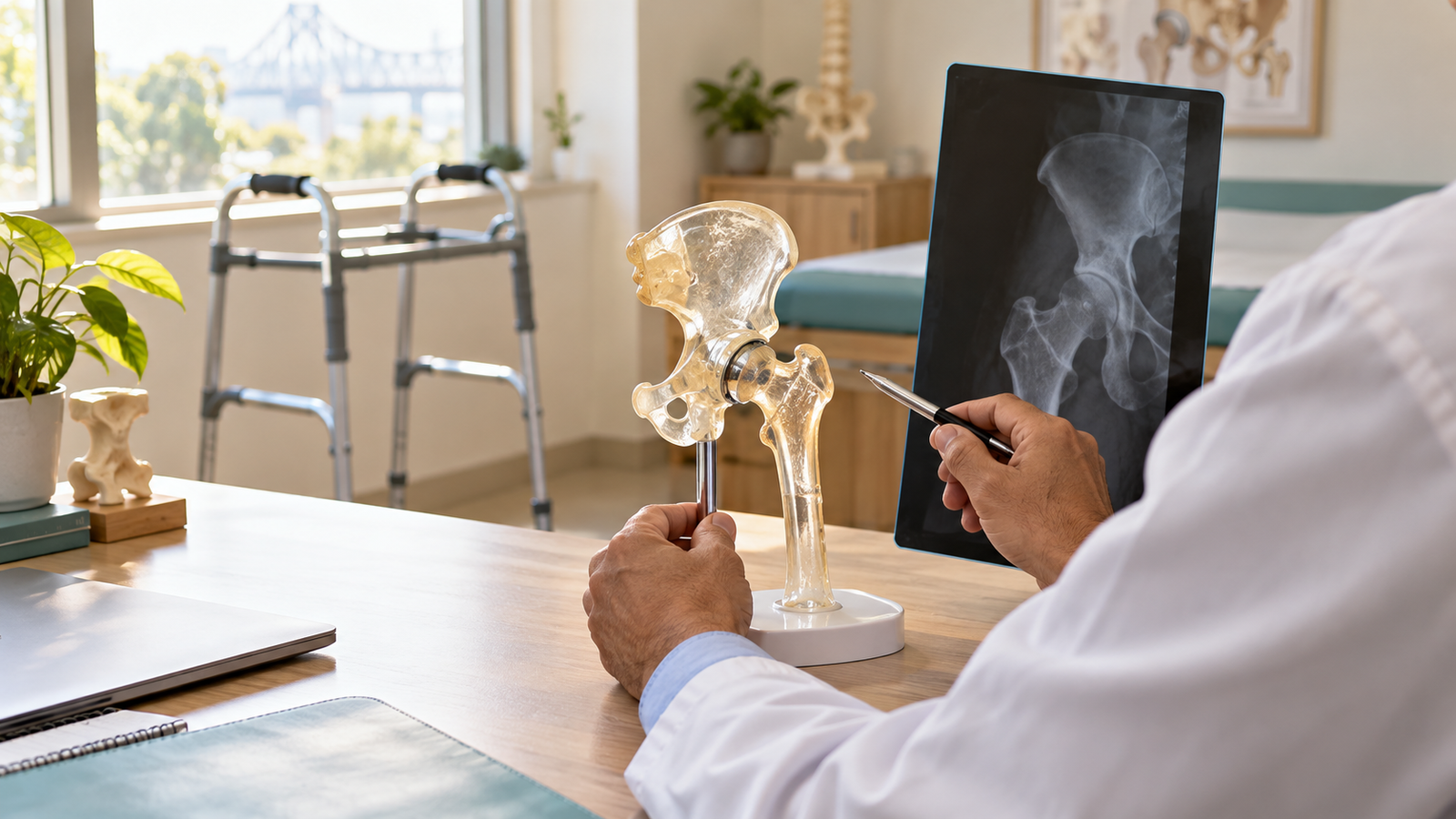
3D planning may help the surgeon study the patient’s hip in more detail before the operation. This can be useful because hip replacement is not only about removing damaged bone and placing an implant. The implant has to work with the patient’s pelvis, thigh bone, soft tissues, walking pattern, and stability needs.
A planning workflow may help assess:
- socket shape
- pelvic anatomy
- femoral head damage
- cup angle
- cup depth
- stem size
- hip offset
- leg-length goal
- possible impingement points
- movement and stability concerns
For patients, the real value is clarity before the operation. The surgeon can go into surgery with a more structured plan instead of relying only on flat X-rays and intraoperative assessment.
Still, no scan or planning system can guarantee a result. Hip replacement remains a medical procedure, and each patient’s anatomy and recovery are different.
How is the implant position planned?
Implant position is one of the most important parts of hip replacement. The artificial ball and socket must move together smoothly, stay stable, and support walking.
The surgeon usually thinks about:
- where the socket cup should sit
- how the thigh-bone stem should fit
- whether the leg length can be balanced
- how much offset is needed for muscle tension
- how stable the joint feels during movement
- whether the hip may impinge in certain positions
- how bone quality affects implant fixation
AAOS describes total hip replacement as a procedure where damaged bone and cartilage are removed and replaced with metal, plastic, or ceramic components. It also notes that the orthopedic surgeon reviews the patient’s history, health, and imaging before surgery.
Robotic planning may support implant-position decisions, but the final responsibility stays with the surgeon.
The hip has to move safely in the body, not just look correct on a screen.
How should patients compare hip replacement surgery in Kolkata?
Patients comparing hip replacement surgery in Kolkata should ask how the surgeon evaluates diagnosis, X-rays, hip anatomy, implant position, leg length, stability, medical fitness, and recovery expectations.
If someone is searching for a hip replacement surgeon in Kolkata or the best hip replacement surgeon in Kolkata, the safer question is not only who uses advanced technology. The better question is who explains the full surgical plan clearly.
A good consultation should cover:
- why replacement is being considered
- whether non-surgical options are still reasonable
- what the X-ray shows
- whether the hip anatomy is straightforward or complex
- how implant position will be planned
- whether robotic or computer-guided planning may help
- how leg length and stability will be checked
- what recovery may realistically involve
Patients may search for the “best” doctor, but medical decisions should not depend only on labels. Clarity, diagnosis, planning, surgical experience, risk discussion, and follow-up matter more than a marketing phrase.
Is robotic planning the same as minimally invasive hip replacement?
Robotic planning and minimally invasive hip replacement are not the same thing.
Robotic planning refers to how implant positioning, measurement, navigation, and surgical guidance may be supported. Minimally invasive hip replacement usually refers to the surgical approach, incision size, and how much tissue is disturbed during the procedure.
Patients searching for minimally invasive hip replacement surgery in Kolkata should ask whether that approach is suitable for their hip anatomy, diagnosis, body type, bone quality, medical condition, and surgeon’s assessment.
AAOS explains that minimally invasive total hip replacement has similar goals to traditional hip replacement, but the surgeon cuts less of the tissue surrounding the hip. It also notes that incision length depends on patient size and procedure difficulty. The key point is simple: smaller incisions does not automatically mean better for every patient. Suitability matters.
Does the robot choose the implant?
No. The robot does not independently choose the implant.
The surgeon selects the implant plan based on diagnosis, X-rays, bone shape, bone quality, hip anatomy, age, activity level, medical condition, surgical approach, and intraoperative findings.
The system may support planning. It may help with positioning. It may provide feedback.
But the surgeon still decides what is appropriate for that patient.
This matters because patients sometimes hear the word “robotic” and assume the technology makes all decisions. A good consultation should explain the plan, not sell the machine.
Which decisions remain with the surgeon?
Many decisions remain surgeon-led before, during, and after hip replacement.
Before surgery, the surgeon decides whether replacement is suitable. Hip pain may come from arthritis, avascular necrosis, old injury, inflammatory disease, or other causes. The correct diagnosis comes first.
During surgery, the surgeon decides how to prepare the bone, position the implant, manage soft tissues, check hip stability, assess leg length, and respond to unexpected anatomy.
After surgery, the surgeon guides wound care, walking instructions, physiotherapy, follow-up X-rays, restrictions, and recovery milestones.
Technology may support:
- planning
- measurement
- navigation
- implant-position feedback
- documentation
The surgeon remains responsible for:
- diagnosis
- patient selection
- surgical approach
- final implant decisions
- stability assessment
- complication management
- recovery planning
That is why the surgeon’s judgment still leads.
Why this matters for patients with advanced hip pain
Advanced hip pain affects more than walking distance.
Patients may stop using stairs. They may avoid travel. Sitting cross-legged may become impossible. Getting in and out of a car may need effort. Some patients start limping without noticing. Others reduce activity so gradually that the family notices the change first.
By the time hip replacement is discussed, many patients are not only asking for pain relief. They want confidence in movement again.
That confidence comes from planning.
Implant position, leg length, stability, muscle strength, bone quality, and rehabilitation all influence recovery. Robotic planning may help in selected cases, but it is still one part of the full treatment pathway.
Dr. Manoj Kumar Khemani may be relevant for patients who need evaluation for advanced hip arthritis, implant-position planning, hip replacement suitability, and robotic-assisted joint replacement options. Heal My Bones explains this topic because patients deserve to understand the difference between technology support and surgeon-led care.
When should a patient discuss robotic planning before hip replacement?
Patients should discuss robotic planning when hip pain has started affecting daily life and surgery is being considered after proper orthopedic evaluation.
This discussion may be especially useful when there is:
- advanced hip arthritis
- severe joint-space loss
- stiffness
- leg-length concern
- abnormal hip shape
- previous hip injury
- avascular necrosis-related joint damage
- failed non-surgical treatment
- concern about implant positioning
- anxiety about stability after surgery
This does not mean every patient must choose robotic-assisted surgery. It means the patient should know whether the planning workflow adds value in their specific case.
A clear explanation helps the patient make a calmer decision.
FAQ
Does robotic hip replacement mean the robot performs the surgery?
No, robotic hip replacement does not mean the robot performs the surgery independently. Robotic-assisted systems may support planning, navigation, and guided execution depending on the platform, but the surgeon remains responsible for the operation. Patients should ask what the system does during their specific procedure and what decisions remain surgeon-led.
How does 3D planning help before hip replacement surgery?
3D planning may help the surgeon study hip anatomy, implant sizing, cup position, stem position, offset, and leg-length goals before surgery. The exact workflow depends on the robotic or computer-guided platform being used. Patients should ask whether special imaging is needed and how the plan will be used during surgery.
How should I choose a hip replacement surgeon in Kolkata?
Choose a surgeon who explains the diagnosis, X-ray findings, surgical need, implant planning, risks, recovery expectations, and follow-up clearly. Search terms like “best hip replacement surgeon in Kolkata” can help patients shortlist options, but the consultation should focus on clinical clarity rather than promotional claims. Patients should carry X-rays, medical records, medicine lists, and previous treatment details for a more useful review.
Is minimally invasive hip replacement the same as robotic hip replacement?
Minimally invasive hip replacement and robotic hip replacement are different concepts. Minimally invasive surgery relates to incision and tissue handling, while robotic assistance relates to planning, navigation, and implant positioning support. Patients should ask which approach is suitable for their anatomy, diagnosis, body type, bone quality, and surgeon’s judgment.
Practical next step
Hip replacement should not be chosen because a term sounds advanced.
Robotic planning may help.
3D measurement may help.
Navigation may help.
But the patient still needs a surgeon-led plan.
Before deciding, ask what is damaging the hip, whether replacement is truly needed now, how the implant position will be planned, how leg length and stability will be checked, and what robotic planning may add in your case.
A confident decision begins with a clear explanation.
Medical Disclaimer
This article is for general educational purposes only and should not be taken as personal medical advice, diagnosis, or treatment recommendation. Hip replacement surgery, robotic-assisted planning, minimally invasive approaches, implant positioning, surgical suitability, risks, recovery, and rehabilitation vary from patient to patient. Please consult a qualified orthopedic surgeon with symptoms, X-rays, medical history, current medicines, and physical examination findings before making any treatment decision.