A stiff arthritic knee that does not bend past 90° can make ordinary movements feel planned. Sitting on a low chair, climbing stairs, entering a car, using the toilet, or getting up from bed may become difficult. When knee arthritis reaches this stage, treatment decisions need more than an X-ray report because stiffness, contracture, pain, muscle weakness, and reduced range of motion can all affect surgery planning and recovery expectations.
Why does a stiff arthritic knee become hard to bend?
A severely stiff knee may lose movement because arthritis can affect cartilage, bone edges, joint lining, soft tissues, muscles, and the way the knee has been used for months or years. Longstanding pain often makes patients avoid bending, and that reduced movement can gradually make the joint feel tighter.
Patients with reduced bending, stair difficulty, knee gap concerns, and arthritis-related stiffness may need a structured knee arthritis evaluation in Kolkata that connects symptoms, X-ray findings, range of motion, walking ability, stiffness pattern, and treatment planning.
| Functional restriction | What patients may notice | Why it matters |
|---|---|---|
| Mild restriction | Slight difficulty with stairs or long sitting | Early stiffness may still respond to guided care |
| Moderate restriction | Trouble with low chairs, car entry, or bending | Function is starting to reduce clearly |
| Severe restriction | Knee does not bend near 90° or straightening is poor | Surgery planning and recovery expectations may become more complex |
| Fixed contracture | Knee stays bent even while lying down | Alignment, walking, and implant planning need closer review |
| Pain-limited movement | Patient can bend only with pain or fear | Pain source and muscle guarding must be assessed |
This is why a stiff knee should not be judged only by the phrase “joint gap.” The actual movement of the knee matters.
The real-life problem: “I can walk, but I cannot bend”
This is a common complaint in knee arthritis.
The patient may still walk across a room or take a short walk outside. But sitting down becomes a task. Getting into a car needs adjustment. Stairs feel tighter than before. A low chair suddenly feels too low.
For some patients, the biggest problem is not constant pain. It is the feeling that the knee has stopped cooperating.
They start changing small habits without noticing it at first. They avoid floor sitting. They choose higher seats. They take extra support while standing up. They may even plan outings around whether the place has stairs or comfortable seating.
That is when stiffness becomes a real quality-of-life issue.
A knee that cannot bend well may still allow short-distance walking, so the problem can be underestimated. But bending difficulty affects daily independence in a different way. It changes how a person sits, travels, climbs, rests, and moves inside the home.
On Manoj Kumar Khemani’s official website, this point is explained because advanced knee arthritis is not only about pain control. When movement starts reducing, the treatment plan has to consider stiffness, function, and realistic recovery expectations together.
Why does arthritis make the knee stiff?
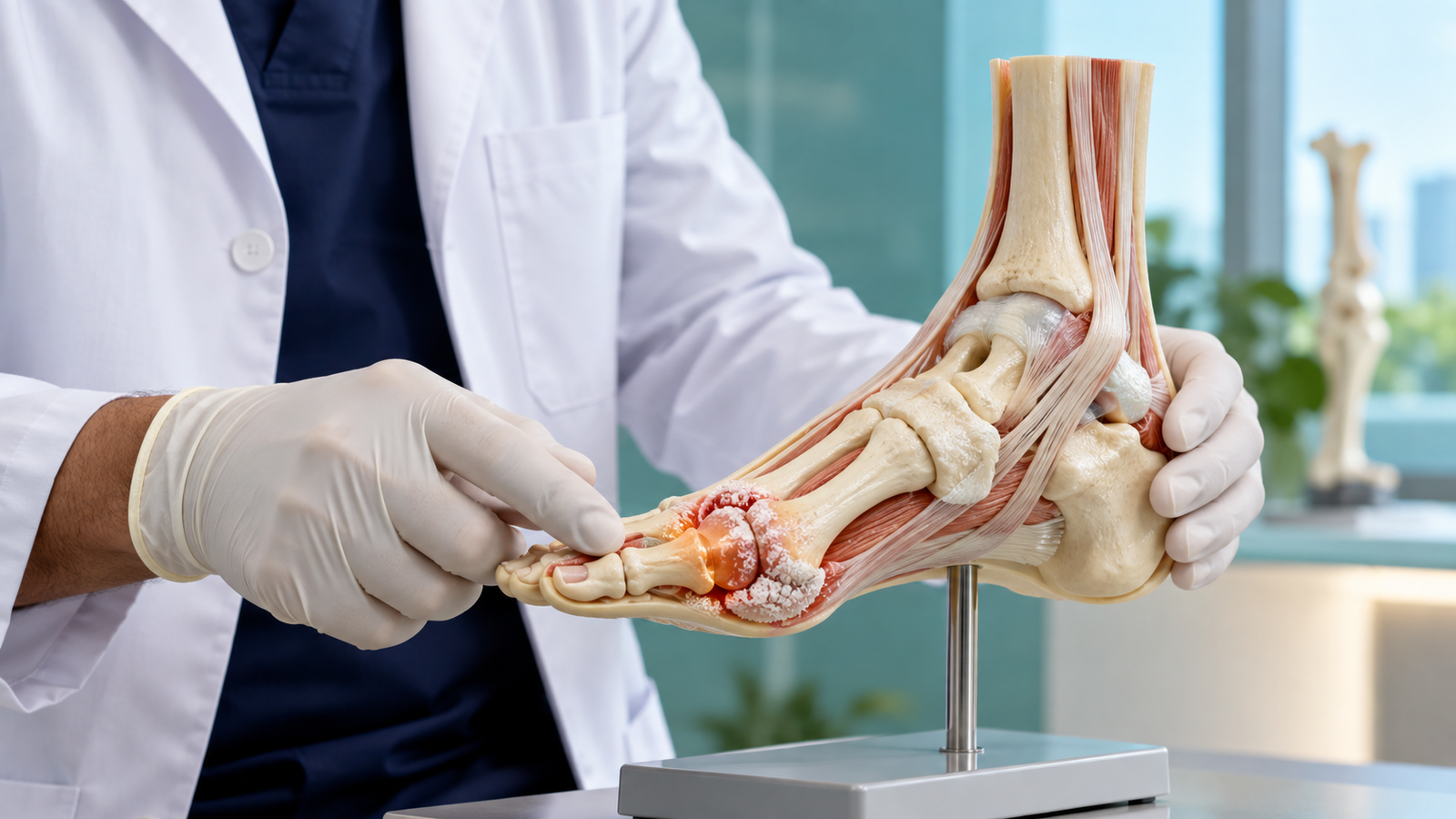
Arthritis can make the knee stiff when joint surfaces become rough, cartilage loss progresses, bone spurs form, inflammation irritates the joint lining, and surrounding muscles become weaker or guarded.
Pain also changes behaviour.
When a person avoids bending the knee for months, the joint may gradually feel tighter. The thigh muscles may lose strength. The back of the knee may feel contracted. Some patients also lose the ability to fully straighten the leg, which can change walking posture and increase tiredness.
AAOS describes severe knee pain or stiffness that limits everyday activities, including walking, stair climbing, and getting in or out of chairs, as one reason knee replacement may be considered in suitable patients.
A stiff knee is not only uncomfortable. It changes function.
Does movement before surgery matter?
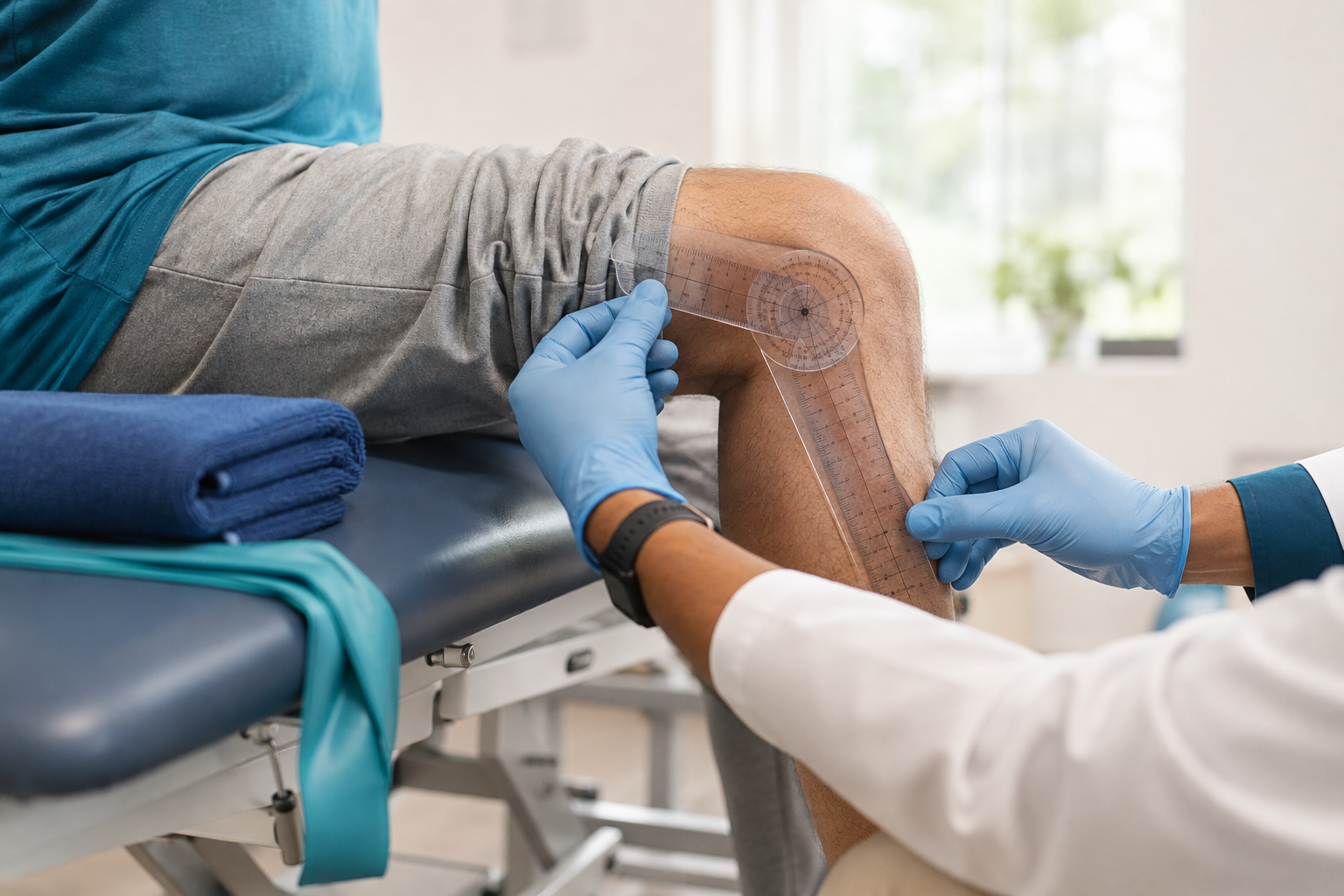
Yes. Movement before surgery matters because the knee’s bending and straightening ability gives the surgeon useful information about stiffness severity, soft-tissue tightness, muscle control, and realistic recovery expectations.
A knee that bends well before surgery and a knee that barely crosses 90° do not behave the same way.
A severely restricted knee may need more careful planning because the surgeon has to understand:
- how much bending is possible before treatment
- whether the knee can fully straighten
- whether stiffness is fixed or pain-limited
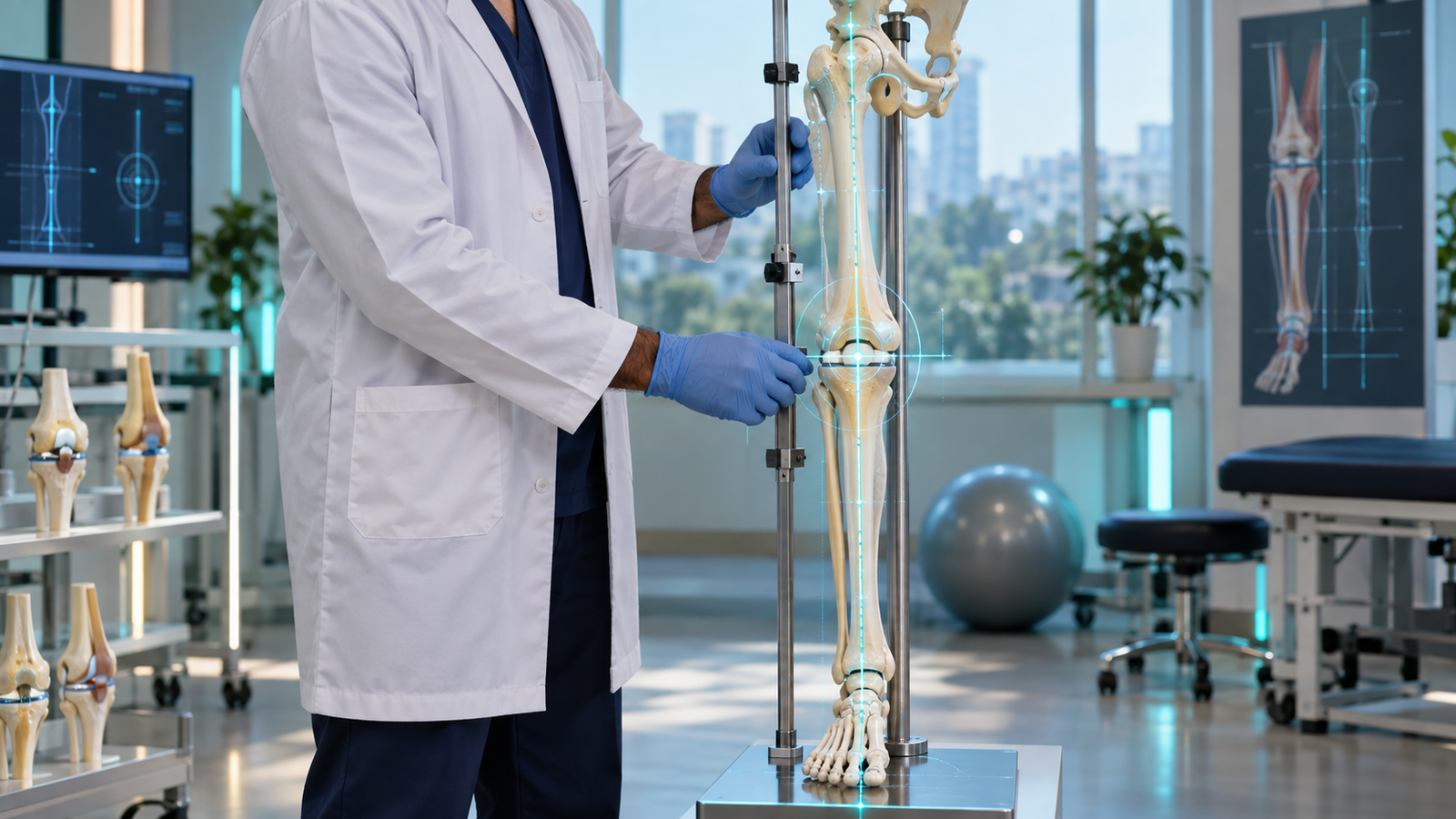
- whether deformity is also present
- whether the kneecap moves properly
- whether muscles have weakened from long-term disuse
- whether swelling or inflammation is active
- how much recovery of movement is realistic
This is where honest counselling matters.
Patients may hope that surgery will make the knee “fully normal.” That expectation needs to be handled carefully. Treatment may improve pain and function in many suitable cases, but movement recovery depends on pre-operative stiffness, soft-tissue condition, rehabilitation, swelling control, medical fitness, and follow-up.
What makes a stiff knee replacement technically difficult?
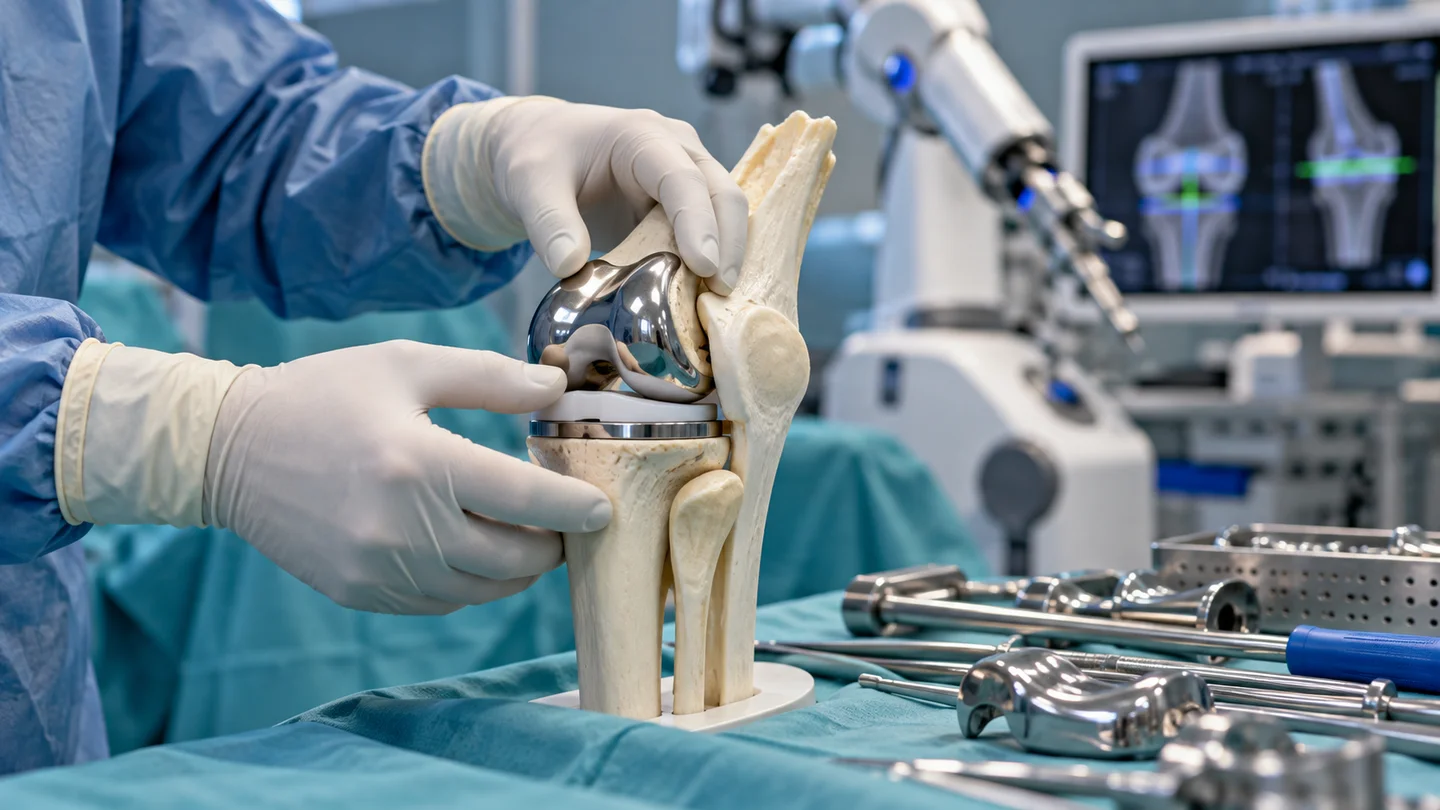
A stiff knee replacement can be technically more demanding because the surgeon is not only replacing damaged joint surfaces. The surgeon also has to manage tight tissues, restricted movement, bone changes, deformity, kneecap tracking, and soft-tissue balance.
In a very stiff knee, exposure can be more difficult. The joint may not open easily. Bone spurs may block movement. The kneecap may be tight. The back of the knee may have contracture. Ligaments and soft tissues may not balance like they would in a more flexible knee.
This does not mean surgery cannot be done.
It means planning needs to be more detailed.
A good evaluation should connect the patient’s range of motion with X-ray severity, walking ability, deformity, pain pattern, and medical fitness. For patients searching for osteoarthritis treatment in Kolkata, this kind of assessment is more useful than simply asking whether the arthritis is “grade 3” or “grade 4.”
Can mobility improve afterward?
Mobility may improve after treatment when pain reduces, inflammation settles, muscles strengthen, and the knee is guided through proper rehabilitation. But improvement is not identical for every patient.
AAOS notes that improving knee motion is one goal of total knee replacement, but restoration of full motion is uncommon. Its guidance also highlights the role of exercise after surgery in maintaining strength and mobility.
That is why recovery expectations should be discussed before any major decision.
A patient with long-standing stiffness may need:
- realistic bending goals
- supervised physiotherapy
- swelling control
- gradual strengthening
- walking practice
- safe stair training
- close follow-up
- patience with recovery timelines
The aim is not to promise a perfect bend. The aim is to build a plan that matches the knee’s condition.
Why “knee gap treatment at home” can be misleading
Many patients search online for “knee gap treatment at home” or home remedies because they want to avoid surgery and control the pain themselves. That is understandable.
But when a knee is not bending, not straightening, swelling repeatedly, or becoming visibly deformed, home remedies cannot measure cartilage loss, bone alignment, contracture, ligament balance, or treatment suitability.
Home care may support mild symptoms. It may include activity pacing, weight management, safe exercises, and pain-control strategies advised by a doctor. But severe stiffness needs a proper examination.
NICE recommends core osteoarthritis care such as information, therapeutic exercise, and weight management where appropriate. NICE also recognises referral for joint replacement consideration when pain, stiffness, reduced function, or progressive deformity substantially affects quality of life and non-surgical management is ineffective or unsuitable.
So the question is not only, “Can I manage arthritis at home?”
The better question is, “Is my stiffness still safe to manage conservatively, or does it need specialist review?”
When should patients look for an arthritis specialist in Kolkata?
Patients searching for arthritis treatment in Kolkata should get the knee examined when stiffness affects sitting, stairs, walking, car entry, toilet use, sleep, work, or daily independence.
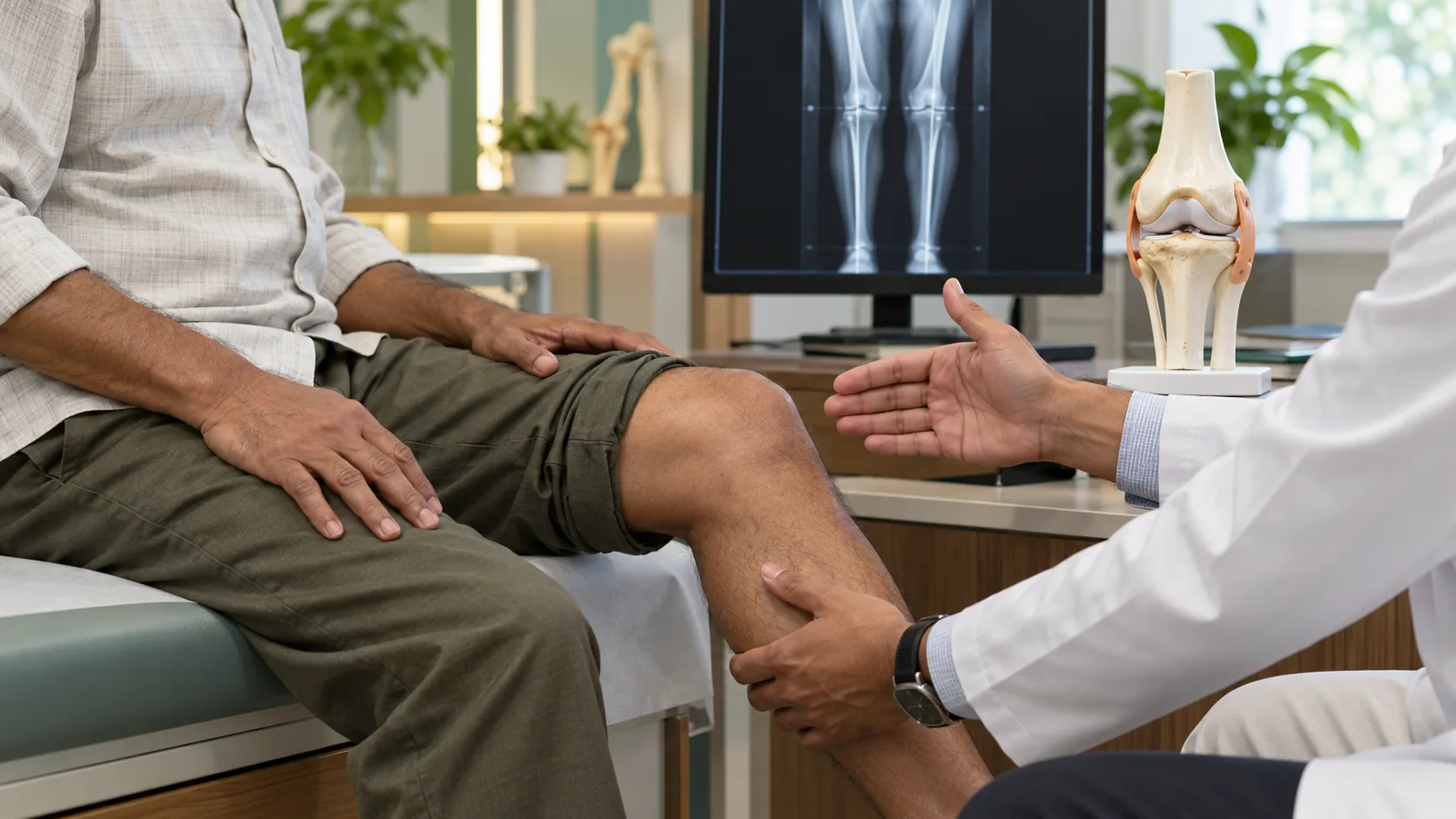
A specialist review should not focus only on the X-ray grade. It should check range of motion, swelling, deformity, pain pattern, muscle strength, walking ability, and whether non-surgical care is still suitable.
Patients looking for an arthritis specialist in Kolkata should also explain how long the knee has been stiff, whether it fully straightens, and which movements are now difficult. These details often give a clearer picture than saying only, “I have arthritis.”
People searching for the best osteoarthritis doctor in Kolkata should avoid judging only by online claims. A more useful way to choose is to check whether the consultation explains range of motion, X-ray findings, deformity, pain source, treatment options, surgery suitability, and realistic recovery goals.
Dr. Manoj Kumar Khemani may be relevant for patients who need orthopedic assessment when knee arthritis causes severe stiffness, reduced bending, functional limitation, or concern about future surgery.
How severe stiffness changes recovery expectations
A stiff knee often needs more preparation before treatment and more discipline afterward.
The patient may need to understand that recovery is not only about the operation, injection, medicine, or exercise sheet. It is also about swelling control, pain-guided movement, muscle activation, walking practice, and follow-up.
If the knee has been stiff for years, the body has adapted to that stiffness.
That adaptation takes time to change.
Patients should also tell the doctor how the stiffness affects daily life. A number like 90° matters, but the daily struggle matters too. Trouble with chairs, stairs, car entry, toilet use, and walking speed often gives a clearer picture than a pain score alone.
The Heal My Bones resource helps patients understand why arthritis care should connect symptoms, movement, X-rays, and realistic planning instead of depending only on home remedies or painkillers.
FAQ
Is it serious if my arthritic knee will not bend past 90 degrees?
A knee that cannot bend past 90 degrees should be evaluated when it affects sitting, stairs, walking, or daily function. Severe stiffness may be linked with advanced arthritis, contracture, swelling, pain guarding, deformity, or mechanical restriction. Patients should bring X-rays and describe which daily movements have become difficult.
Can arthritis stiffness improve without surgery?
Arthritis stiffness may improve with guided exercise, swelling control, weight management, medicines, and activity modification in selected cases. Improvement depends on arthritis severity, deformity, inflammation, muscle weakness, and how long the knee has been stiff. A specialist review helps decide whether non-surgical care is still reasonable.
Does poor knee bending before replacement affect recovery?
Poor knee bending before replacement can affect recovery expectations because long-standing stiffness may not reverse completely. Final movement depends on pre-operative range, soft-tissue tightness, pain control, swelling, surgical planning, physiotherapy, and patient health. Patients should ask what bending goal is realistic for their knee.
Can arthritis stiffness be cured completely?
Arthritis stiffness may improve with the right treatment plan, but a complete cure depends on arthritis type, severity, joint damage, stiffness duration, and deformity. Longstanding knee osteoarthritis often needs ongoing management rather than a one-time cure. A doctor can check whether exercise, medicine, weight management, injection, or surgical evaluation is appropriate.
Practical next step
A knee that will not bend past 90° is not just painful. It is functionally restricted.
That restriction can change treatment planning, recovery expectations, physiotherapy needs, and surgical complexity in suitable patients. The next step is not to guess from the X-ray grade alone.
Measure the problem in daily life.
Can the knee bend enough to sit? Can it straighten while lying down? Can the patient climb stairs, enter a car, or walk without fear?
Those answers help the doctor understand the real impact of arthritis and plan care more safely.
Medical Disclaimer
This article is for general educational purposes only and should not be taken as personal medical advice, diagnosis, or treatment recommendation. Knee arthritis, stiffness, range of motion, contracture, X-ray findings, medicines, physiotherapy, injections, surgery suitability, recovery, and rehabilitation vary from patient to patient. Please consult a qualified orthopedic doctor with your symptoms, reports, medical history, current medicines, and examination findings before making any treatment decision.