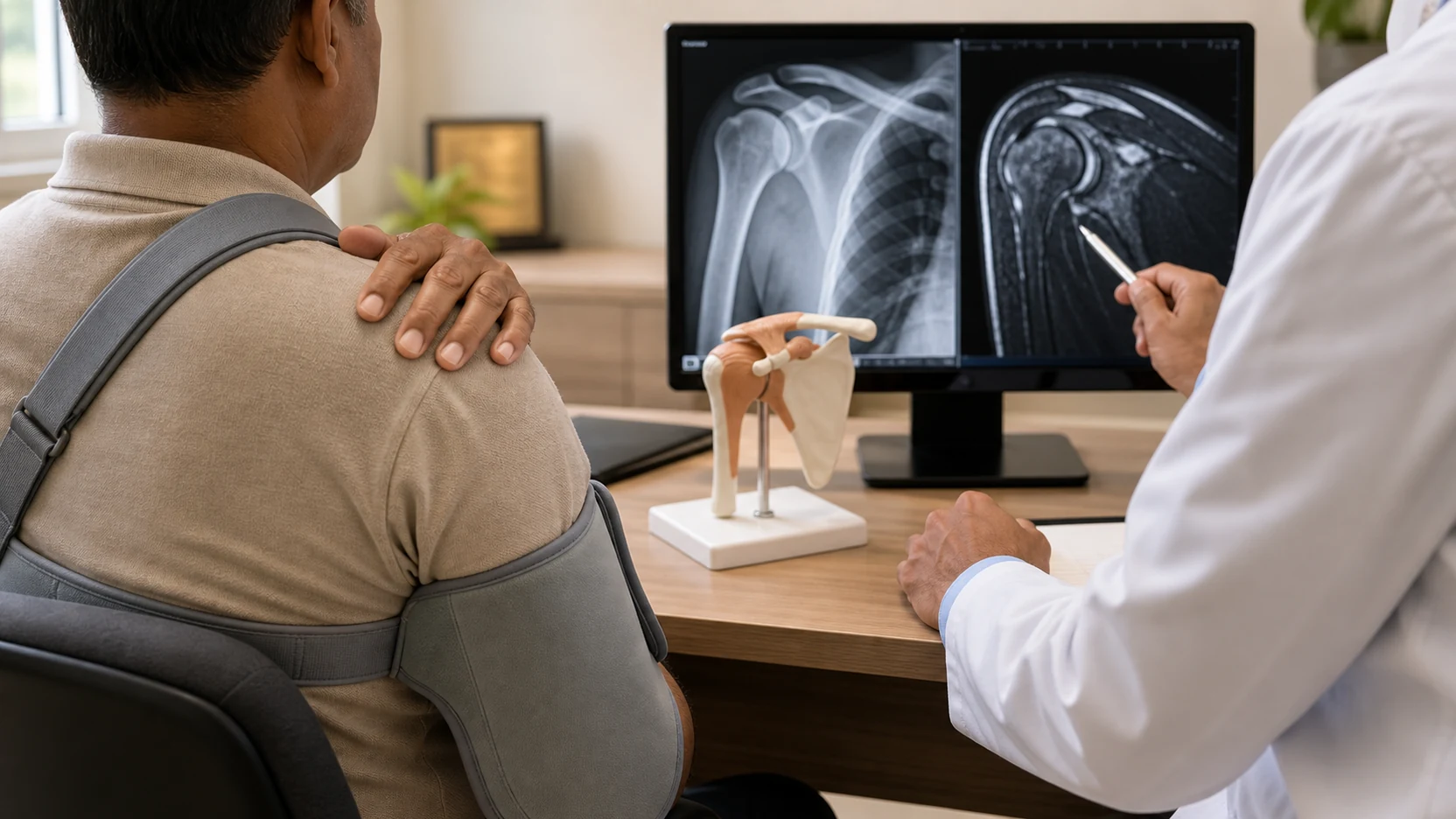
Frozen shoulders mainly cause stiffness because the shoulder capsule becomes tight. Shoulder arthritis causes pain and stiffness because the smooth joint surface becomes damaged. Both can make arm movement painful, but treatment planning is different, especially when shoulder joint replacement in Kolkata is being considered for advanced arthritis.
For patients with long-standing shoulder pain, stiffness, grinding, or reduced movement, specialist-led shoulder arthritis and joint replacement evaluation can help confirm whether the problem is frozen shoulder, arthritis, or another shoulder condition.
Here is the easiest way to separate the three common possibilities:
| Condition | Main problem | What patients usually notice |
|---|---|---|
| Frozen shoulder | Tight shoulder capsule | "My shoulder feels locked, especially when I rotate the arm." |
| Shoulder arthritis | Damaged joint surface | "The pain feels deep, movement is stiff, and the shoulder may grind." |
| Rotator cuff problem | Tendon weakness or tear | "I can move the arm, but lifting feels weak or painful." |
This difference matters because the wrong label can delay the right treatment. A stiff shoulder is not always a frozen shoulder. A painful shoulder is not always arthritis.
The patient's problem: "I thought it was frozen shoulder, but the pain is not going away"
Many patients first call any painful, stiff shoulder a frozen shoulder. It sounds familiar. Friends may have had it. A physiotherapist may have mentioned it. Someone in the family may say, "Do exercises, it will open up."
Sometimes that is true. But not always.
A patient may struggle to wear a shirt, reach behind the back, comb hair, lift a small bag, or sleep on the affected side. These problems can happen in frozen shoulder, shoulder arthritis, and rotator cuff disease. The symptoms overlap enough to confuse people.
At Heal My Bones, we usually look closely at the pattern. Is the shoulder stiff in all directions? Is there weakness while lifting? Does the pain feel deep inside the joint? Is there a grinding sound? Is the pain worse at night? Did it start after an injury, or did it come slowly?
The answers often guide the diagnosis before any advanced discussion begins.
The common mistake is treating every stiff shoulder as a frozen shoulder for months. If the problem is actually arthritis, only stretching may not solve the joint-surface damage. If the problem is a frozen shoulder, jumping too early to a surgery discussion can create unnecessary fear.
How Frozen Shoulder Pain Feels in Daily Movement
Frozen shoulder, also called adhesive capsulitis, usually starts with pain and gradually increases stiffness. The shoulder capsule tightens, so movement becomes restricted even when someone else tries to move the arm.
Patients often say the shoulder feels blocked. Reaching behind the back becomes difficult. Wearing a shirt or blouse becomes painful. Sleeping on that side may become uncomfortable. In some cases, even small movements suddenly hurt.
The American Academy of Orthopaedic Surgeons explains that frozen shoulders cause pain and stiffness and can make the shoulder very hard to move over time. That matches what many patients describe in daily life: the shoulder feels less like a painful muscle and more like a locked joint.
One clinical clue is passive movement. In the case of a frozen shoulder, the patient cannot move the arm fully, and the doctor may also find the shoulder difficult to move during examination. That is different from some tendon problems, where the patient may be weak or painful while lifting, but passive motion may remain better.
Treatment for frozen shoulders is usually not replacement surgery. It often involves pain control, guided physiotherapy, stretching, home exercises, and sometimes injections depending on the stage and clinical judgment.
How does shoulder arthritis pain feel?
Shoulder arthritis pain is usually deeper, more joint-based, and often linked with stiffness, grinding, and reduced function. The patient may feel that the shoulder is wearing out rather than simply tightening.
Some describe a rough sensation during movement. Others say the shoulder aches after use and becomes stiff after rest. Night pain may occur as arthritis progresses. Reaching overhead, pushing, lifting, bathing, dressing, and sleeping can all become difficult.
In shoulder arthritis, the problem is not only stiffness. The joint surface is damaged. In advanced cases, the smooth cartilage wears down, the joint space reduces, and bone changes may develop. This can make movement painful even when the patient tries to push through exercises.
X-rays become important here. Clinical examination tells us how the shoulder is moving, but imaging helps show whether the joint surface is damaged, how severe the arthritis is, and whether shoulder replacement surgery should even be discussed.
This is where the diagnosis changes the treatment pathway. Frozen shoulder often improves with time and guided care. Advanced arthritis may need a different conversation if pain and function remain poor despite non-surgical treatment.
When does shoulder arthritis surgery or replacement become necessary?
Shoulder arthritis surgery may be discussed when pain, stiffness, reduced function, or joint damage continues despite appropriate non-surgical care. Replacement is not considered only because an X-ray shows arthritis. It becomes more relevant when the shoulder problem is affecting daily life, sleep, independence, and arm use.
The NICE osteoarthritis guideline recommends considering joint replacement referral for hip, knee, or shoulder osteoarthritis when pain, stiffness, reduced function, or progressive deformity substantially affects quality of life and non-surgical care is ineffective or unsuitable. Patients can review the official NICE osteoarthritis recommendations for this referral principle.
A patient may need replacement evaluation if the shoulder pain is persistent, sleep is disturbed, movement is reduced, X-rays show advanced joint wear, or routine activities like dressing, bathing, reaching, cooking, and carrying objects are becoming difficult.
This does not mean surgery is automatic.
A good evaluation should first ask: Have medicines, activity modification, physiotherapy, injections, and time been used appropriately? Is the rotator cuff working? Is arthritis truly advanced? Is the patient medically fit? What does the patient expect from surgery?
These questions matter because shoulder joint pain surgery is not a shortcut. It is a carefully planned decision for selected patients.
Total shoulder replacement vs reverse shoulder replacement:
Patients often hear terms like total shoulder replacement and reverse shoulder replacement and assume they are the same. They are not.
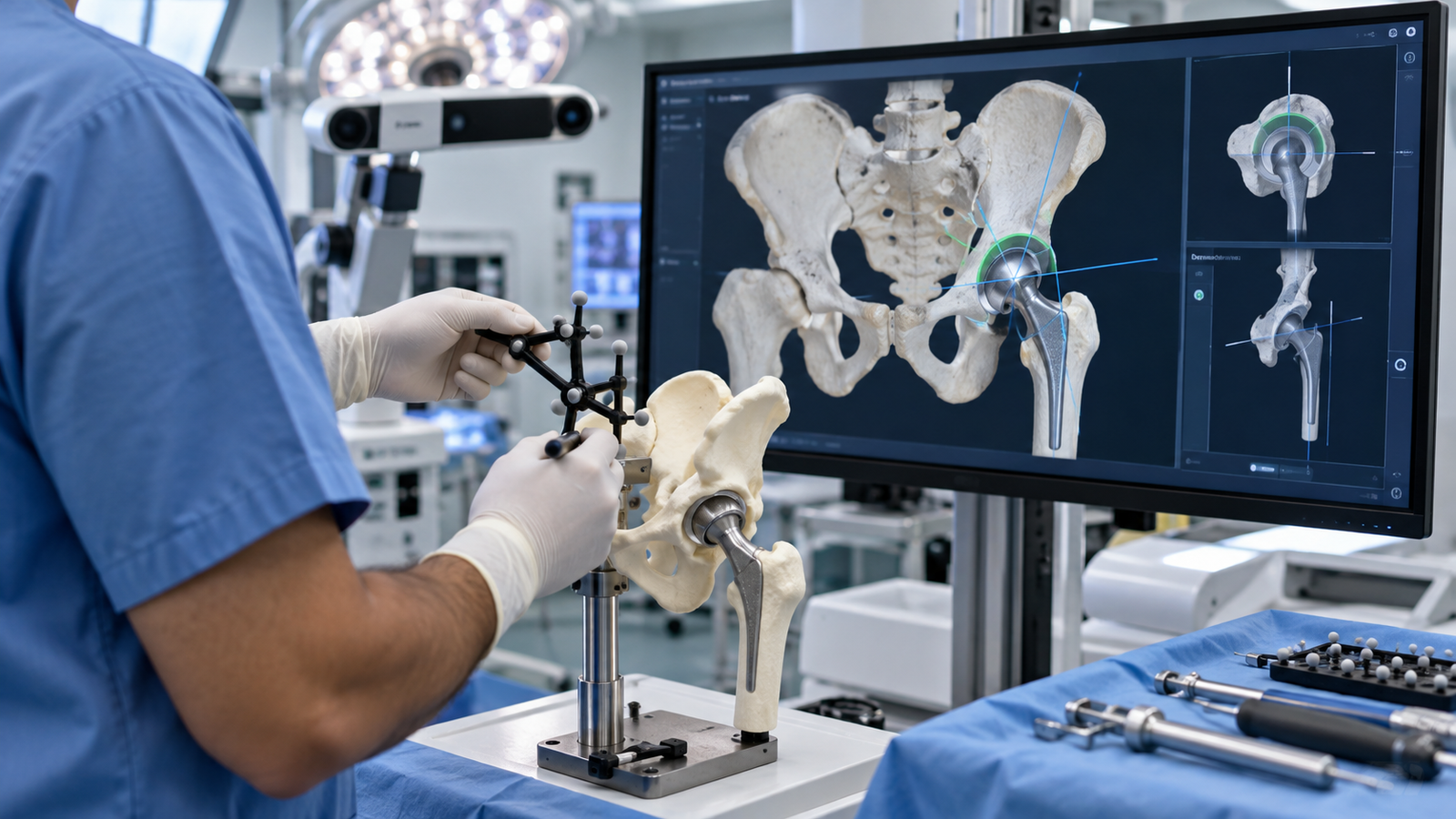
In a total shoulder replacement, the damaged ball-and-socket surfaces of the shoulder joint are replaced in a way that follows the usual shoulder anatomy. This option is commonly considered when the shoulder joint surface is damaged but the rotator cuff is functioning well enough.
Reverse shoulder replacement is different. It changes the mechanics of the shoulder so that other muscles, especially the deltoid, can help move the arm when the rotator cuff is badly damaged or not functioning properly. It may be considered in selected cases of severe arthritis with rotator cuff deficiency, complex shoulder damage, or certain revision situations.
The choice is not made by preference alone. It depends on X-rays, rotator cuff condition, bone quality, age, activity needs, and surgical assessment.
This is why patients should not search only for "best shoulder replacement surgeon" and stop there. The more useful question is whether the surgeon is carefully matching the procedure to the shoulder problem.
What is the usual shoulder replacement recovery time?
Shoulder replacement recovery time varies because the shoulder condition, implant type, rotator cuff status, pain level, age, medical health, and physiotherapy plan are not the same for every patient.
Many patients use a sling in the early phase. Movement is usually increased gradually under medical and physiotherapy guidance. Early recovery may focus on wound healing, pain control, safe movement, and protecting the repair. Later stages focus on strength, flexibility, and returning to daily activities.
The mistake is expecting instant recovery because the damaged joint has been replaced. Surgery is one part of treatment. Rehabilitation is the second half.
Patients should ask the surgeon what they can do in the first few weeks, when they can start active movement, when they may return to household work, and which activities should be avoided during healing. A realistic recovery plan prevents frustration.
When Should You See an Orthopedic Doctor for Shoulder Pain?
You should see an orthopedic doctor when shoulder pain, stiffness, weakness, or restricted movement starts affecting daily activities such as dressing, bathing, sleeping, lifting, or reaching overhead. A proper examination can help identify whether the problem is frozen shoulder, shoulder arthritis, rotator cuff disease, or another shoulder condition.
For patients in Kolkata, the consultation should focus on finding the actual cause of pain before choosing treatment. If arthritis is suspected, the doctor may review X-rays, check shoulder movement, assess rotator cuff function, and discuss whether non-surgical care is still suitable or whether replacement evaluation is needed.
Dr. Manoj Kumar Khemani's role fits naturally at this decision stage. A patient may come in thinking it is a case of frozen shoulder, but the examination and X-ray may show arthritis. Another patient may fear surgery, but the shoulder may still be manageable without replacement. At Heal My Bones, the goal is to identify the actual cause before choosing a treatment path.
This approach helps avoid two common errors: continuing the wrong treatment for months or assuming every painful arthritic shoulder needs immediate surgery.
Questions to Ask Before Starting Shoulder Treatment
Patients should ask simple, direct questions during consultation.
Ask whether the pain is more likely from frozen shoulder, arthritis, or a rotator cuff problem. Ask what the X-ray shows. Ask whether physiotherapy is suitable at this stage. Ask whether an injection has a role. If shoulder replacement surgery in Kolkata is being discussed, ask why it is being considered now.
Also ask about risks, implant type, hospital stay, recovery timeline, physiotherapy, and realistic movement after surgery. These are not negative questions. They are part of informed decision-making.
A good consultation should make the diagnosis clearer. It should not make the patient feel rushed.
Shoulder pain affects daily dignity in small ways. Wearing clothes, reaching for a shelf, sleeping comfortably, bathing, cooking, carrying a bag - these are not minor functions. Treatment should be planned around real life, not only the scan report.
FAQ
How can I tell if my shoulder pain is frozen shoulder or arthritis?
Frozen shoulder usually causes a tight, blocked feeling with major restriction in both active and passive movement. Shoulder arthritis more often causes deep joint pain, stiffness, grinding, and X-ray changes showing joint-surface damage. A shoulder examination and imaging review can help confirm the cause before treatment is planned.
When is shoulder replacement needed for arthritis?
Shoulder replacement may be needed when arthritis causes persistent pain, stiffness, sleep disturbance, and reduced arm function despite appropriate non-surgical treatment. X-ray findings, rotator cuff condition, medical fitness, and daily activity limitation all affect the decision. Patients should consult an orthopedic specialist with reports and a clear history of symptoms.
What is the difference between total shoulder replacement and reverse shoulder replacement?
Total shoulder replacement usually follows normal shoulder anatomy and is considered when the joint surface is damaged but the rotator cuff is functioning adequately. Reverse shoulder replacement changes shoulder mechanics and may be considered when the rotator cuff is severely damaged or not functioning well. The choice depends on examination, imaging, bone quality, and surgeon assessment.
What is the recovery time after shoulder replacement surgery?
Recovery after shoulder replacement surgery usually happens in stages and may take several months for better strength, comfort, and function. The timeline depends on implant type, rotator cuff condition, pain control, physiotherapy, wound healing, and the patient's general health. Patients should ask for a surgeon-specific recovery plan before finalizing surgery.
Practical next step
If your shoulder pain is not improving, do not rely only on the label "frozen shoulder." The same pain area can come from different problems, and each one needs a different plan.
Carry your X-rays, previous prescriptions, injection details if any, and a short note on what movements are difficult. Mention whether sleep is affected, whether the shoulder feels weak, and whether you feel grinding during movement.
A structured evaluation with Dr. Manoj Kumar Khemani can help identify whether the problem is frozen shoulder, shoulder arthritis, or another condition - and whether non-surgical care or replacement evaluation is the more suitable next step.
Medical Disclaimer
This article is for general educational purposes only and should not be taken as personal medical advice, diagnosis, or treatment recommendation. Shoulder pain, frozen shoulder, shoulder arthritis, shoulder replacement suitability, implant selection, recovery expectations, and surgical risks can vary from patient to patient. Please consult a qualified orthopedic doctor with your reports, symptoms, medical history, and physical examination findings before making any treatment decision.