Medical review note: This article should be reviewed by Dr Manoj Kumar Khemani before publishing.
Many patients start searching for an orthopedic doctor in Kolkata only after pain begins affecting walking, sleep, stairs, office travel, or basic daily movement. The right specialist is not simply the nearest name on Google. A good consultation should identify the cause of pain, explain whether tests are needed, and give a treatment path that feels practical for the patient's age, activity level, and local travel routine.
For patients from Salt Lake, Bangur Avenue, Lake Town, Kestopur, Dum Dum, and New Town, convenience also matters. Orthopedic recovery often needs follow-up visits, report reviews, physiotherapy coordination, and movement guidance. You can review Dr Manoj Kumar Khemani's Kolkata orthopedic consultation details before shortlisting an appointment.
What should you check before choosing an orthopedic doctor in Kolkata?
The right orthopedic specialist should examine the painful area, understand your movement problem, review reports only when needed, and explain the diagnosis in plain language. A reliable consultation does not jump straight to surgery or long-term medicine; it starts with clinical assessment and a practical plan.
Before booking, check:
- Relevant clinical experience: The doctor should regularly evaluate knee pain, hip stiffness, ligament injuries, fractures, arthritis symptoms, shoulder stiffness, and injury-related swelling.
- Diagnosis-first approach: A proper consultation includes symptom history, physical examination, movement testing, and imaging review where required.
- Hospital access: Even if surgery is not needed, access to a hospital setup helps when scans, procedures, or urgent support become necessary.
- Clear explanation: The patient should understand what is causing the pain, what can be tried first, and when advanced treatment may be needed.
- Follow-up planning: Orthopedic care often needs review after medicines, physiotherapy, injury healing, or scan reports.
- Patient feedback quality: Read reviews for patterns around diagnosis, explanation, waiting time, and post-consultation support.
A simple way to judge a consultation is this: did the doctor explain the problem in a way you can repeat at home? If not, the visit may not have given you enough clarity.
Which symptoms need an orthopedic consultation?
You should consult a bone and joint specialist when pain, swelling, stiffness, weakness, numbness, or reduced movement starts affecting daily function. Mild soreness after overuse may settle with rest, but pain linked to injury, repeated swelling, or movement restriction should not be ignored.
Patients commonly seek help for:
| Symptom | Possible concern | When to book a review |
|---|---|---|
| Knee pain while climbing stairs | Arthritis, kneecap tracking issue, ligament strain, cartilage irritation | If it repeats or affects walking |
| Hip pain while standing or getting out of a chair | Early arthritis, muscle strain, spine-related pain, joint wear | If sitting, standing, or sleep becomes difficult |
| Swelling after a twist or fall | Ligament injury, fracture, joint fluid, soft tissue damage | If swelling appears quickly or keeps returning |
| Shoulder stiffness | Frozen shoulder, tendon irritation, arthritis, old injury | If arm movement is reducing |
| Pain after old injury | Improper healing, instability, chronic inflammation | If pain returns during normal activity |
| Numbness with joint pain | Possible nerve involvement or referred pain | If tingling, weakness, or numbness persists |
MedlinePlus notes that joint symptoms with swelling, numbness, inability to bear weight, or abnormal movement should be assessed by a healthcare provider. Patients can read the neutral medical guidance here: MedlinePlus joint disorders.
In real patient conversations, delay is common. Many people first try painkillers, hot water, massage, or rest. These may give temporary relief, but repeated pain usually needs a proper diagnosis rather than repeated self-treatment.
Why does location matter for orthopedic treatment in Kolkata?
Local access matters because orthopedic treatment is rarely completed in one visit. A patient may need X-ray review, MRI discussion, medicine adjustment, physiotherapy planning, injection follow-up, brace advice, or surgical counselling depending on the diagnosis.
For someone living in Salt Lake, New Town, Bangur Avenue, Lake Town, Kestopur, or Dum Dum, long travel can become a barrier. A patient with knee pain may struggle with stairs. A person with hip stiffness may find long car rides uncomfortable. Someone with a ligament injury may need assistance while walking.
Before selecting a doctor, ask yourself:
- Can I reach the clinic without worsening pain?
- Is the route manageable during Kolkata traffic or rain?
- Can I return easily for follow-up?
- Is there nearby hospital or diagnostic support if needed?
- Can a family member accompany me if walking is difficult?
This is not just a convenience issue. Follow-up compliance affects recovery. Patients who can return for reviews, clarify doubts, and complete physiotherapy usually manage their condition better than those who disappear after the first prescription.
What happens during a good orthopedic consultation?
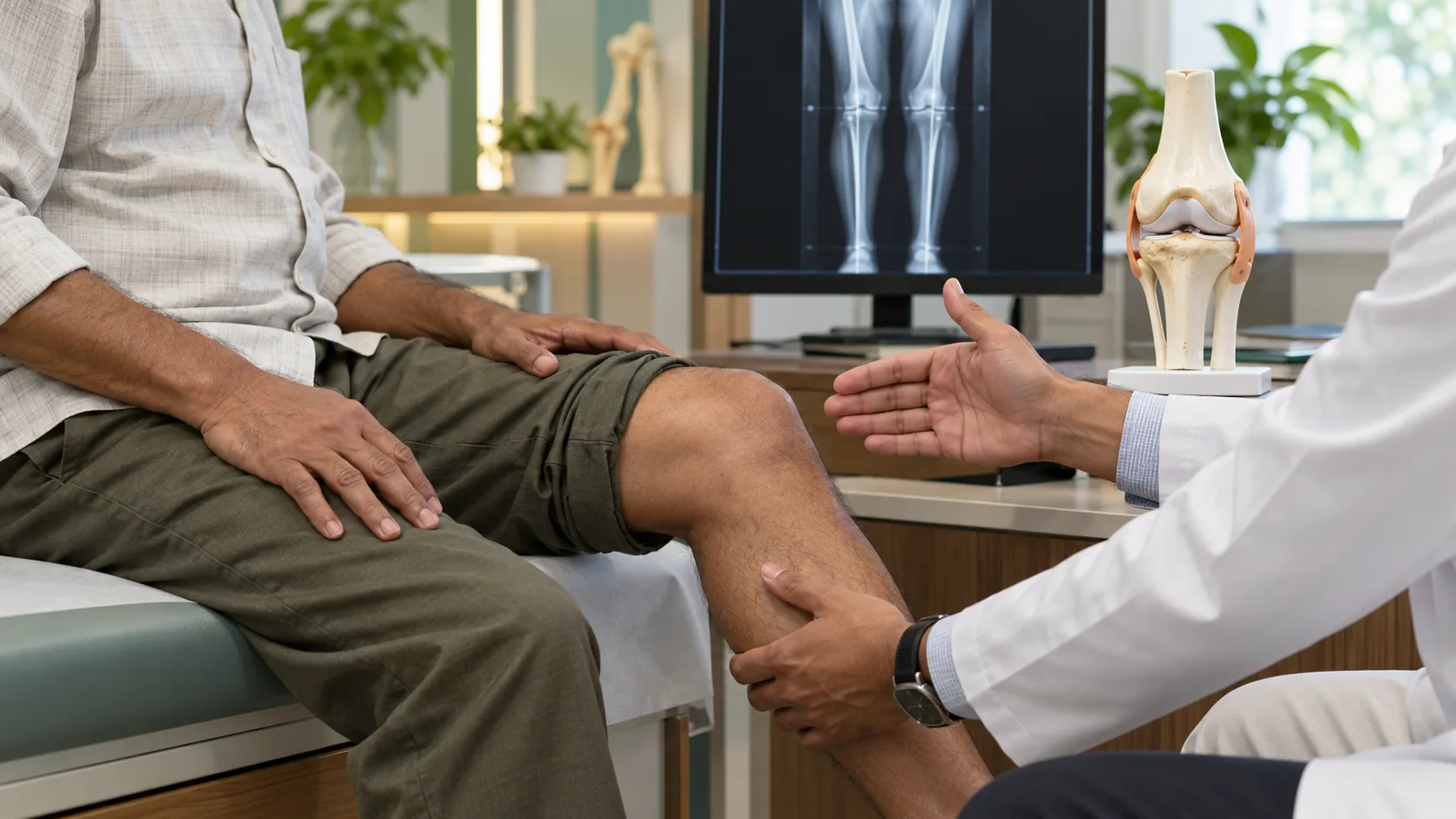
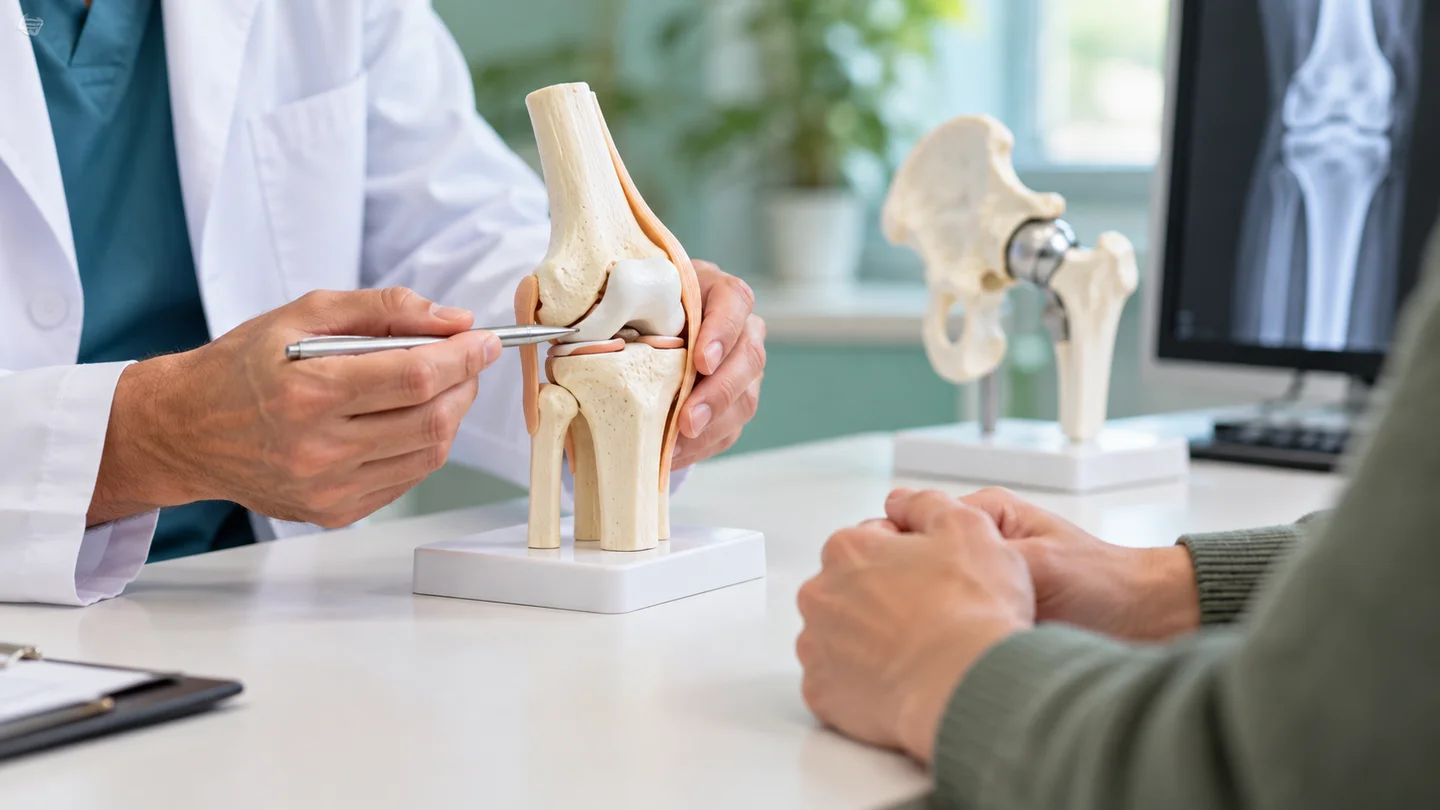
A good orthopedic consultation should feel structured. The doctor should ask when the pain started, what movement worsens it, whether there was an injury, whether swelling appeared, and how much daily activity has changed.
A typical assessment may include:
- checking the painful area
- testing joint movement
- examining swelling, tenderness, deformity, or instability
- assessing walking pattern where relevant
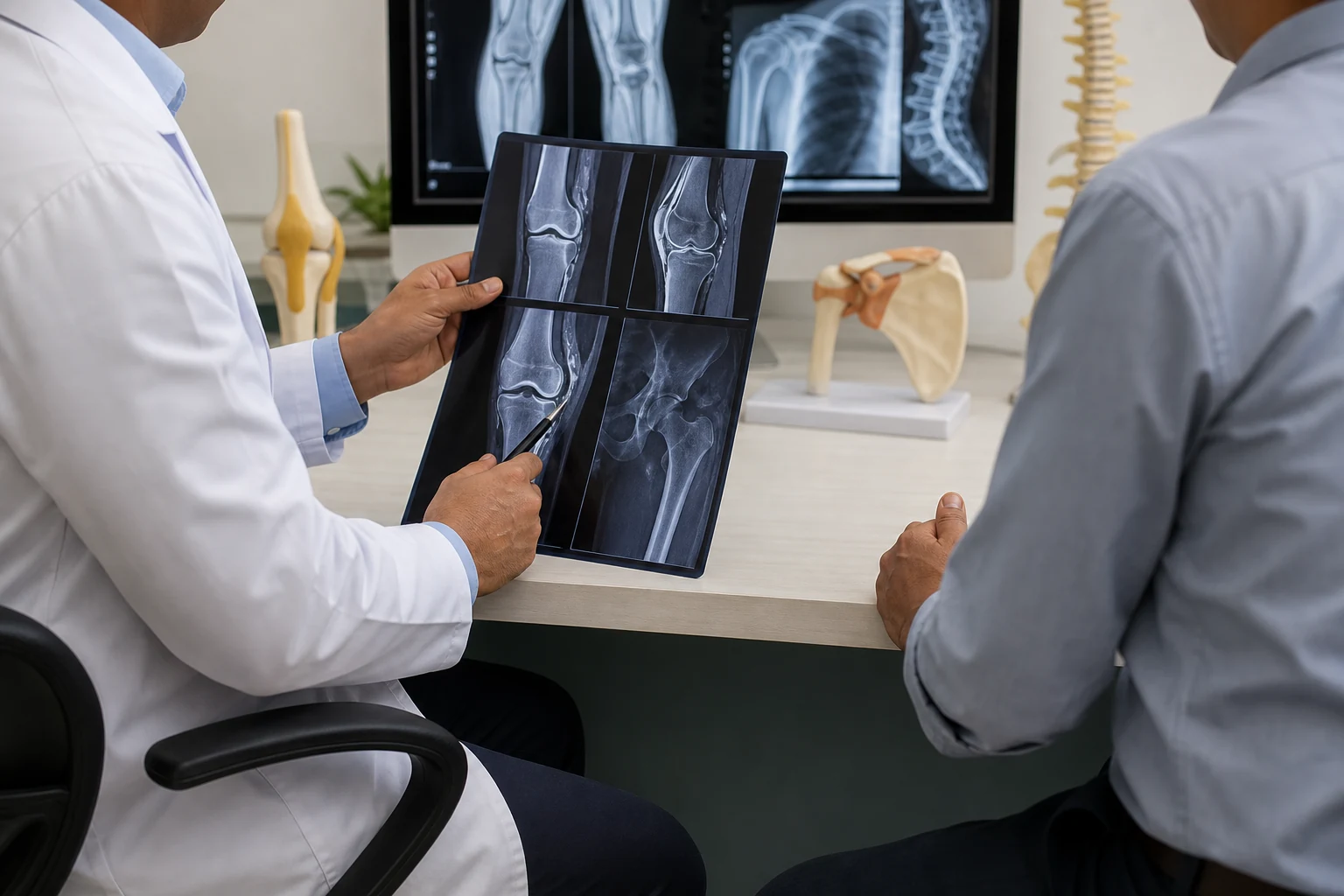
- reviewing previous X-rays, MRI, CT scans, or blood reports
- advising fresh tests only when clinically needed
- explaining treatment options in stages
For example, a patient with knee pain after a minor twist may not need the same pathway as a senior patient with long-term stiffness. A young active patient with repeated knee buckling may need ligament evaluation, while a person with gradual pain while climbing stairs may need arthritis or cartilage assessment.
If your pain is affecting walking, stairs, sleep, or daily movement, it is better to book a focused orthopedic consultation in Kolkata instead of relying only on repeated painkillers or home remedies.
The American Academy of Orthopaedic Surgeons advises patients to prepare questions before visiting an orthopaedic surgeon and to understand diagnosis, treatment choices, and preparation steps clearly. Their patient guide is useful as a reference: AAOS guide to visiting an orthopaedic surgeon.
What questions should patients ask before surgery?
Patients should ask about diagnosis, non-surgical options, recovery time, risks, physiotherapy, hospital stay, and follow-up before agreeing to surgery. A responsible surgical discussion should help the patient make an informed decision, not create pressure.
Use this checklist during consultation:
| Question | Why it matters |
|---|---|
| What exactly is causing my pain? | Confirms whether the diagnosis is based on symptoms, examination, imaging, or all three |
| Is non-surgical treatment possible first? | Helps avoid unnecessary intervention where conservative care is suitable |
| What happens if I delay treatment? | Clarifies risk of worsening pain, instability, deformity, or reduced movement |
| Which test confirms the diagnosis? | Prevents confusion from incomplete or unrelated reports |
| What are the expected benefits and risks? | Keeps expectations realistic |
| How long is recovery likely to take? | Helps plan work, family support, travel, and physiotherapy |
| How many follow-ups are needed? | Makes the care path practical |
| What warning signs should I watch for? | Helps the patient act early if symptoms worsen |
A second opinion is useful when two recommendations are very different. But compare opinions by the quality of examination and explanation, not only by whether surgery was advised or avoided.
How should you handle two different orthopedic opinions?
Getting two different opinions can be confusing, especially when one doctor suggests rest or physiotherapy and another talks about surgery. The better way to compare them is not by choosing the easier answer, but by checking which doctor explained your condition more clearly.
A useful orthopedic opinion should connect four things: your symptoms, physical examination, activity limitation, and scan findings. For example, an MRI may show a ligament tear, but the real treatment decision also depends on knee stability, swelling, walking confidence, age, activity level, and whether the injury is affecting daily movement.
Before deciding, ask yourself:
| What to compare | Why it matters |
|---|---|
| Did the doctor examine the painful joint properly? | A report alone does not show how the joint behaves during movement. |
| Was the scan explained in relation to your symptoms? | Imaging findings should match your pain, swelling, stiffness, or instability. |
| Were non-surgical options discussed? | Many orthopedic problems can be managed first with medicines, physiotherapy, bracing, or activity changes. |
| Was the recovery timeline explained clearly? | Patients need to plan work, travel, family support, and physiotherapy. |
| Were risks and limitations explained? | A balanced opinion should mention both benefits and possible complications. |
| Was a follow-up plan given? | Orthopedic care often needs review, especially after injury, pain treatment, or physiotherapy. |
If one opinion is based only on a scan report and the other includes your symptoms, examination findings, walking difficulty, and recovery goals, the second one may be more useful for decision-making.
For patients in Kolkata, this is especially relevant because travel, follow-up visits, physiotherapy access, and family support all affect the final treatment plan. While shortlisting a specialist such as Dr Manoj Kumar Khemani, focus on whether the consultation gives you clarity about the problem and the next practical step - not just whether the advice sounds quick or convenient.
When should you not delay an appointment?
Do not delay an orthopedic appointment if pain follows a fall, road accident, sports injury, sudden twist, or visible swelling. Early review is especially useful when the joint becomes stiff, walking changes, or pain starts spreading.
Book a consultation sooner if you notice:
- inability to bear weight
- sudden swelling
- visible deformity
- severe night pain
- repeated knee buckling
- hip pain with difficulty walking
- shoulder stiffness that is worsening
- numbness, tingling, or weakness
- fever with joint pain
- pain after trauma in an elderly patient
Mild discomfort can sometimes settle. Repeated or worsening symptoms need a proper examination.
FAQs
How do I know if my joint pain needs an orthopedic consultation?
You need an orthopedic consultation when pain affects walking, sleep, work, stairs, or normal daily activity. Pain with swelling, numbness, weakness, injury history, or reduced movement needs earlier review. Note the pain location, duration, trigger activity, and any swelling before booking the appointment.
Should I choose the nearest orthopedic surgeon or the most experienced one?
Choose based on both clinical suitability and practical access. The nearest doctor may be convenient, but the consultation should include proper examination, clear diagnosis, and a follow-up plan. For Kolkata patients, a Salt Lake or nearby consultation point can be useful when it also offers reliable orthopedic assessment.
What reports should I carry for my first orthopedic visit?
Carry previous prescriptions, X-rays, MRI or CT reports, blood tests, discharge summaries, and a list of current medicines. Bring the actual scan images or digital files if available because the written report may not show every clinical detail. Also note when the pain started and what movement makes it worse.
What should I ask before agreeing to orthopedic surgery?
Ask what condition is being treated, whether non-surgical care is suitable, what recovery may involve, and what risks apply to your case. Surgery decisions should be based on symptoms, examination findings, imaging, function loss, and response to conservative care where appropriate. Request clear instructions about hospital stay, physiotherapy, follow-up, and warning signs.
A practical next step for Kolkata patients
Choosing the right orthopedic specialist is not about picking the first search result. It is about finding a doctor who examines carefully, explains the diagnosis clearly, and gives a treatment plan that fits your pain level, mobility, age, work routine, and follow-up needs.
For patients travelling from Lake Town, Bangur Avenue, Kestopur, Dum Dum, or New Town toward Salt Lake, checking the clinic route in advance can make the visit easier, especially when walking or climbing stairs is already painful. You can visit Dr Manoj Kumar Khemani on his Healing Touch Clinic before planning your appointment; replace this placeholder with the verified Google Business Profile share link before publishing.