After a serious road accident, many patients are told they have more than one fracture at the same time. The injuries may involve the leg, pelvis, shoulder, wrist, ribs, or spine, often creating a situation where treatment decisions need to happen quickly. In severe road accident bone injury cases, orthopedic trauma teams frequently evaluate several fracture sites simultaneously before deciding the safest surgical sequence.
Patients searching for complex bone fracture treatment in Kolkata are usually trying to understand whether surgery is necessary, how long recovery may take, and what happens when multiple injuries affect movement together. Delayed stabilization, missed fractures, or poor rehabilitation planning can create long-term mobility problems that become harder to correct later.
Dr. Manoj Khemani regularly manages patients with multi-fracture trauma after bike crashes, highway collisions, fall injuries, and high-impact accidents across Kolkata, Salt Lake, Rajarhat, and nearby regions. In these situations, the treatment process extends beyond simply fixing a broken bone. The focus shifts toward restoring overall function safely while minimizing complications during recovery.
Patients who want to understand how advanced bone fracture stabilization and orthopedic trauma care works after severe orthopedic injuries often require a detailed assessment of bone alignment, soft tissue injury, swelling, and joint stability before surgery is planned.
Complex Bone Fracture Treatment Kolkata: What Happens After a Severe Road Accident?
Multiple fractures after a road accident are usually treated through a staged orthopedic trauma process that begins with emergency stabilization, followed by surgical fixation and structured rehabilitation. The exact treatment pathway depends on fracture severity, blood loss, nerve involvement, swelling, and whether the injury includes open wounds or joint damage.
In many serious trauma cases, orthopedic specialists first focus on protecting vital systems before definitive fracture reconstruction begins. Stabilizing circulation, preventing further bone displacement, reducing infection risk, and planning the safest surgical sequence often become the immediate priorities during the first few hours after injury.
The speed and accuracy of those early decisions can strongly influence long-term recovery outcomes.
Why Multi-Fracture Trauma Requires a Different Treatment Strategy
A standard fracture injury usually affects one isolated area. Severe road accidents are very different because the body experiences a widespread trauma response after high-impact collisions.
According to the World Health Organization (WHO), road traffic injuries remain one of the leading causes of trauma-related disability worldwide, particularly among younger adults involved in high-speed accidents. Orthopedic injuries account for a significant percentage of emergency trauma admissions, especially when multiple weight-bearing bones or joints are affected.
Patients may arrive with multiple broken bones, chest injuries, ligament damage, nerve compression, vascular compromise, or internal bleeding at the same time. Treating each fracture independently does not work well in these situations because every injury affects overall body stability differently.
Orthopedic trauma specialists instead create a coordinated treatment sequence that considers:
- which fracture threatens mobility most
- whether prolonged surgery is medically safe
- how swelling may affect fixation timing
- which injuries carry the highest risk of permanent damage
We frequently see accident victims from EM Bypass, New Town, and Salt Lake who initially believe they have only one fracture, only for imaging to later reveal additional injuries involving the pelvis, wrist, shoulder, or lower limbs.
The Emergency Phase Often Determines Long-Term Recovery
Many patients assume fracture surgery happens immediately after hospital admission. In reality, trauma teams first determine whether the patient is stable enough to tolerate surgery safely.
Patients requiring emergency orthopedic fracture evaluation after major road trauma often need rapid imaging and temporary stabilization before definitive surgery is performed. During the emergency phase, specialists evaluate:
- breathing stability
- blood pressure
- neurological condition
- bleeding risk
- soft tissue injury
- fracture displacement
This stage becomes especially important in accident fracture treatment involving pelvic injuries, femur fractures, or open wounds where delayed stabilization may increase complications significantly.
The American Academy of Orthopaedic Surgeons states that early orthopedic stabilization improves outcomes in severe trauma patients because it reduces additional tissue damage and supports safer recovery planning. American Academy of Orthopaedic Surgeons (AAOS)
Patients requiring advanced orthopedic fracture stabilization procedures after major trauma often undergo temporary immobilization before definitive reconstruction is performed.
How Orthopedic Surgeons Decide Which Fracture Needs Surgery First
Not every fracture is repaired during the same operation.
This is where orthopedic trauma experience becomes extremely important because the order of treatment can directly affect recovery quality. An experienced orthopedic trauma surgeon must understand swelling control, soft tissue preservation, staged fixation planning, and long-term mobility restoration after severe accidents.
A patient may arrive with:
- a femur fracture
- pelvic instability
- shoulder trauma
- wrist injuries
Yet the femur may be treated first because it affects blood loss, movement, and overall trauma stability more aggressively than the other fractures.
In severe trauma cases, surgeons often use a strategy called damage-control orthopedics. In many high-energy trauma cases, complex fracture reconstruction planning becomes necessary to restore alignment safely while minimizing additional tissue damage. The goal is to stabilize the patient initially while delaying certain reconstructive procedures until swelling decreases and the body becomes medically stronger.
Open fractures are commonly prioritized because delayed cleaning and fixation increase infection risk rapidly. Some shattered bone injury patterns caused by high-speed collisions may also require staged reconstruction because extensive swelling and tissue damage make immediate definitive fixation unsafe.
Patients needing bone fracture treatment in Kolkata after major road accidents often require multiple procedures rather than one extended surgery.
Surgical Fixation Methods Used in Complex Trauma Cases
Modern orthopedic trauma surgery focuses on restoring alignment while minimizing additional tissue damage around the fracture site.
The fixation method depends on:
- fracture location
- joint involvement
- bone fragmentation
- soft tissue condition
- patient age
- weight-bearing requirements
The primary goal of fracture fixation surgery is to stabilize the injured bone while allowing controlled healing and gradual return of movement.
Intramedullary rods are frequently used for femur and tibia fractures because they stabilize long bones internally while supporting earlier rehabilitation. Locking plate systems are commonly selected for complex joint injuries where maintaining precise alignment becomes essential for future mobility.
In comminuted fracture cases where the bone breaks into several fragments, restoring alignment becomes technically demanding because surgeons must stabilize the injury while preserving surrounding soft tissue integrity.
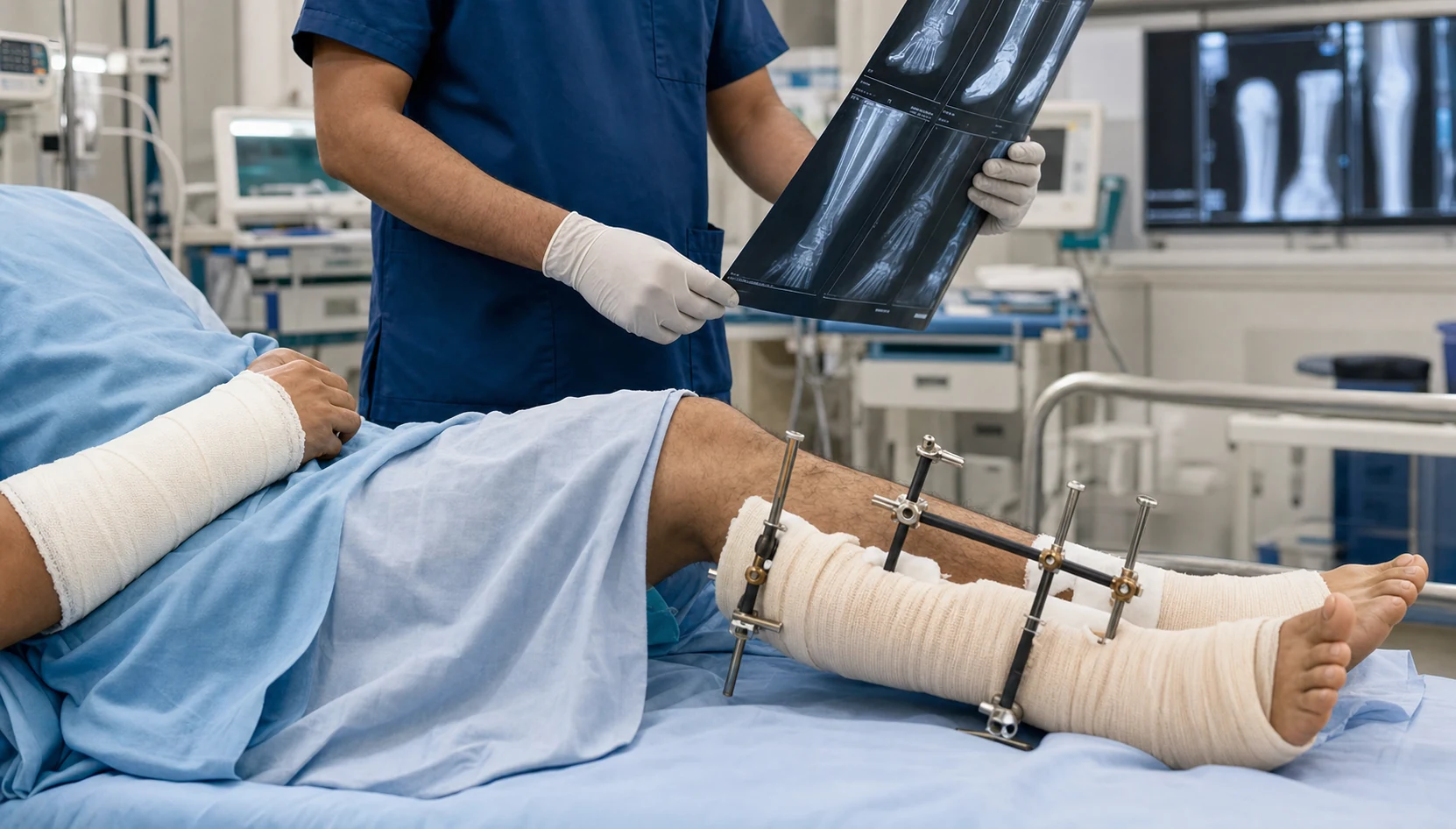
Severe crush injuries or open fractures may initially require external fixation devices before definitive reconstruction becomes safe enough to perform.
Research published by the National Institutes of Health has shown that staged fixation approaches improve outcomes in polytrauma orthopedic patients by reducing complications during recovery. NIH Orthopedic Trauma Research
ICU Coordination Plays a Bigger Role Than Most Patients Realize
Patients with multiple fractures are rarely managed by orthopedic surgeons alone.
Serious accident injuries often require coordination between:
- critical care specialists
- vascular surgeons
- anesthesiologists
- neurologists
- rehabilitation teams
This becomes particularly important when patients develop breathing complications, chest trauma, head injuries, or prolonged immobility after surgery.
Dr. Manoj Khemani frequently coordinates fracture recovery planning alongside multidisciplinary trauma teams because orthopedic stabilization represents only one part of the patient's overall recovery process.
Poor coordination between departments can delay surgery, prolong hospitalization, and increase the risk of avoidable complications.
Recovery Starts Much Earlier Than Most Patients Expect
Many patients assume rehabilitation begins after discharge. Modern orthopedic trauma care works differently.
Recovery planning often starts during hospitalization itself because prolonged immobility increases the risk of muscle loss, blood clots, lung complications, and severe joint stiffness. Even limited movement during the early recovery phase helps preserve circulation and improves long-term mobility.
Depending on the injury pattern, patients may begin assisted movement, breathing exercises, circulation therapy, supervised sitting, or gradual weight-bearing while still admitted.
Early polytrauma rehabilitation also improves circulation, muscle preservation, and long-term joint mobility after multiple fracture surgeries.
Patients recovering from trauma fracture care generally improve faster when rehabilitation planning begins early rather than weeks later.
Typical Recovery Timeline After Multiple Fractures
Recovery timelines vary considerably depending on fracture severity, surgical timing, soft tissue damage, diabetes, smoking history, and rehabilitation consistency.
During the first two weeks, treatment usually focuses on swelling control, pain management, and stabilization. Between weeks three and six, early bone healing and assisted movement typically begin. Over the following months, patients gradually progress toward strengthening, balance recovery, and independent walking.
Joint injuries, pelvic trauma, and severe comminuted fractures often require longer rehabilitation compared to isolated fractures.
This is one reason orthopedic specialists discourage patients from comparing their recovery speed directly with someone else's.
Common Complications Patients Should Monitor Carefully
Recovery complications do not always appear immediately after surgery.
Patients should contact their orthopedic specialist urgently if they develop:
- increasing redness
- fever
- wound drainage
- sudden calf pain
- severe swelling
- numbness
- breathing difficulty
These symptoms may indicate infection, blood clots, implant irritation, nerve compression, or delayed healing.
Patients who postpone follow-up visits after orthopedic trauma surgery often develop complications that become significantly harder to manage later.
Individuals requiring evaluation for delayed fracture healing complications should ideally seek reassessment before mobility problems worsen further.
Why Specialized Orthopedic Trauma Experience Matters in Serious Accident Cases
Treating multiple fractures requires more than technical surgical skill. Trauma specialists must understand staged reconstruction planning, swelling management, soft tissue preservation, rehabilitation timing, ICU coordination, and long-term mobility restoration.
This becomes especially important after high-impact collisions where restoring stable movement matters just as much as repairing the fractures themselves.
Patients looking for surgeons experienced in complex trauma care often prefer consulting specialists who routinely manage high-energy orthopedic injuries rather than isolated fracture cases alone. Those planning an in-person consultation can review Dr. Manoj Khemani's orthopedic practice location in Kolkata before visiting for fracture evaluation or follow-up care.
Frequently Asked Questions
How long does recovery usually take after multiple fractures from a road accident?
Most patients require several months of recovery after severe orthopedic trauma. Healing speed depends on fracture complexity, surgical timing, soft tissue injury, and rehabilitation consistency. Patients with pelvic injuries or joint involvement often need longer physiotherapy support before regaining stable mobility.
Can multiple fractures heal completely after a serious accident?
Yes, many patients recover functional movement successfully after multiple fractures when stabilization and rehabilitation are managed properly. Surgical alignment, infection prevention, and structured rehabilitation play a major role in long-term outcomes. Delayed treatment or missed follow-up care may increase the risk of chronic pain and stiffness later.
Why do some road accident patients need more than one fracture surgery?
Multiple surgeries are often necessary because severe trauma creates swelling, tissue damage, and medical instability that make prolonged surgery unsafe initially. Orthopedic teams may stabilize the fractures first and complete reconstruction later once the patient becomes medically stronger. This staged approach is common in high-energy trauma injuries.
Can delayed fracture treatment after an accident become dangerous?
Yes, delaying treatment after a serious fracture can increase the risk of infection, poor bone alignment, nerve compression, and long-term mobility problems. Certain injuries may also become harder to stabilize surgically if swelling, tissue damage, or deformity worsen over time. Patients with persistent pain, swelling, or difficulty bearing weight should ideally seek orthopedic evaluation early.
Can someone walk normally again after multiple fractures from a road accident?
Many patients recover stable mobility after multiple fractures when surgery, rehabilitation, and follow-up care are managed properly. Recovery speed depends on the severity of joint damage, muscle injury, nerve involvement, and physiotherapy consistency during healing. Patients with high-impact trauma often improve gradually over several months rather than within a few weeks.
What are the signs that the bone fracture is not healing properly after surgery?
Persistent swelling, increasing pain, instability, delayed weight-bearing, or lack of improvement after several weeks may indicate delayed fracture healing. Infection, smoking, diabetes, poor nutrition, or severe bone fragmentation can slow recovery significantly. Patients experiencing worsening symptoms after surgery should ideally seek orthopedic reassessment early.
Final Thoughts
Multiple fractures after a serious road accident can affect far more than bone stability alone. Recovery often depends on how quickly the injuries are identified, how carefully the surgical sequence is planned, and how early rehabilitation begins after stabilization.
Patients dealing with persistent pain, swelling, movement difficulty, or suspected fracture complications after trauma should avoid delaying orthopedic assessment. Early evaluation, proper imaging, and structured recovery planning often play a major role in restoring mobility safely after complex orthopedic injuries.