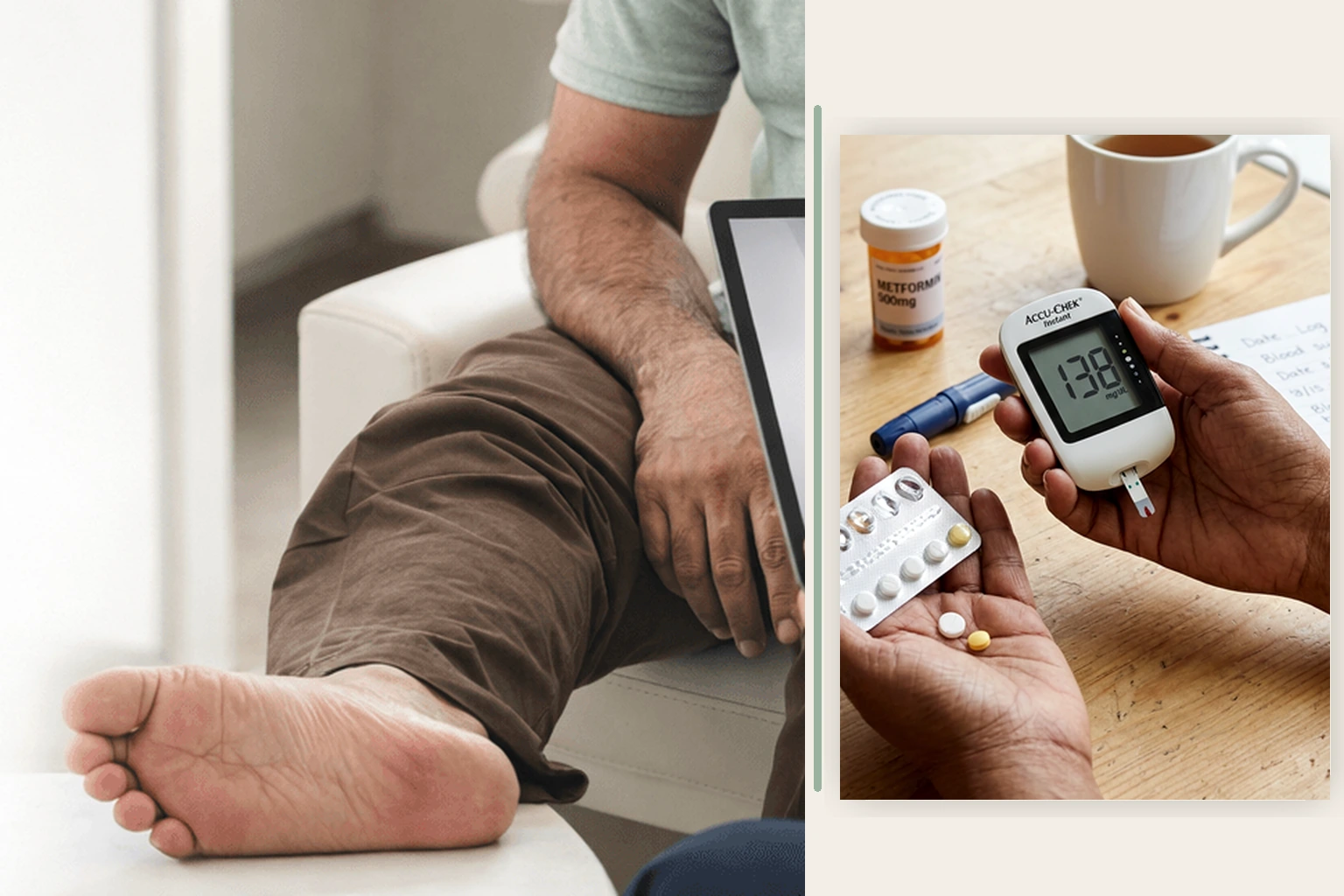
A gout flare usually gets attention because of pain. The joint feels hot, swollen, tight, and tender. But some patients describe something slightly different - a numb toe, tingling in the fingers, pins and needles in the feet, or a burning feeling around a painful joint. That is when the question becomes more specific: can gout cause numbness or tingling, or is the symptom coming from somewhere else?
The careful answer is this: gout usually causes inflammation inside or around a joint. True numbness or tingling often suggests that a nerve may also be involved, or that another condition is being confused with gout.
For patients in Kolkata dealing with repeated uric acid-related swelling, finger pain, or confusing hand and foot sensations, this page on uric acid-related joint pain evaluation in Kolkata is the most relevant starting point.
Can gout cause numbness or tingling in the feet or hands?
Gout usually causes sudden joint pain, swelling, heat, redness, and tenderness. Numbness, tingling, pins and needles, or weakness are not the classic signs of gout and may suggest nerve irritation, diabetes-related neuropathy, spine-related pain, pressure from swelling, or another diagnosis that needs checking.
A useful clinic distinction is whether the patient points to a hot, swollen joint or describes a travelling sensation. Gout usually stays centered around an inflamed joint. Nerve symptoms often move along a line - into the toes, across the sole, down the leg, or through several fingers.
For example, gout in the big toe can make the joint so tender that even bedsheet pressure feels unbearable. That is different from a numb toe, where sensation feels dull or reduced. Tingling feels different again, almost like small electric sparks or pins and needles.
This is why "gout numbness" should not be treated as one automatic diagnosis. The joint has to be examined. The doctor also needs to ask whether the numbness is constant, whether it travels, whether there is weakness, and whether there are other risk factors such as diabetes, back pain, neck pain, kidney issues, or repeated uric acid flares.
What does early stage gout in fingers feel like?
Early stage gout in fingers may feel like sudden pain, swelling, warmth, tightness, or tenderness in one or more finger joints. Some patients first notice it while gripping a cup, typing, opening a bottle, wearing a ring, or bending the finger in the morning.
Finger gout is often missed because many people still think gout only affects the big toe. It can affect the hands too. A finger joint may become puffy, red, shiny, or unusually painful without a clear injury. Sometimes the pain settles after a few days, then returns again in the same joint weeks or months later.
That repeated pattern matters. A single painful finger may be blamed on strain. Recurrent swelling in the same small joint deserves a more careful look.
Dr Manoj Kumar Khemani often sees patients who have already tried short courses of painkillers before seeking care. The pain reduces temporarily, but the story repeats: swelling, relief, another flare. At that point, the goal is not just to calm the current pain. The larger task is to understand whether uric acid inflammation is driving repeat joint attacks.
Do not forcefully bend or massage a painful, hot finger joint. If the finger is very swollen, difficult to move, or associated with fever or spreading redness, it should be checked quickly.
When is gout confused with arthritis or nerve pain?
Gout, arthritis, and nerve pain can all disturb walking, gripping, sleep, and daily movement, but they do not behave the same way. Gout usually attacks suddenly with heat and swelling, arthritis often builds as a pattern of stiffness or wear-related pain, and nerve pain commonly produces tingling, numbness, burning, or travelling discomfort.
| What the patient notices | Gout flare | Arthritis | Nerve-related pain |
|---|---|---|---|
| How it usually starts | Sudden, sometimes overnight; one joint may become intensely painful | Gradual, recurring, often linked with use or age-related joint changes | May start as tingling, burning, numbness, or shooting pain |
| What the joint looks like | Swollen, warm, red, shiny, and very tender during a flare | May be swollen or stiff, but usually less hot than a gout flare | Skin may look normal unless another condition is present |
| Where the discomfort stays | Usually centered around one inflamed joint | Usually centered around affected joints, often repeated over time | May travel from back to leg, neck to hand, or into toes/fingers |
| What the patient says | "Even light touch hurts." | "It feels stiff and painful when I use it." | "It feels numb, electric, burning, or like pins and needles." |
| What needs checking | Uric acid history, joint swelling pattern, flare frequency, medicines, kidney factors | Joint movement, deformity, stiffness pattern, X-ray changes where needed | Sensation, weakness, reflexes, diabetes history, spine or nerve compression signs |
| When not to delay | Fever, spreading redness, severe swelling, inability to move or bear weight | Rapid worsening, severe disability, joint deformity | Weakness, spreading numbness, balance trouble, sudden loss of sensation |
This table is not meant for self-diagnosis. It is a way to understand why the doctor asks so many questions.
A high uric acid level can support the suspicion of gout, but it does not automatically explain every painful or numb hand and foot. Some people have high uric acid without a flare. Some have gout plus another problem, such as diabetes-related nerve symptoms or spine-related nerve irritation.
The examination helps separate these possibilities. The doctor may compare both sides, check the painful joint, review uric acid levels, ask about diet and medicines, look for repeated flare patterns, and check whether the tingling follows a nerve pathway.
Which doctor should you consult for uric acid joint pain in Kolkata?
You should consult an orthopedic specialist when uric acid-related joint pain is repeated, severe, confusing, or associated with swelling, stiffness, numbness, tingling, or difficulty walking or using the hand. A proper evaluation should separate gout from arthritis, injury, infection, nerve pain, and other joint conditions.
For Kolkata patients, the pattern is familiar. Pain comes suddenly. It settles after a few days. Then it comes back. Many people from Salt Lake, Lake Town, Bangur Avenue, Kestopur, Dum Dum, and New Town manage these flares with painkillers, home remedies, or diet guesses before the joint is properly examined.
The consultation should answer practical questions:
- Is this likely a gout flare or another joint problem?
- Is numbness coming from the joint swelling or from a nerve?
- Is the uric acid level high enough to matter clinically?
- Are the finger symptoms early gout, arthritis, or tendon-related pain?
- Is treatment needed only for the current flare, or also to reduce future attacks?
- Are there warning signs that need urgent care?
That last question is important. Gout can be very painful, but not every painful or numb hand or foot is gout.
What should you do during a suspected gout flare?
During a suspected gout flare, protect the painful joint and avoid testing it repeatedly. Do not keep walking on a painful foot, gripping through a swollen finger, or massaging a hot joint to "loosen it."
A few simple mistakes can make symptoms harder to read later. Heat may feel comforting, but a joint that is already hot and swollen usually needs medical guidance, not aggressive rubbing or pressure. Leftover medicines are also risky because gout medicines, painkillers, diabetes medicines, blood pressure medicines, and kidney health can interact in ways patients may not realize.
Get medical advice if this is your first attack, if the swelling is severe, if the same joint keeps flaring, or if numbness and tingling continue after the joint pain reduces.
Treatment should not only chase pain relief. If flares keep returning, the plan should look at uric acid control, kidney function, medication history, diet, hydration, weight, diabetes, and other health factors.
When should numbness or tingling be treated as urgent?
Numbness or tingling should be treated more seriously if it is sudden, spreading, associated with weakness, or linked with loss of balance, severe swelling, fever, redness, or inability to move the joint. These symptoms may point beyond a routine gout flare.
Do not wait if you notice:
- sudden weakness in the hand or foot
- numbness spreading quickly
- loss of grip strength
- difficulty walking or balancing
- fever with a swollen joint
- severe redness spreading around the joint
- a cold, pale, or blue toe or finger
- severe pain after injury
- inability to move the joint
This safety point should stay clear in the patient's mind: gout causes inflammation, but numbness can be a nerve, circulation, infection, injury, or spine-related warning sign. A proper diagnosis protects the patient from treating the wrong problem.
FAQs
What are the 10 foods that trigger gout?
Common gout-trigger foods include organ meats, red meat, shellfish, sardines, anchovies, processed meats, sugary drinks, alcohol, high-fructose packaged foods, and heavy meat-based gravies or broths. These foods may raise uric acid or increase flare risk, especially in people already prone to gout. A food diary can help identify personal triggers because not every patient reacts the same way.
What is the best treatment for uric acid gout?
The best treatment for uric acid gout depends on whether the patient is having an acute flare or needs long-term uric acid control. Flare treatment may include doctor-prescribed anti-inflammatory medicines, while repeated attacks may need urate-lowering treatment, lifestyle changes, and monitoring. Patients with recurring swollen joints, finger symptoms, or foot flares should get a proper diagnosis instead of taking painkillers repeatedly.
What organs are affected by gout?
Gout mainly affects joints, but high uric acid can also affect the kidneys. Uric acid crystals may collect in joints and soft tissues, and some patients may develop kidney stones or kidney-related complications. People with gout plus kidney disease, repeated stones, or very high uric acid levels should be monitored by a doctor.
What fruit flushes uric acid?
No fruit literally flushes uric acid on its own, but cherries and vitamin C-rich fruits may support better uric acid control as part of a balanced diet. Citrus fruits, strawberries, and cherries are often discussed because vitamin C and anti-inflammatory compounds may help some patients. Fruit should support medical care, not replace gout treatment, especially when attacks are frequent.
A practical next step for Kolkata patients
If your joint is hot, swollen, red, and suddenly painful, gout may be part of the picture. If the main problem is numbness, tingling, pins and needles, weakness, or a travelling sensation in the hand or foot, do not force it into a gout label too quickly.
For patients in Kolkata dealing with repeated uric acid flares, early finger symptoms, or confusing hand and foot sensations, Dr Manoj Kumar Khemani can help assess whether the pain is gout-related, nerve-related, arthritis-related, or something else. The safest next step is simple: get the joint examined, understand the cause, and treat the right problem before it becomes a repeated cycle.