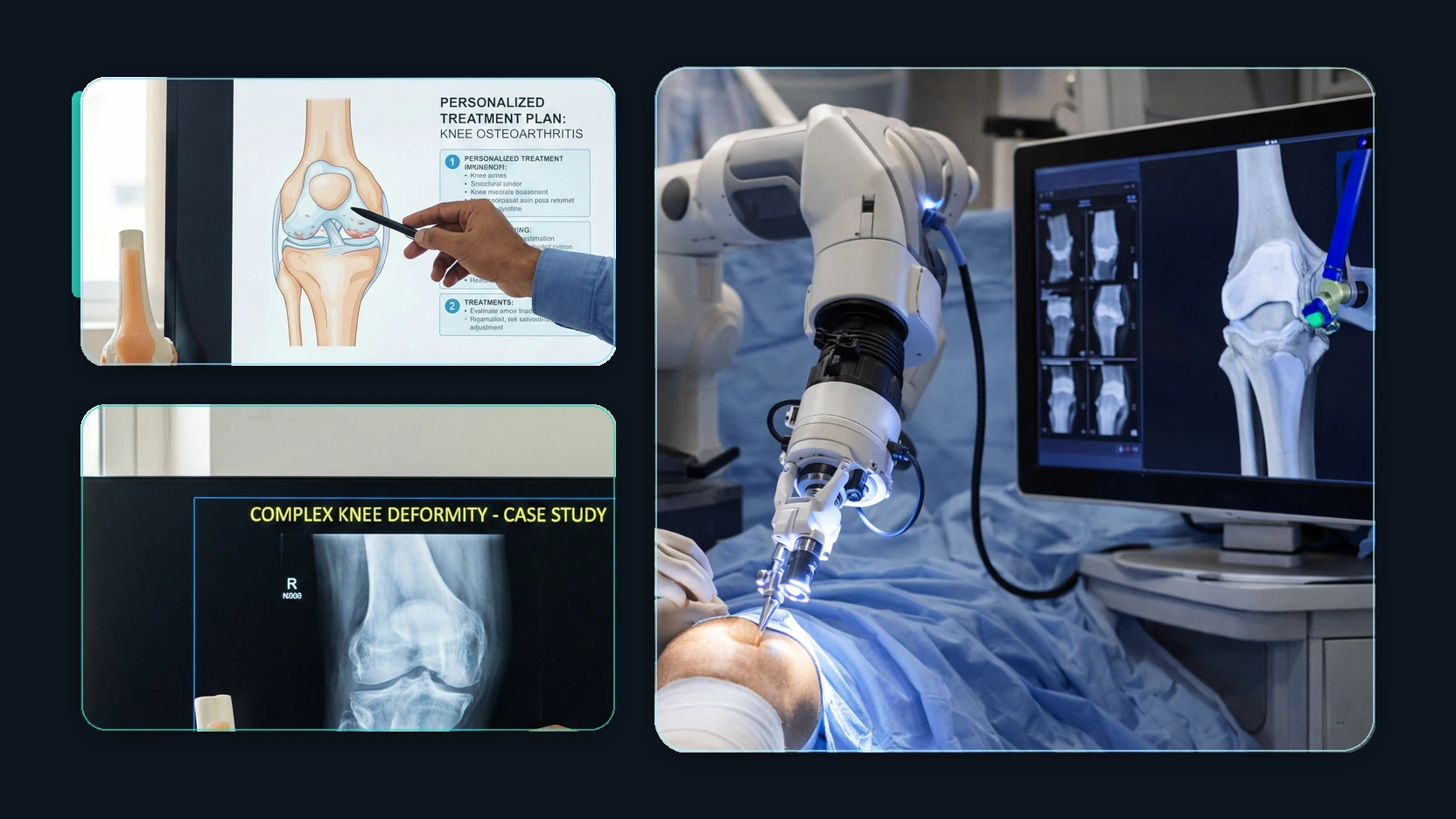
Robotic knee replacement in Kolkata may be considered when advanced knee arthritis causes persistent pain, poor walking ability, stiffness, deformity, or night pain despite appropriate non-surgical treatment. The decision should not be based only on the word "robotic"; it should be based on symptoms, X-rays, arthritis severity, medical fitness, implant planning, surgeon judgment, and recovery expectations.
For patients comparing advanced surgical options, a surgeon-led robotic joint replacement evaluation can help clarify whether the knee has reached the stage where replacement should be discussed.
| Sign patients notice | Why it matters |
|---|---|
| Pain while walking short distances | May suggest arthritis is affecting daily function |
| Difficulty climbing stairs | Often reflects reduced strength, motion, or load tolerance |
| Repeated swelling | May indicate ongoing joint irritation |
| Night pain | Can suggest the pain is no longer only activity-related |
| Bowing or visible deformity | May reflect advanced joint wear and alignment change |
| Poor relief from medicines or injections | May mean conservative care is no longer enough |
A consultation helps separate temporary knee pain from advanced arthritis that may need a replacement-timing discussion.
The patient's concern: "How do I know if I am ready?"
This is the question many patients carry silently.
They may not start the consultation by asking about surgery. They usually begin with something more everyday: "My knee pain is increasing," "I cannot climb stairs like before," or "The injection worked earlier, but this time it did not help much."
Family members may suggest knee replacement. Friends may talk about robotic technology. Online videos can make the procedure look simple. But the patient is often still unsure.
That hesitation is reasonable. Knee replacement is a major decision. It affects walking, recovery time, work planning, home support, physiotherapy, and long-term expectations. No patient should feel pushed into surgery only because a newer technology is available.
At Heal My Bones, the decision starts with the full picture: how long the pain has been present, what treatments have already been tried, how much the knee is affecting daily life, what the X-ray shows, and whether the patient is medically fit for surgery.
Not every painful knee is a surgical knee. The real task is to understand whether delay is still safe or whether the joint has reached a stage where replacement should be discussed.
What does robotic knee replacement in Kolkata actually involve?
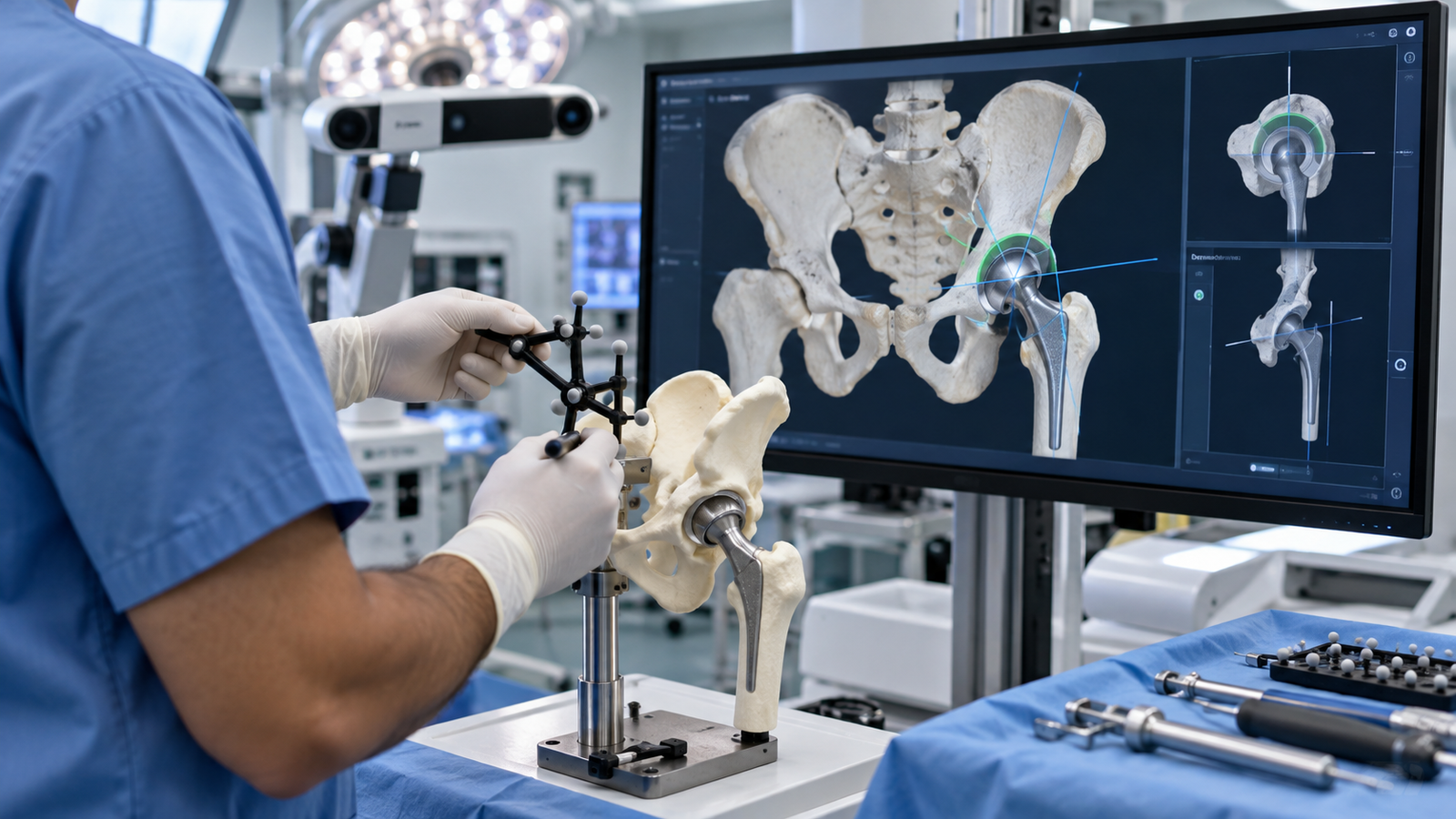
Robotic-assisted knee replacement is a surgeon-led procedure where technology helps with planning and precision during surgery. It does not mean the robot performs the operation independently.
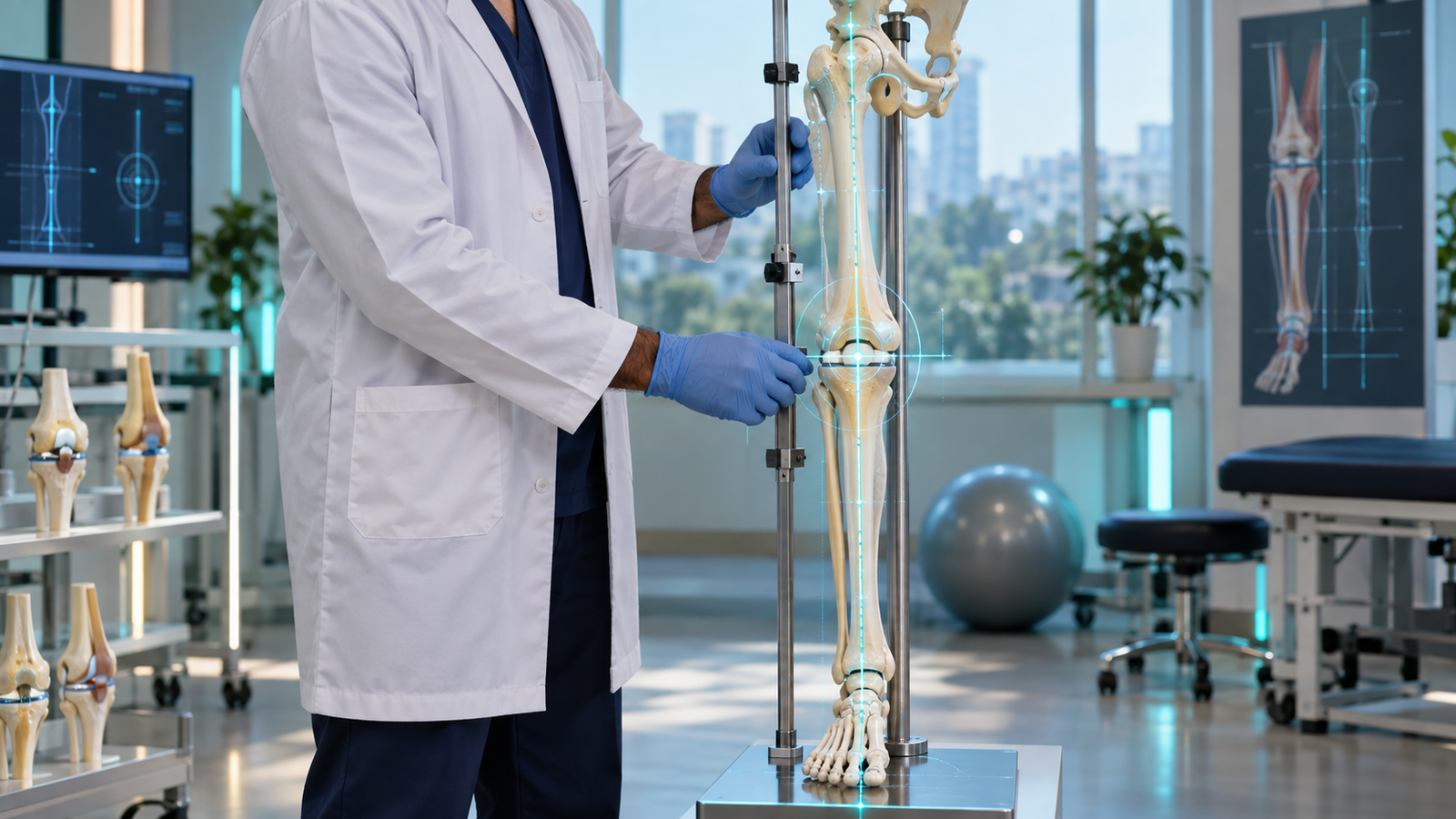
Depending on the system used, robotic support may help the surgeon study the knee anatomy, plan implant positioning, assess alignment, and guide bone preparation. The surgeon still examines the patient, decides whether surgery is suitable, chooses the surgical plan, performs the procedure, and manages recovery.
The American Academy of Orthopaedic Surgeons explains that robotic-assisted joint replacement uses planning and guidance tools to support the surgeon during joint replacement. This is useful for patient education because it makes one point clear: robotic technology assists the surgeon; it does not replace surgical judgment.
That distinction matters.
Patients should not ask only, "Is the surgery robotic?" They should also ask, "Why is replacement being considered for my knee?" and "How will the surgeon plan my case?"
Technology is useful only when the decision behind it is sound.
Signs that your knee arthritis may be reaching the replacement stage
Advanced knee arthritis usually does not appear suddenly. The knee gives warnings over months or years.
The first sign may be reduced walking distance. Earlier, the patient could walk to the market and return without much difficulty. Now they stop halfway. Then stairs become painful. Getting up from a low chair takes effort. Some patients start avoiding family outings because they are worried about whether they can walk enough.
These changes are not minor. They show that arthritis is affecting life, not only the joint.
A patient should consider a knee replacement evaluation if pain continues despite medicines, physiotherapy, weight control, activity changes, or injections. Night pain is another important sign. If the knee aches even at rest or disturbs sleep, the arthritis may be more advanced.
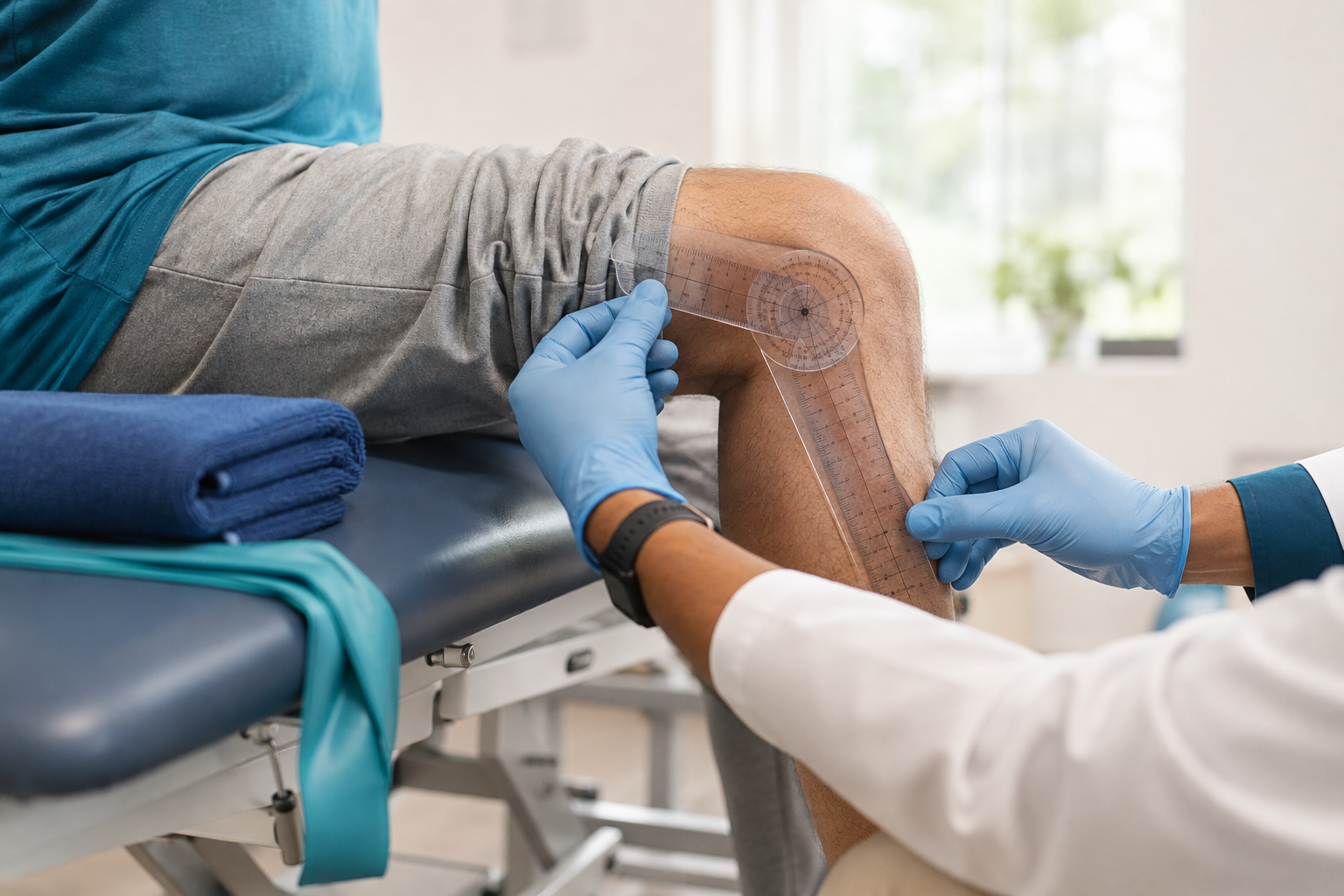
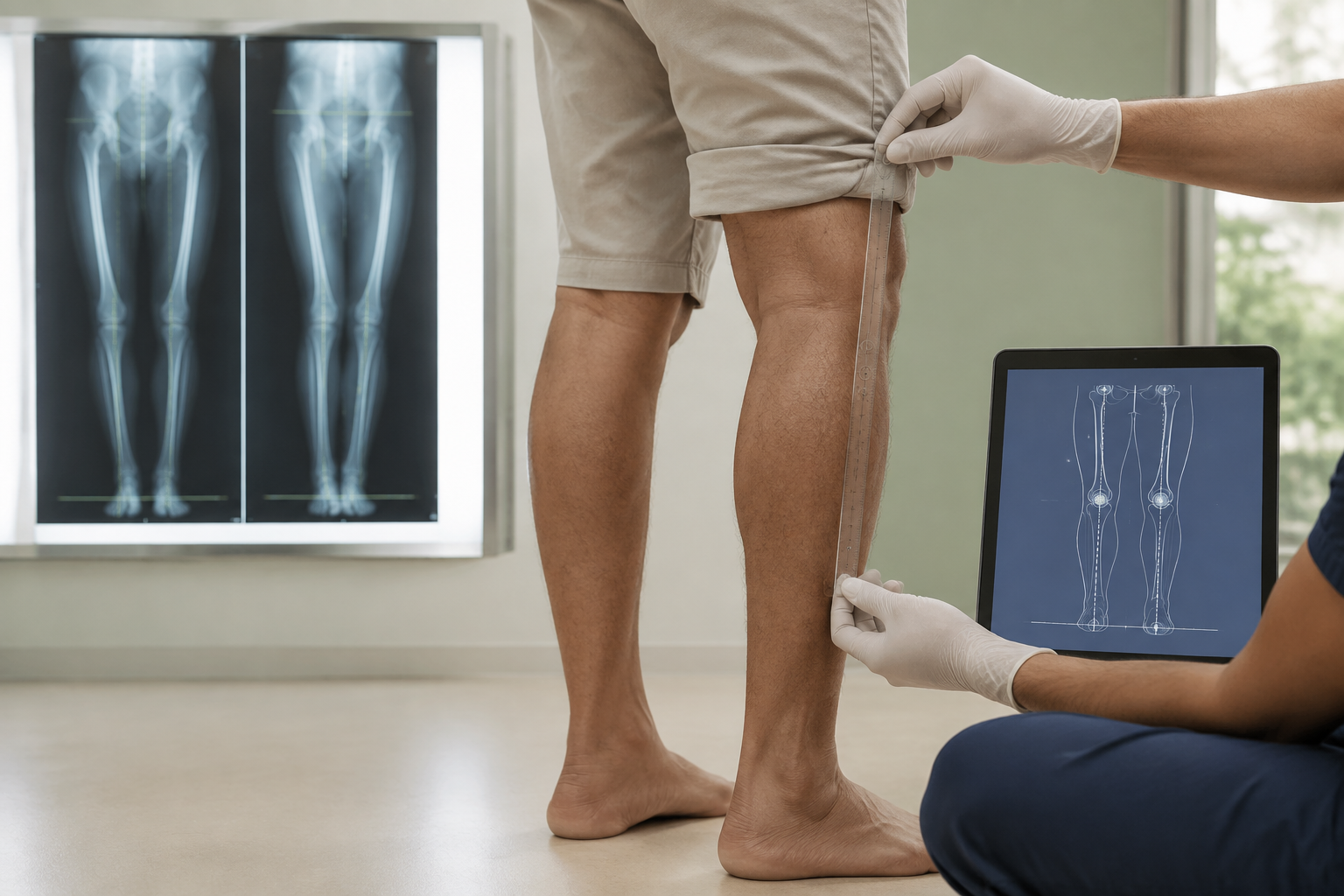
Visible deformity also matters. Some patients notice that the leg is bending inward or outward. Others feel the knee is unstable or "not straight." This may happen when joint space loss and alignment changes become more serious.
The NICE osteoarthritis guideline recommends considering referral for joint replacement when symptoms such as pain, stiffness, reduced function, or progressive deformity substantially affect quality of life and non-surgical care is ineffective or unsuitable. Patients can review the official NICE osteoarthritis recommendations for a guideline-based view of when referral may be appropriate.
The practical meaning is simple: surgery is considered when pain, movement, and quality of life are clearly affected, not simply because arthritis exists on an X-ray.
Who may not be ready for surgery yet?
Not every patient with knee arthritis needs replacement immediately.
If pain is mild, walking is still comfortable, sleep is not affected, and daily work is manageable, non-surgical treatment may still be appropriate. Some patients improve with guided strengthening, weight management, medication review, activity modification, and carefully selected injections.
A good orthopedic consultation should identify this clearly. If surgery can be safely delayed, the patient should know that. If the knee needs closer monitoring, that should also be explained.
The decision should not be rushed because of fear. It should also not be delayed endlessly because of fear.
This balance is important. A patient who is too early for surgery may not benefit from a major operation at that time. A patient who delays too long may lose muscle strength, walking confidence, and mobility before finally choosing treatment.
Is technology enough without the right surgeon?
No. Robotic technology is not enough without careful surgical judgment.
This is where the role of a robotic knee replacement surgeon in Kolkata becomes important. The surgeon must decide whether replacement is suitable, how the knee should be aligned, what implant is appropriate, how soft tissues should be balanced, and what recovery plan the patient should follow.
Patients often compare hospitals by equipment. That is understandable. Robotic systems, navigation tools, and digital planning platforms can all sound impressive. But the more reliable comparison is usually the quality of evaluation.
A strong consultation should answer practical questions. Is the arthritis advanced enough? Have non-surgical options been reasonably tried? What does the X-ray show? What risks should the patient understand? What recovery support will be needed? What happens if surgery is delayed?
These answers help patients make a decision with clarity rather than pressure.
What should patients ask before deciding?
Before deciding, patients should ask direct questions. Not aggressive questions. Practical ones.
Ask whether your knee needs partial or total knee replacement, if replacement is being considered. Ask how your arthritis stage has been judged. Ask whether robotic planning changes the way your case will be prepared. Ask what implant is being considered and why. Ask what recovery may realistically look like during the first few weeks.
Also ask what can go wrong.
This is not negative thinking. It is informed consent. A responsible medical discussion should include benefits, limitations, possible complications, rehabilitation needs, and the patient's role after surgery.
If a consultation discusses only the technology and not the patient, something is missing.
Why Dr. Manoj Kumar Khemani's evaluation matters
Patients searching for a knee replacement surgeon in Kolkata often want a clear answer: "Do I really need surgery now?"
Dr. Manoj Kumar Khemani's relevance lies in this decision stage. The patient may already have tried medicines, injections, exercise, or lifestyle changes. What they need next is not a generic explanation of arthritis, but a proper review of symptoms, imaging, deformity, medical fitness, and expectations.
At Heal My Bones, the goal is to help patients understand where they stand. Some knees are still suitable for non-surgical care. Some need monitoring. Some need a serious discussion about replacement timing.
That clarity helps patients avoid two common mistakes: rushing into surgery because technology sounds attractive, or delaying evaluation until daily life becomes severely limited.
FAQ
How do I know if I am a suitable candidate for robotic knee replacement?
You may be a suitable candidate if advanced knee arthritis is causing persistent pain, poor walking ability, stiffness, deformity, or night pain despite proper non-surgical care. Suitability also depends on X-ray findings, medical fitness, bone condition, implant planning, and recovery readiness. The next step is to get an orthopedic evaluation with current reports and a clear history of previous treatments.
Is robotic knee replacement better for every arthritis patient?
Robotic-assisted surgery is not automatically better for every arthritis patient. Its value depends on patient selection, surgeon experience, arthritis severity, implant planning, and rehabilitation support. A consultation should explain why the technology is useful in your specific case, not just describe it as advanced.
What is the recovery time after knee replacement surgery?
Recovery time after knee replacement varies, but many patients need several weeks for walking confidence and several months for fuller strength, flexibility, and comfort. Recovery depends on age, health conditions, pain control, physiotherapy, wound healing, and how the knee was functioning before surgery. Patients should ask the surgeon for a realistic recovery plan before finalizing surgery.
Should I meet a knee pain doctor in Kolkata before deciding on surgery?
You should meet a knee pain doctor in Kolkata if pain, swelling, stiffness, deformity, or walking difficulty is affecting daily life despite medicines, injections, or physiotherapy. The doctor can assess whether the pain is due to advanced arthritis or another knee problem. This helps avoid both unnecessary delay and unnecessary surgery.
Practical next step
If knee pain is now affecting walking, stairs, sleep, or independence, do not decide only from online information or family advice. Take your X-rays, treatment history, medicine list, and notes about walking difficulty to an orthopedic consultation.
The right question is not only whether robotic surgery is available. The better question is whether your knee, your health, and your daily life have reached the stage where surgeon-led replacement evaluation is appropriate.
A careful assessment with Dr. Manoj Kumar Khemani can help you understand the answer before making a major decision.
Medical Disclaimer
This article is for general educational purposes only and should not be taken as personal medical advice, diagnosis, or treatment recommendation. Knee arthritis, robotic-assisted knee replacement suitability, implant planning, recovery expectations, and surgical risks can vary from patient to patient. Please consult a qualified orthopedic doctor with your reports, symptoms, medical history, and physical examination findings before making any treatment decision.