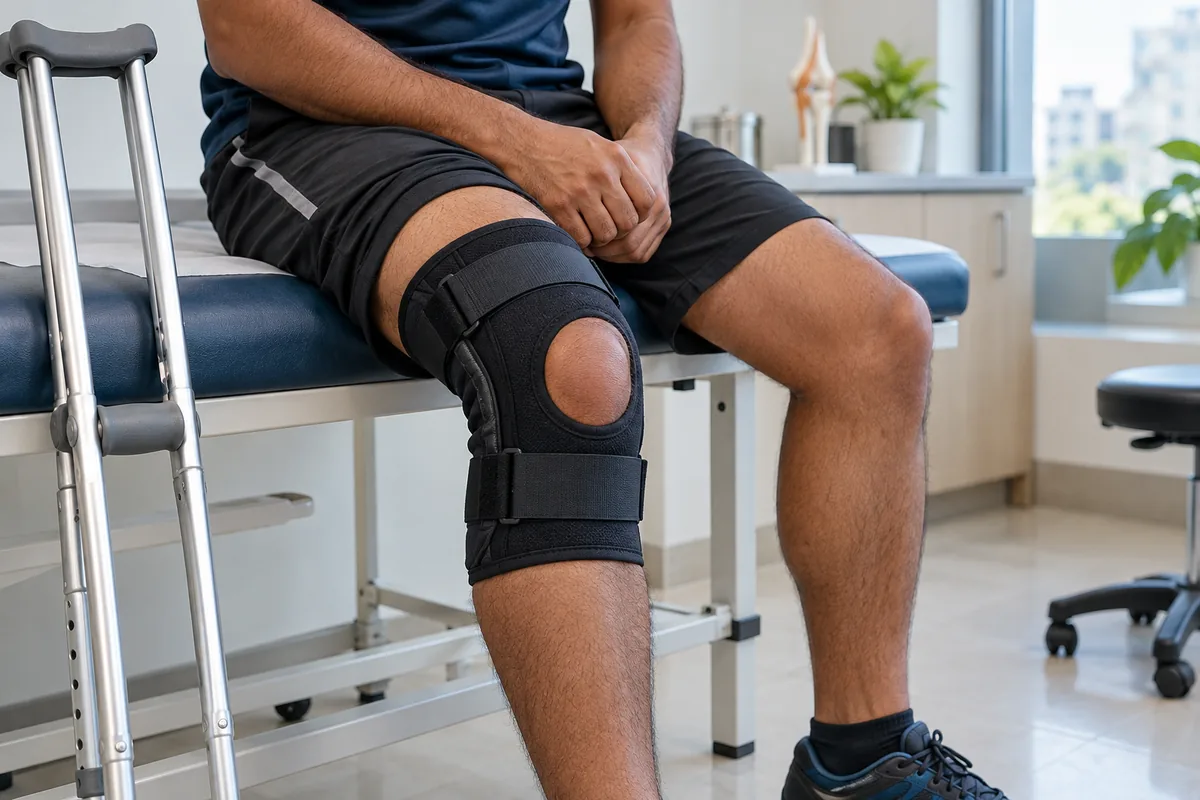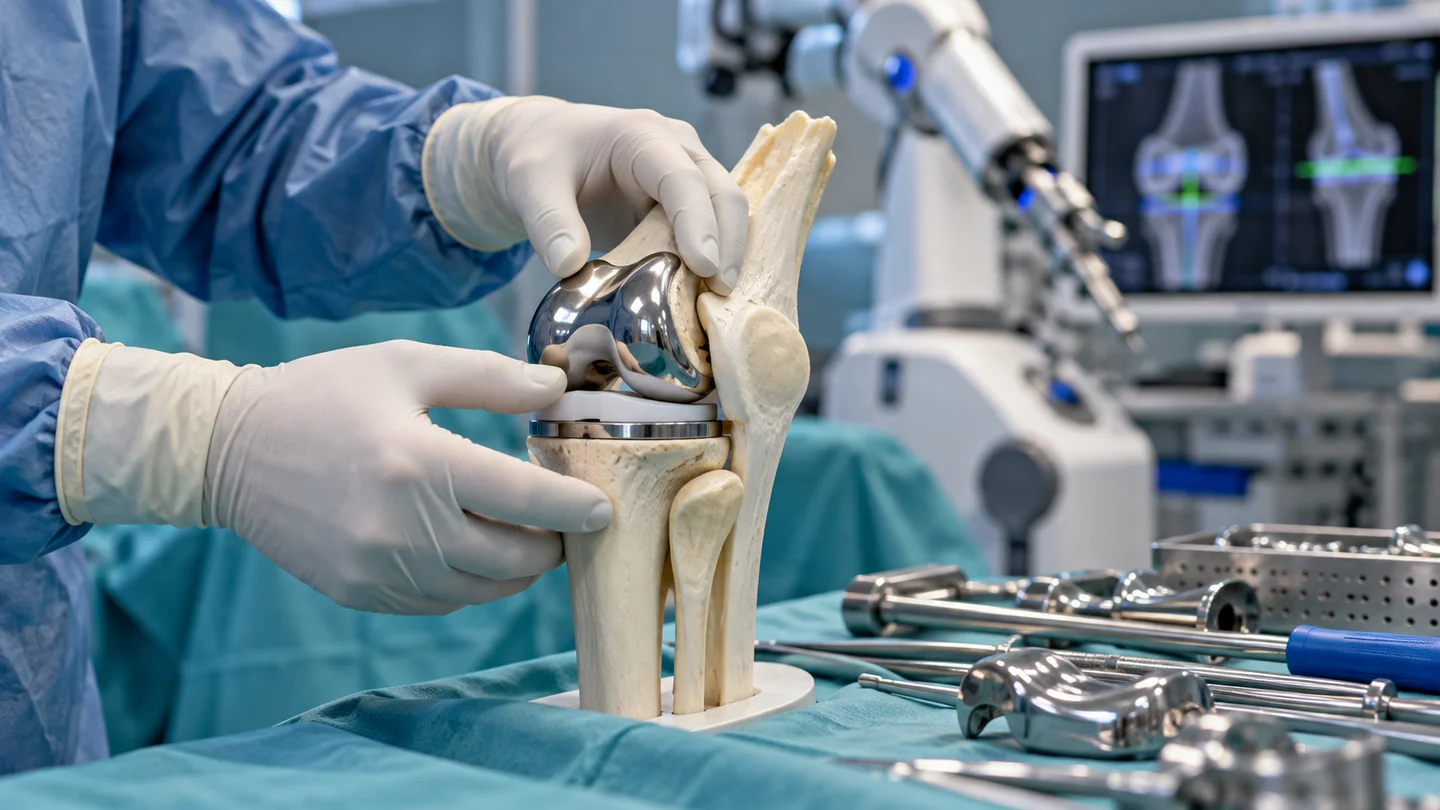

6 Important Questions to Ask Before Joint Replacement Surgery
You've been advised to have surgery. The doctor has explained the procedure, your family is discussing how to manage things at home, and you're trying to work out how much time you'll need away from work.
But something is still bothering you.
Is surgery really the next step? Have all the options been considered?
These aren't unreasonable doubts. An operation can affect your health, independence and daily routine for months, so understanding why it has been recommended matters.
Getting a second opinion before orthopedic surgery gives you another opportunity to examine the diagnosis, review the scans and understand the treatment choices.
It doesn't mean your first surgeon is wrong. Sometimes the second doctor will recommend exactly the same operation.
What matters is whether you come away understanding the medical reasoning behind the decision.
What Should a Second Surgeon Check Before You Agree to Surgery?
A second surgical opinion should independently review your diagnosis, original scans, symptoms, previous treatment, proposed operation and expected recovery. The purpose is to determine whether the recommendation is appropriate for your condition, not simply to approve or reject the first surgeon's advice.
Six areas deserve particular attention:
- The diagnosis: Is the cause of your problem clear?
- The scans: Do the images support the proposed treatment?
- Your symptoms: Does the diagnosis explain your pain and daily limitations?
- Other treatment options: Is surgery the most appropriate next step?
- The operation: Is the proposed procedure suitable for your condition?
- The expected benefit: What might improve, what could remain unchanged, and what are the risks?
A qualified orthopaedic specialist should be able to explain these findings in terms you understand.
Patients comparing specialists can also review Dr. Manoj Kumar Khemani's orthopaedic practice and consultation information to understand his areas of work before deciding whether another assessment is appropriate.
One important exception: if you have been told that treatment is urgent, ask how much time is medically safe before arranging another opinion. Some serious injuries cannot wait.
Check 1: Is the Diagnosis Clear Enough to Justify Surgery?
Consider someone who has experienced knee pain for several months.
Their MRI shows a meniscus tear, and surgery has been suggested. Yet the person describes pain mainly around the front of the knee, rather than the area where the meniscus injury would usually cause symptoms.
That doesn't prove the proposed operation is inappropriate. It does raise a reasonable point for the second surgeon to examine.
Is the tear actually responsible for the pain?
Medical scans can reveal abnormalities that aren't necessarily causing a person's symptoms.
The second assessment should connect what you feel with what the doctor finds during examination and what the imaging shows.
For example, the surgeon may check where your knee hurts, whether it locks or gives way, how far it bends and whether certain movements reproduce your symptoms.
If those findings don't fit the proposed diagnosis, further assessment may be more useful than immediately choosing an operation.
A diagnosis should explain the problem you're living with, not simply identify something unusual on a scan.
Check 2: Have the Original X-Rays and MRI Images Been Reviewed?
A radiology report is helpful, but it cannot replace every detail contained in the original images.
Reports usually describe the main findings. The surgeon still needs to understand how those findings relate to your symptoms, examination and possible treatment.
Imagine an X-ray showing arthritis in the knee.
The report may describe narrowing of the joint space or other changes. But the amount of visible arthritis doesn't always correspond directly with how much pain someone experiences.
One patient may have considerable radiographic changes and still manage everyday activities. Another may struggle with walking or climbing stairs.
During a second opinion, the surgeon may review the actual X-rays, MRI or CT scans rather than relying solely on a written summary.
Older images can also be useful.
They may help establish whether a condition has progressed or remained relatively stable.
Bring the original digital image files if you have them, along with the reports. If a new scan is needed, the surgeon should explain what additional information it is expected to provide.
You shouldn't have to repeat investigations without a clinical reason.
Check 3: Does the Recommended Operation Match Your Daily Difficulties?
Pain is personal, and medical decisions shouldn't be based on imaging alone.
Suppose two patients have similar-looking knee X-rays.
One walks comfortably, manages household activities and experiences occasional discomfort.
The other struggles to stand for long, avoids stairs and has difficulty sleeping because of persistent symptoms.
Even if their scans look similar, the effect on their lives is different.
This is particularly relevant when major elective surgery is being considered.
A second surgeon should understand what you can and cannot do, how your condition has changed and whether previous treatment has helped.
The assessment might consider your walking distance, joint movement, strength, stability and ability to manage work or personal responsibilities.
It should also account for your goals.
Someone who wants to return to recreational sport may have different functional priorities from a person whose main aim is to walk comfortably around the house.
Neither goal automatically makes surgery necessary.
The recommendation needs to reflect both the medical findings and the problem you are trying to solve.
Check 4: Have Reasonable Alternatives Been Considered?
Being advised to have surgery doesn't always mean every other treatment has been exhausted.
Depending on the condition, options may include structured exercise, physiotherapy, appropriate medication, bracing, activity modification or further observation.
But the word alternative doesn't mean those treatments are suitable for everyone.
A stable musculoskeletal condition may allow time for rehabilitation. A seriously displaced fracture or an injury affecting blood circulation may require prompt intervention.
The relevant question is whether another treatment could reasonably address your particular condition.
The second surgeon should review what you've already tried, whether it was appropriate, and what results you experienced.
For example, saying that physiotherapy “didn't work” may not be enough information by itself.
What exercises were prescribed? How long did you follow the programme? Did strength or movement improve? Was pain the only remaining problem?
These details may affect the next recommendation.
The American College of Surgeons' patient guidance on seeking a surgical consultation encourages patients to discuss alternatives, risks, expected benefits and what may happen without an operation.
Sometimes a second opinion confirms that surgery is the most reasonable choice. Sometimes it identifies a suitable treatment that hasn't yet been fully considered.
Both outcomes can be valuable.
Check 5: Is the Proposed Operation Appropriate for Your Condition?
Two surgeons may agree that an operation could help but recommend different approaches.
This doesn't automatically mean that either recommendation is wrong.
Orthopaedic conditions vary in ways that aren't always obvious to patients.
A joint may be damaged in one area or several. A ligament injury may involve partial damage or significant instability. A bone may be broken but stable, or unable to maintain an acceptable position.
These differences influence surgical planning.
There may also be more than one medically accepted approach for certain conditions.
What matters is understanding why the surgeon prefers one procedure for your particular findings.
What if two surgeons disagree?
First, establish where they disagree.
Do they interpret the diagnosis differently? Or do they agree about the condition but recommend different treatments?
Those are separate situations.
If the diagnosis is uncertain, further examination or investigation may be useful.
If both agree on the diagnosis, the discussion may focus on differences in the proposed procedures, recovery expectations or the risks relevant to your health.
It's reasonable to ask each surgeon to explain the advantages and limitations of their recommendation.
The goal isn't to keep consulting doctors until someone gives you the answer you prefer.
It's to understand which approach is supported by the findings and what trade-offs it involves.
Check 6: What Can Surgery Realistically Improve?
This is often the part of the conversation patients remember least clearly.
You may understand the name of the operation but remain uncertain about what life will be like afterward.
Will the pain disappear? How soon can you walk? When might you return to work? Could the problem come back?
The answers vary with the procedure and your individual condition.
Some operations are intended mainly to relieve pain. Others aim to restore stability, correct deformity or improve movement.
Successful treatment does not always mean every symptom disappears.
Before agreeing to surgery, understand the intended benefit, important complications, likely rehabilitation and any limitations that may remain.
You should also know what could happen if you choose not to have the operation at that time.
For someone with an elective condition, waiting may sometimes be reasonable. For another person, delay could increase the risk of deterioration.
These possibilities should be discussed without unnecessary pressure.
A second opinion is especially useful when the expected benefit has not been clearly explained.
When Is Getting Another Opinion Worthwhile—and When Shouldn't You Wait?
A further assessment can be helpful when you have been advised to undergo major elective surgery but still don't understand the diagnosis or treatment choice.
It may also be worthwhile when your symptoms don't seem to match the scan findings, you've received different recommendations, or the proposed operation would involve substantial recovery and lifestyle changes.
But some conditions require urgent attention.
A badly injured limb with impaired circulation, a suspected serious open fracture or rapidly worsening nerve function may need immediate hospital care.
Waiting for a routine outpatient appointment could be harmful.
The Royal Free London NHS patient guidance on second opinions also stresses discussing whether a delay could affect treatment when the medical condition is serious.
If you are unsure about urgency, contact your treating medical team and ask what timeframe is clinically safe.
Your Surgical Second-Opinion Checklist
A productive appointment begins before you enter the consultation room.
Instead of trying to remember every detail of the first visit, prepare a short summary of your condition and bring the relevant records.
Six things to carry into your consultation
| Bring or prepare | Why it helps |
|---|---|
| 1. Diagnosis and first surgical recommendation | Shows what condition has been identified and which operation was proposed |
| 2. Original X-rays, MRI or CT images and reports | Allows the specialist to review the actual findings |
| 3. A short symptom timeline | Shows when the problem began, how it changed and what activities are difficult |
| 4. Records of previous treatment | Helps assess which non-surgical measures have already been tried |
| 5. Medical history, medicines and allergies | Identifies health factors relevant to treatment and surgical risk |
| 6. Your priorities and concerns | Clarifies what you hope to improve and which recovery issues matter to you |
If you've previously undergone surgery on the affected area, bring the operative records and implant details if available.
Digital scans are often more useful than photographs of a report or a printed film.
It also helps to write down what you still don't understand about the proposed procedure.
A relative or caregiver can accompany you if you wish, particularly when treatment decisions involve practical support at home.
The checklist isn't meant to turn the consultation into an examination.
It's there to make sure the details that matter don't get overlooked.
How Do You Choose the Right Surgeon for Another Opinion?
Searching online for an orthopedic doctor in Kolkata can produce a long list of names, rankings and patient reviews.
Those results may help you identify available specialists, but they cannot establish which doctor is most appropriate for your particular problem.
Start with medical registration, recognised qualifications and relevant clinical practice.
If you're considering an operation, the second surgeon should have suitable experience assessing the condition involved.
Communication matters too.
A specialist should be willing to explain why the original recommendation is supported or why a different approach may deserve consideration.
Accessibility is worth considering, particularly if further examinations or follow-up visits are likely.
For patients in Kolkata, HealMyBones provides information about Dr. Manoj Kumar Khemani's orthopaedic practice and consultation arrangements.
The purpose of another consultation should remain the same regardless of which surgeon you see: an independent assessment based on your medical findings and treatment needs.
FAQ
Do I need my first surgeon's permission to get a second opinion?
You can seek another qualified medical opinion about a proposed operation without treating it as a disagreement with your first surgeon. Referral procedures and access to records may vary between healthcare providers and hospitals. You can request copies of your relevant medical records and check the second clinic's appointment requirements.
Will my first orthopedic surgeon be upset if I consult another doctor?
Seeking a second opinion is a normal part of informed medical decision-making. A professional consultation should focus on your diagnosis and treatment choices rather than treating another assessment as a personal criticism. You may choose to share the second surgeon's findings with your original treating team.
Does getting a second opinion mean I have to change my surgeon?
No, seeking another opinion does not automatically mean transferring your treatment. You may decide to continue with your original surgeon after reviewing the additional recommendations. If you prefer to change providers, confirm that the new team can accept responsibility for your treatment and follow-up care.
Can I get a second opinion if my surgery has already been scheduled?
Yes, another consultation may still be possible when an operation has already been scheduled. The safety of postponing or rescheduling depends on the condition and whether delaying treatment could cause harm. Speak with your treating surgeon about the available time frame before changing the planned date.
Before You Say Yes, Understand Why
Getting another surgical opinion isn't about proving your first surgeon right or wrong.
Sometimes both doctors will agree. That agreement can be useful because you've heard the reasoning independently.
Sometimes their recommendations will differ.
In that case, the most important next step is understanding whether the disagreement concerns the diagnosis, the treatment options or the timing of surgery.
You don't need to understand every medical term. You do need a clear explanation of what is wrong, what the operation is intended to achieve, what alternatives exist and what recovery may involve.
If you're considering elective bone or joint surgery, bring your scans and medical records, clarify whether waiting is safe, and discuss the six areas covered above with an appropriately qualified specialist.
A decision becomes easier to make when you understand the reasons behind it—not simply the name of the operation.
Medical Disclaimer
This article is intended for general educational purposes and does not provide individual medical advice, diagnosis or a recommendation to undergo, delay or decline surgery.
The suitability and timing of orthopaedic treatment depend on the diagnosis, symptoms, examination findings, imaging, medical history and overall health. A second opinion does not guarantee a different recommendation or a better treatment outcome.
Do not postpone urgent medical care for serious injuries, compromised circulation, progressive nerve symptoms or other emergencies while arranging a routine second opinion.