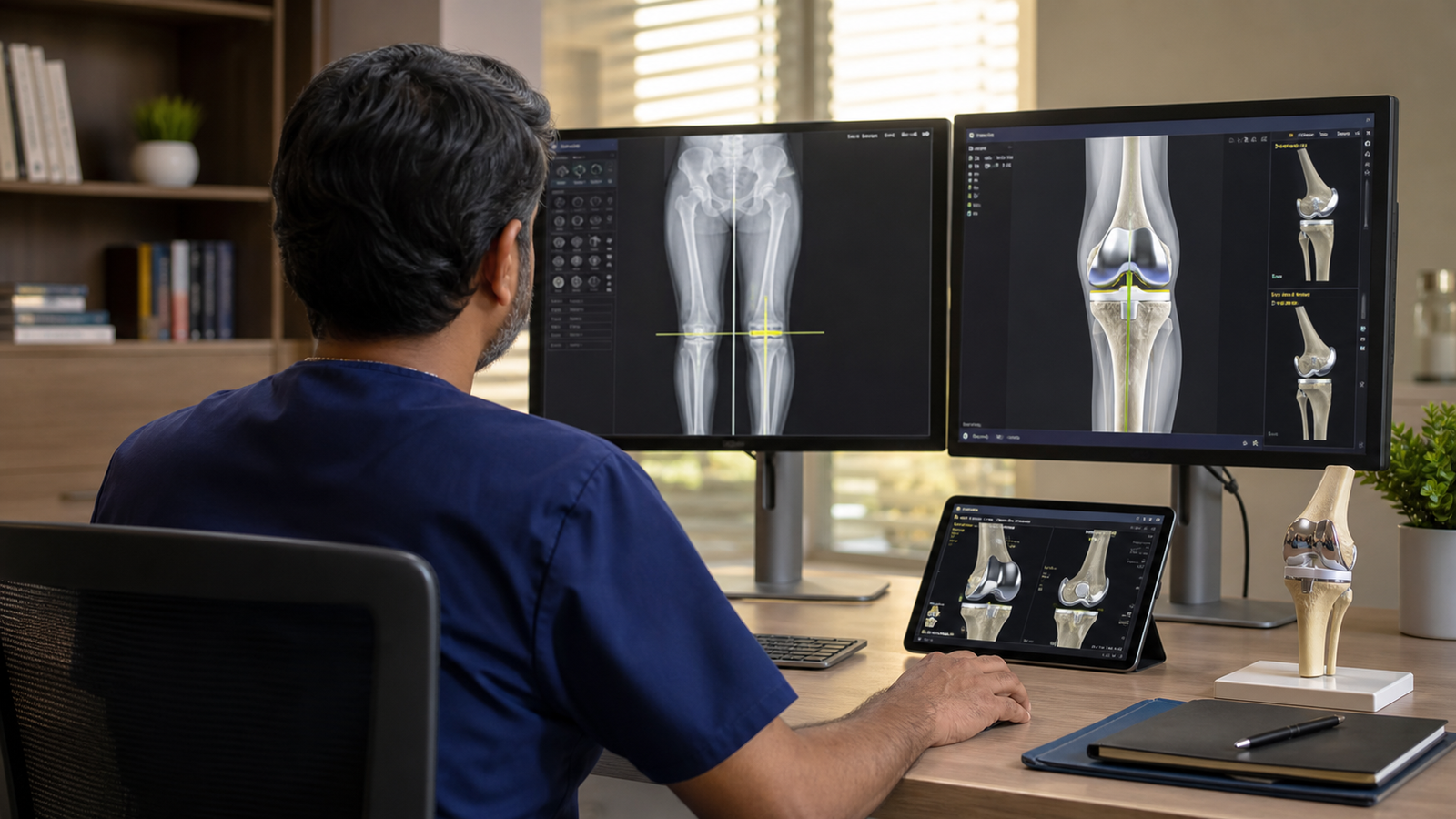
Robotic knee replacement does not begin with the robot. Before robotic joint replacement surgery in Kolkata is even considered, the surgeon usually reviews pain, walking difficulty, X-rays or scans, knee alignment, implant options, medical fitness, and patient expectations. The machine may assist the plan, but the plan still begins with the patient’s knee and the surgeon’s assessment.
Why robotic knee replacement does not start with the robot
Before surgery begins, the surgeon first checks whether knee replacement is suitable at all. That means reviewing symptoms, clinical examination, imaging, arthritis severity, leg alignment, medical history, and fitness for anaesthesia.
Patients exploring advanced technology for knee arthritis may benefit from understanding how robotic joint replacement planning connects clinical examination, imaging, alignment assessment, implant positioning, and surgeon-led decision-making.
| Pre-operative step | Why it affects the surgical plan |
|---|---|
| Pain and function review | Shows how much the knee affects daily life |
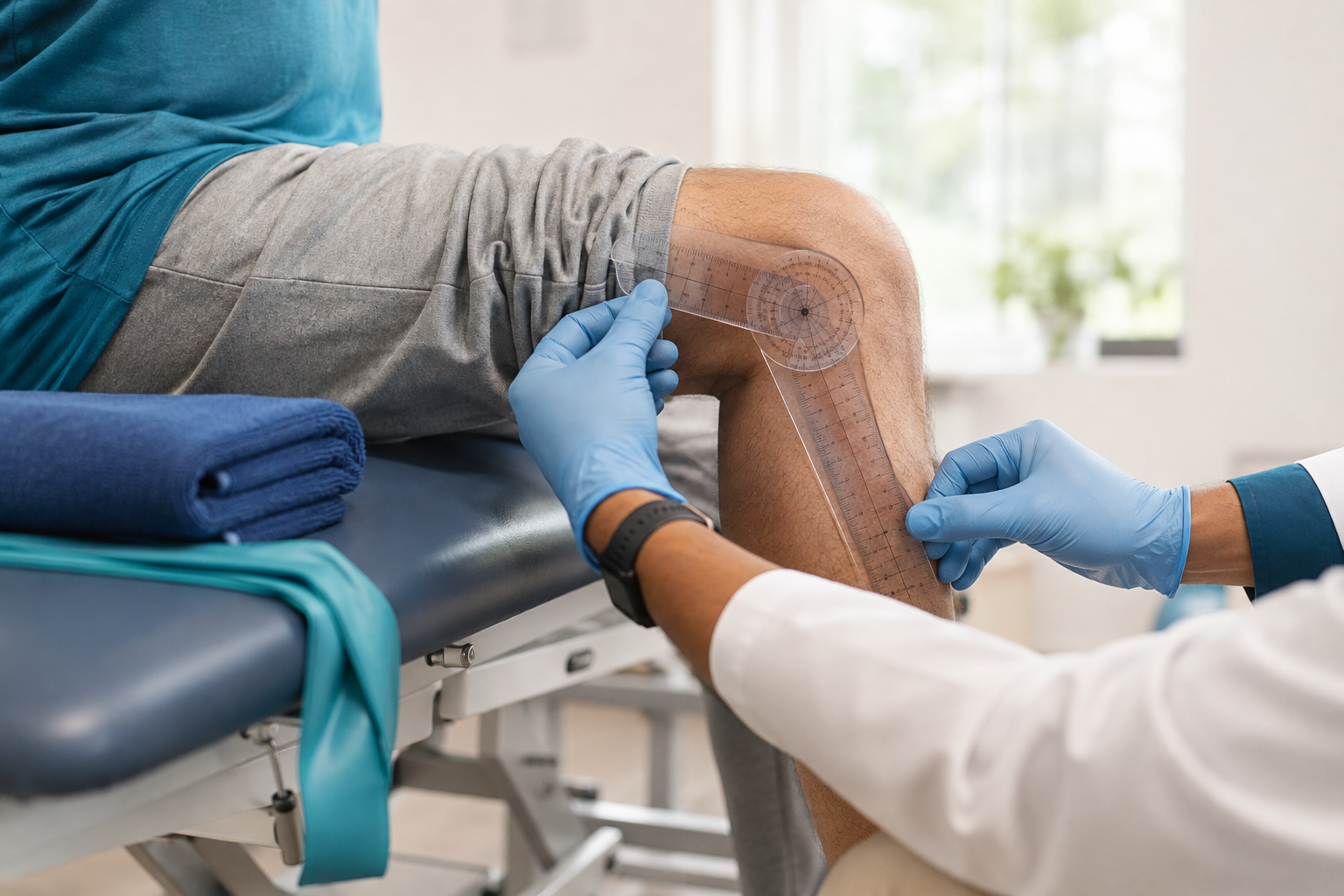
| Physical examination | Checks movement, deformity, swelling, tenderness, and stability |
| X-ray or scan review | Helps assess arthritis stage, bone condition, and alignment |
| Alignment assessment | Helps plan leg axis and implant positioning |
| Implant discussion | Helps match implant type, size, and fit to the knee |
| Medical-fitness review | Checks safety before anaesthesia and surgery |
| Recovery planning | Prepares the patient for hospital stay, walking support, and rehabilitation |
This is the stage where small details can change the surgical plan.
The patient worries: “When will the robot actually come in?”
Many patients imagine robotic knee surgery starts with a machine beside the operation table.
In reality, it starts much earlier — usually in the consultation room.
The surgeon first needs to understand the real problem. How far can the patient walk? Are stairs difficult? Is the knee bowed? Is there swelling? Has medicine, injection, or physiotherapy stopped helping? Is the pain affecting sleep, independence, or daily confidence?
Only after this picture is clear does robotic assistance become part of the discussion.
On the Heal My Bones website, robotic knee surgery is explained as a planning-supported surgical approach, not a shortcut. A patient should not choose surgery only because the word “robotic” sounds advanced. The decision should come from symptoms, examination, imaging, suitability, and realistic recovery planning.
What does the surgeon check before surgery?
A proper pre-operative review combines the patient’s story with objective findings.
The surgeon may check:
- where the pain is located
- whether the knee is bowed inward or outward
- how much the knee bends and straightens
- whether swelling is present
- whether the knee feels unstable
- how arthritis appears on X-ray
- whether deformity is fixed or correctable
- whether one or both knees are affected
- previous treatment response
- medical conditions such as diabetes, heart disease, kidney issues, or blood-pressure problems
This information shapes the plan.
A stiff knee may need a different approach from a knee that still moves well. A patient with severe deformity may need different alignment planning from someone whose arthritis is advanced but whose leg axis is less affected.
The plan should be built around the patient, not around the machine.
How is knee alignment measured before surgery?
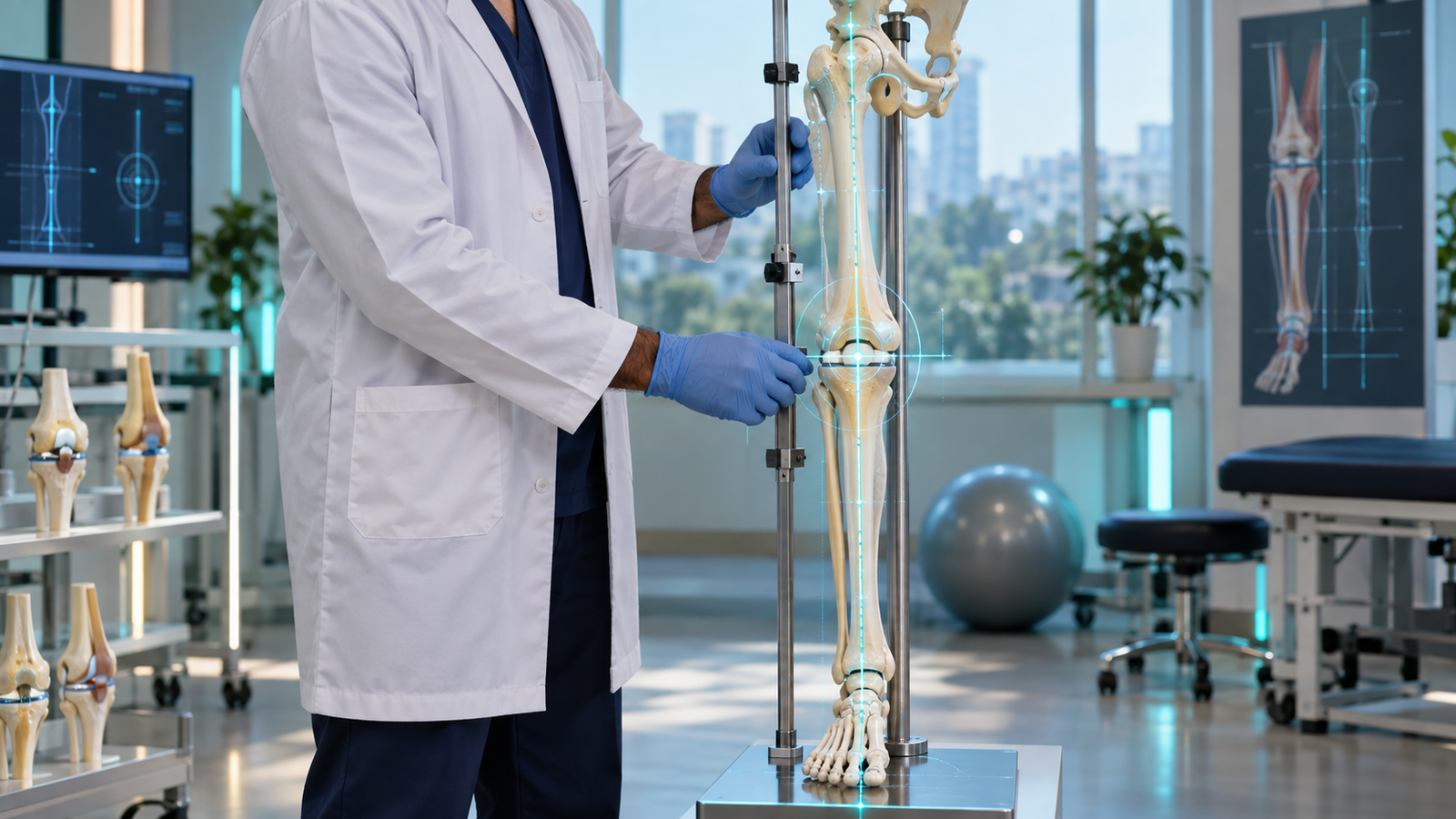
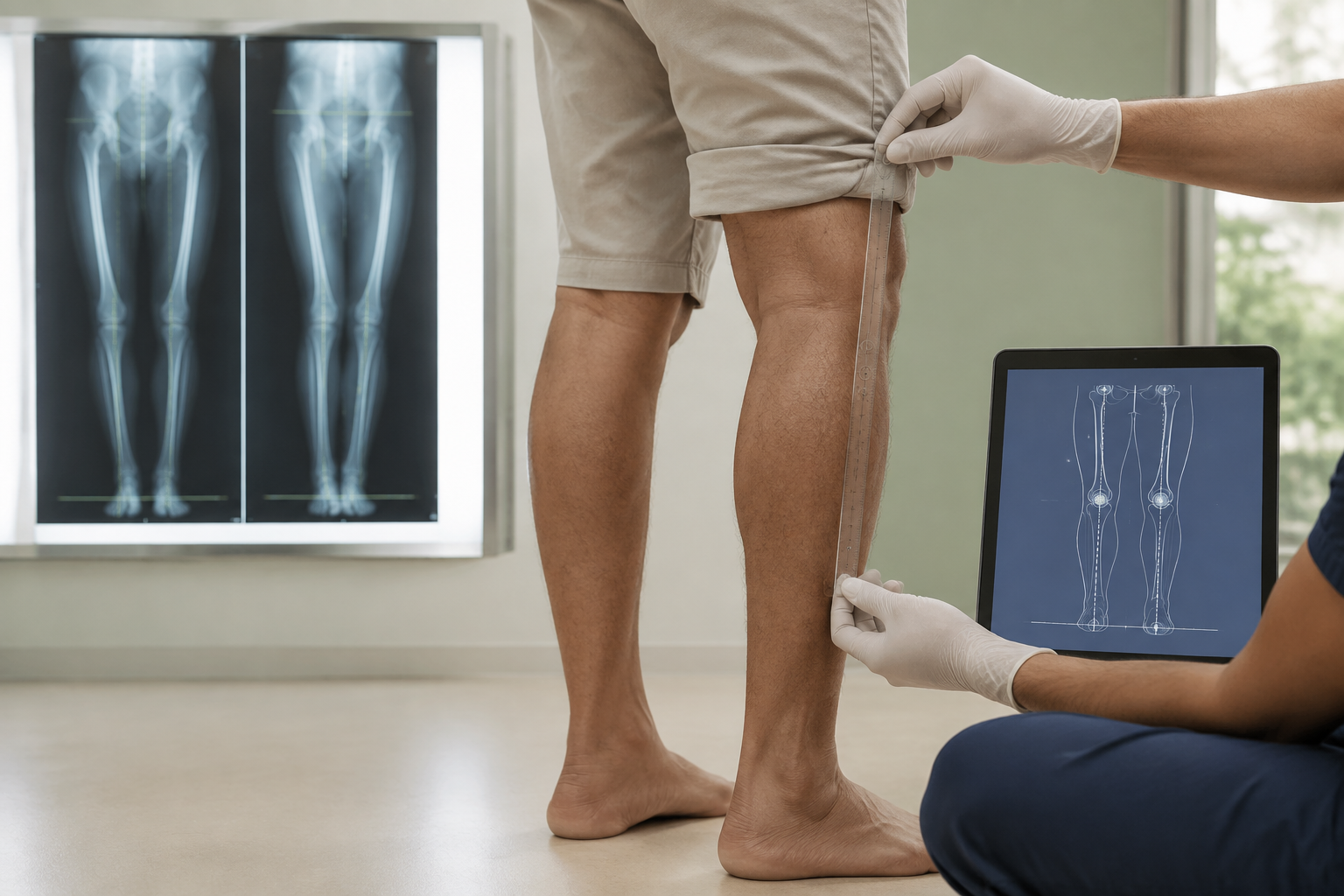
Knee alignment is checked to understand how the hip, knee, and ankle relate to each other when the leg carries weight. In advanced arthritis, the leg may gradually bow inward or outward, and that change can affect implant positioning.
The surgeon may use standing X-rays, long-leg alignment views, CT-based planning, or platform-specific digital mapping depending on the robotic system. Some systems need pre-operative imaging to create a 3D model. Others may use intraoperative mapping during surgery.
AAOS explains that robotic-assisted joint replacement may involve special imaging before surgery to create a customized 3D plan, depending on the robotic platform being used. Patients can read its overview on robotic-assisted joint replacement for a neutral explanation.
For patients, the practical point is clear: alignment is not guessed at the last minute. It is assessed, measured, planned, and checked again during the surgical workflow.
Who selects implant size and position?
The surgeon selects implant size and position using examination findings, imaging, planning software, knee anatomy, ligament balance, bone quality, and intraoperative assessment.
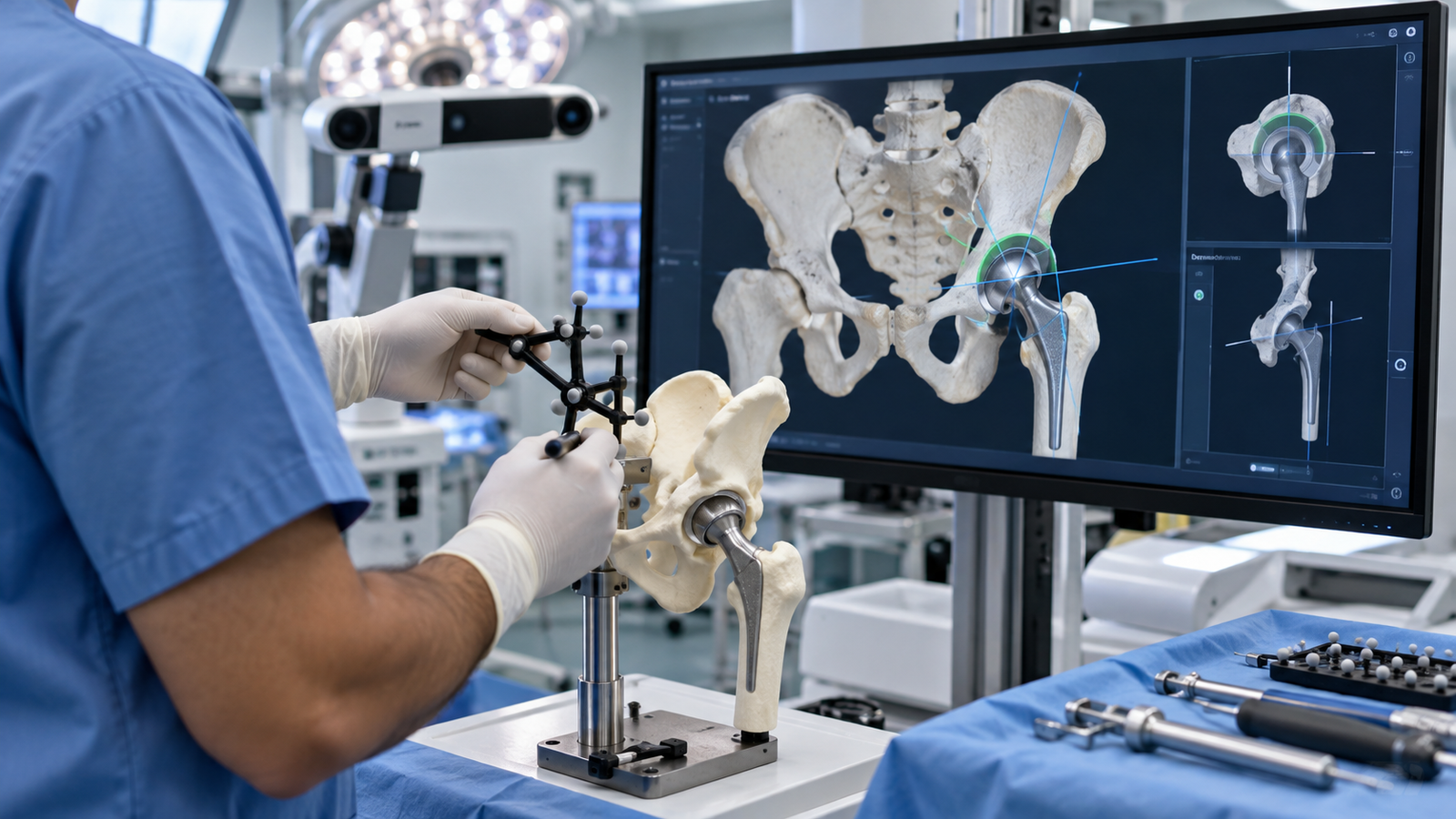
Robotic systems may help estimate implant sizing and positioning in selected workflows. The software may show a proposed plan. But the final decision remains surgeon-led.
That distinction matters.
A robotic system can assist with measurements. It can support planned bone preparation. It can help the surgeon work within planned boundaries. But it does not understand the patient’s full situation — pain pattern, stiffness, deformity, bone condition, medical fitness, activity needs, and recovery expectations.
A useful consultation should explain what the system helps with and what the surgeon still decides.
Pre-operative planning flow: from pain to surgical plan
An original planning-flow diagram can make this topic easier for patients to understand.
Suggested expert asset: Planning-flow diagram
Patient Symptoms
Pain, walking difficulty, stair trouble, stiffness, swelling
⬇
Clinical Examination
Range of motion, deformity, stability, tenderness, walking pattern
⬇
Imaging Review
X-ray, scan, arthritis pattern, bone condition, alignment view
⬇
Digital Planning
3D model or system-specific mapping, implant size, alignment goals
⬇
Medical Fitness
Blood tests, ECG if advised, anaesthesia review, comorbidity control
⬇
Final Surgeon Plan
Suitability, implant strategy, surgical steps, recovery guidance
This type of visual asset gives patients a clearer mental map. It also helps the blog move beyond generic technology claims and show the actual workflow before surgery.
Why medical fitness is checked before robotic knee surgery
Knee replacement planning is not only about the joint.
The patient’s general health matters. Blood sugar, blood pressure, heart condition, kidney function, current medicines, infection risk, anaesthesia fitness, and previous medical history may all affect surgery timing and safety.
Some patients may need blood tests, ECG, urine tests, physician review, or anaesthesia consultation. Others may need sugar control, medicine adjustment, or infection screening before admission.
If a CT scan is part of the selected robotic workflow, patients can also ask why it is needed and how the imaging will be used. FDA guidance explains that medical X-ray imaging, including CT, uses ionizing radiation, so imaging should be justified by medical need and optimized for dose. Patients can review the FDA’s overview on medical X-ray imaging for general safety context.
The scan, if advised, should answer a planning question. It should not feel like an unexplained formality.
Why surgeon planning still matters
Surgeon planning still matters because robotic assistance supports execution; it does not replace judgment.
The surgeon decides whether knee replacement is needed, whether robotic assistance is suitable, how alignment should be planned, how bone preparation should be performed, and how the implant should be balanced during surgery.
During the procedure, the surgeon still evaluates:
- bone quality
- soft-tissue balance
- knee movement
- trial implant fit
- stability through bending and straightening
- whether planned alignment suits the real knee
- whether adjustment is needed during surgery
A robotic system can help with controlled execution, but it cannot replace surgical responsibility.
That is why patients should ask about the planning process, not only the technology name.
Which patients may be evaluated for robotic joint replacement surgery?
Patients may be evaluated when knee arthritis has reached a stage where pain, deformity, stiffness, or walking difficulty is affecting daily life despite reasonable non-surgical care.
This does not mean every patient with knee pain needs surgery. It also does not mean every patient who needs surgery must choose robotic assistance.
A consultation should first answer basic questions:
Is the arthritis advanced enough?
Is pain affecting function?
Is knee deformity significant?
Have non-surgical treatments stopped helping?
Is the patient medically fit?
Does the patient understand recovery and rehabilitation?
Patients searching for a robotic knee replacement surgeon in Kolkata or knee replacement surgeon Kolkata should ask how the surgeon checks alignment, implant size, bone cuts, medical fitness, and recovery planning before surgery. Patients comparing options should avoid judging only by the availability of robotic technology; the stronger consultation explains how the plan is created for the patient’s knee.
People searching for the best robotic knee replacement surgeon in Kolkata should also avoid choosing based only on labels like “advanced” or “robotic.” A better way to judge the consultation is to ask how the surgeon explains suitability, imaging, alignment goals, implant planning, risks, and recovery steps.
Dr. Manoj Kumar Khemani may be relevant for patients who want to understand whether robotic planning is appropriate for their arthritis pattern, deformity, stiffness, walking limitation, and medical condition.
What should patients ask before robotic knee surgery?
Patients should ask practical planning questions before making a decision.
They can ask whether a CT scan or other imaging is needed, how alignment is measured, who approves the digital plan, how implant size is selected, what happens if the plan needs adjustment during surgery, and what medical-fitness checks are required before admission.
They should also ask about hospital stay, pain control, physiotherapy, wound care, walking support, and follow-up schedule.
A useful consultation should leave the patient knowing what will be checked, what will be planned, and what remains surgeon-led.
The Heal My Bones resource helps patients understand this planning-first approach before they discuss surgery.
FAQ
Do I need a CT scan before robotic knee replacement?
A CT scan may be needed if the selected robotic system uses CT-based planning. Some systems use CT or other imaging to create a 3D model, while others use different mapping workflows. Patients should ask whether the scan is required for their platform and how it will affect implant sizing, alignment, or surgical planning.
Who decides the implant size in robotic knee replacement?
The surgeon decides implant size using imaging, planning software, knee anatomy, bone quality, ligament balance, and intraoperative findings. Robotic planning may suggest measurements, but the surgeon checks whether those measurements fit the real knee. Patients should ask how implant size and position are finalized before and during surgery.
How long is the hospital stay after robotic knee replacement?
Hospital stay varies by patient health, surgery type, pain control, walking ability, wound condition, and rehabilitation progress. Some patients may mobilize early, but discharge timing should be based on safety rather than speed. Patients should discuss expected stay, walking support, physiotherapy, and home-care needs before admission.
Who is suitable for robotic knee replacement?
Suitability depends on arthritis severity, deformity, knee stiffness, pain level, walking limitation, medical fitness, and surgeon assessment. Robotic assistance may be considered when knee replacement is appropriate and the selected system can support planning and execution for that case. Patients should bring X-rays, prescriptions, medical reports, and a clear history of previous treatments to consultation.
Practical next step
Robotic knee replacement does not begin with the robot.
It begins with a patient explaining what daily life has become: stairs, walking distance, pain, stiffness, swelling, and loss of confidence. From there, the surgeon reviews the knee, studies the imaging, checks alignment, discusses implants, assesses medical fitness, and builds the plan.
The better question is not only, “Will a robot be used?”
The better question is, “How will my knee be planned before surgery begins?”
Medical Disclaimer
This article is for general educational purposes only and should not be taken as personal medical advice, diagnosis, or treatment recommendation. Robotic knee replacement suitability, CT scan needs, imaging, implant selection, alignment planning, surgical risks, hospital stay, recovery, physiotherapy, and treatment decisions vary from patient to patient. Please consult a qualified orthopedic surgeon with your symptoms, reports, medical history, current medicines, and physical examination findings before making any treatment decision.