
Arthritis in Both Your Hip and Knee? Which Should Be Treated First?
Your knee hurts whenever you walk, so naturally, you assume it needs treatment first. But during the examination, the orthopaedic surgeon starts checking how well your hip moves.
Why would the hip matter when most of the pain is around your knee?
Because sometimes, pain from an arthritic hip can be felt at the knee. And when both joints are affected, the most painful area isn't always the best place to begin treatment.
For people living with hip and knee arthritis, deciding which joint needs attention first can be surprisingly complicated. The answer depends on where the pain originates, how much each joint limits movement and whether the condition can be managed without surgery.
If both joints eventually require replacement, the surgeon must also consider how treating one will affect recovery from the other.
There is no rule that the hip must always come first. The decision begins with understanding what is actually causing your difficulties.
Hip and Knee Arthritis: Which Joint Should Be Treated First?
When osteoarthritis affects both the hip and knee, doctors assess which joint is causing the greatest disability and whether pain from the hip is being felt at the knee. The treatment order also depends on joint stiffness, deformity, walking difficulties and rehabilitation needs; some patients may not need surgery on either joint.
The assessment usually considers:
- Where the pain starts: Is the knee painful because of its own arthritis, or is some discomfort coming from the hip?
- Which activities are difficult: Walking, climbing stairs, getting dressed or rising from a chair.
- How the joints move: Is the hip unusually stiff, or does the knee have significant deformity or instability?
- What the examinations and scans show: Do the findings explain the symptoms?
- What treatment has already helped: Can exercise, medication or other appropriate care still manage the problem?
- How recovery would work: Would the untreated joint make rehabilitation after surgery difficult?
These factors help distinguish a joint that needs treatment now from one that can be monitored or managed conservatively.
Patients considering how arthritis symptoms and treatment options are assessed can use this framework when preparing for an individual orthopaedic consultation.
Why Your Knee May Hurt Even When the Main Problem Is in Your Hip
Consider someone who has been experiencing knee pain for months. They have noticed discomfort while walking and occasionally need to stop after climbing stairs.
An X-ray shows some knee arthritis. That seems to explain the symptoms.
But during the examination, the surgeon finds that the hip is very stiff. Rotating it inward produces discomfort extending down the thigh towards the knee.
That finding changes the conversation.
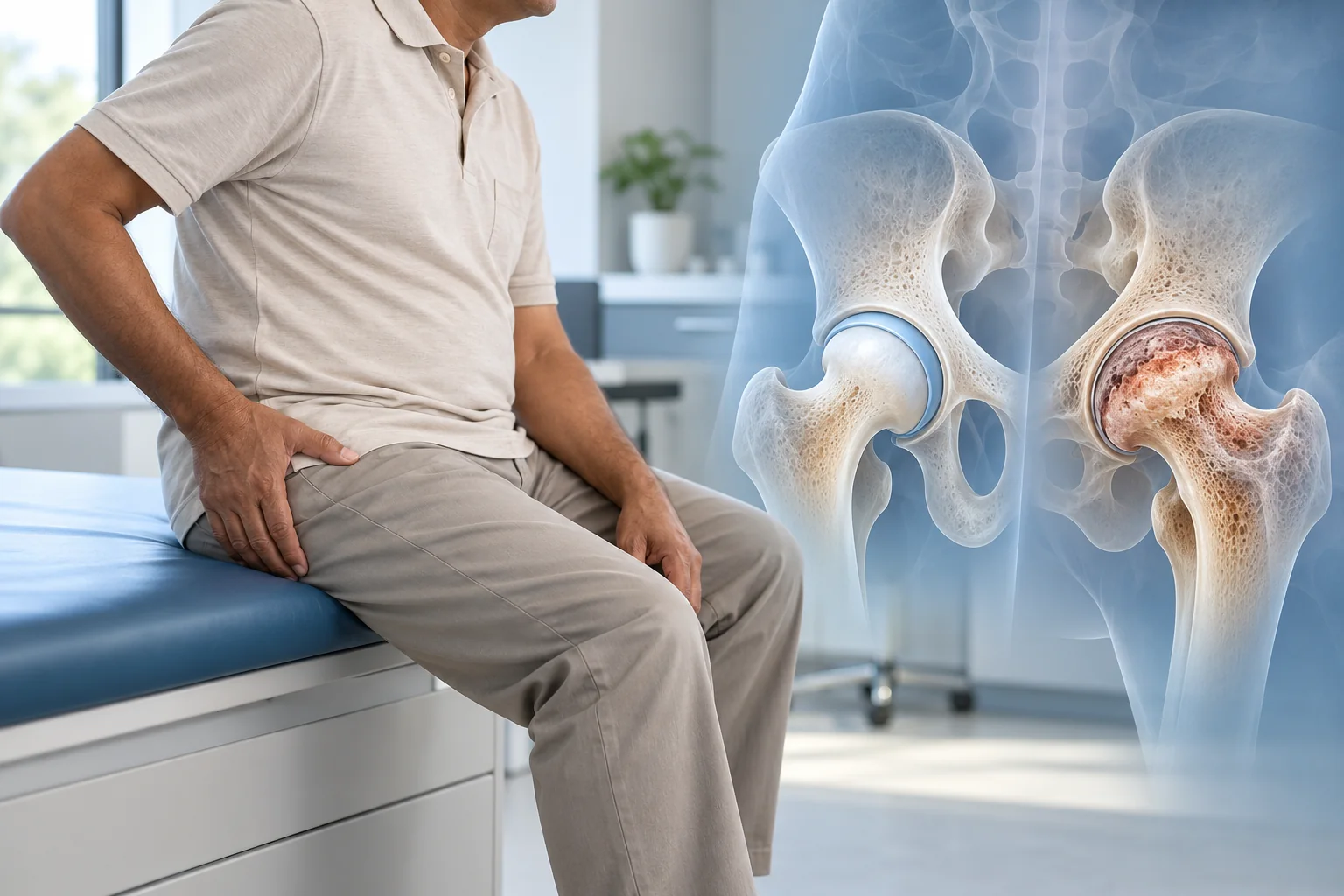
Hip arthritis can cause pain in the groin, buttock and thigh. In some patients, pain is felt as far down as the knee, even though the knee itself isn't responsible for all of it.
Doctors call this referred pain.
This is why examining only the painful knee can sometimes miss an important part of the problem.
However, referred pain doesn't mean the knee is necessarily healthy. Both joints can have genuine osteoarthritis, and each may contribute separately to the person's symptoms.
The challenge is working out how much pain is coming from each joint.
Can Treating the Hip Actually Improve Knee Pain?
It can, when some of the knee discomfort originates from the hip.
A retrospective study followed 255 people who underwent hip arthroplasty. Before surgery, pain in the same-side knee was reported more often than pain in the opposite knee; same-side knee pain improved at follow-up. Because this was an observational study, it cannot show that hip replacement will relieve knee pain for every patient. Read the study and its methods.
That finding helps explain why the hip deserves careful assessment when both joints are painful.
But there is a limitation worth understanding.
Improvement in referred knee pain doesn't mean that arthritis inside the knee has been cured.
If the knee also has substantial cartilage damage, stiffness or deformity, those problems may remain after the hip is treated.
For example, a person with advanced hip arthritis and relatively mild knee changes might notice considerable relief in overall leg pain after hip treatment.
Someone with severe arthritis in both joints may still need separate treatment for the knee.
So, the possibility of referred pain is a reason to investigate the hip—not a promise that hip surgery will eliminate knee pain.
How Does a Surgeon Find Out Which Joint Is Causing More Trouble?
An X-ray provides useful information, but the examination begins with what you experience each day.
The surgeon may ask whether the pain is felt in the groin, thigh, around the kneecap or along the inner side of the knee. They will also want to know which movements bring on the discomfort.
Checking the hip
Hip osteoarthritis can restrict movement, particularly rotation.
The surgeon may gently move the hip while assessing stiffness and whether particular movements reproduce the pain you recognise.
Difficulty putting on socks, getting into a car or turning in bed can also provide useful clues about hip function.
Checking the knee
The knee examination looks at movement, swelling, tenderness, alignment and stability.
The surgeon may assess how comfortably you straighten and bend the knee, whether it feels unstable and whether the pain increases during certain movements.
Difficulty standing from a chair or walking downstairs may suggest that the knee is contributing significantly to the problem.
The findings are then considered together.
If hip movement reproduces the pain felt near the knee, that may suggest a referred component. If the knee has local tenderness, swelling, restricted movement or marked deformity, it may also be causing symptoms independently.
In uncertain cases, further assessment may be needed to identify the main pain source.
Why the Joint That Looks Worse on an X-Ray May Not Come First
Imaging shows structural changes, including joint-space narrowing, bone spurs and deformity. It does not tell the surgeon exactly how much difficulty you experience during daily activities.
The severity of symptoms and the extent of visible joint damage do not always match.
For someone consulting an arthritis specialist in Kolkata, the assessment should therefore go beyond comparing X-ray reports. The specialist needs to understand which joint is limiting movement, whether pain from the hip is being felt around the knee, and how those findings affect the treatment decision.
Osteoarthritis can often be assessed from symptoms and examination. Imaging may be useful when the findings are uncertain or when surgery is being planned. A treatment recommendation should connect your symptoms, physical examination and imaging rather than rely only on which report describes more severe arthritis.
How Walking Changes When Both the Hip and Knee Have Arthritis
Your hip and knee work together whenever you take a step.
The hip helps position the leg and control movement through the pelvis, while the knee bends, straightens and supports your body as your weight moves forward.
When one joint becomes painful or stiff, you may unconsciously change how you walk.
Someone with a stiff hip may shorten their stride, rotate the leg differently or lean their body to make walking more comfortable.
A painful knee may produce another pattern. The person might avoid fully straightening it, take shorter steps or place more weight on the opposite leg.
When both joints have arthritis, these adjustments can overlap.
The surgeon therefore looks at the entire walking pattern rather than examining each joint as an isolated problem.
This becomes particularly relevant if joint replacement is being considered.
A newly replaced knee still needs a reasonably functional hip for walking and rehabilitation. If the hip remains severely stiff or painful, it may restrict how well the person can regain movement and confidence.
That is one reason hip-first surgery may be considered in selected patients when both joints need replacement.
However, a severely deformed or unstable knee may present a different clinical priority.
There isn't one treatment order that fits every walking pattern.
Hip First or Knee First? What Actually Influences the Decision
When both joints are significantly affected, the surgeon weighs several findings together.
| Clinical finding | How it may influence treatment |
|---|---|
| Hip arthritis appears responsible for some knee pain | Treating the hip first may help clarify how much knee discomfort remains |
| Knee arthritis causes much greater disability | Knee-focused treatment may take priority |
| Both joints have advanced osteoarthritis | Hip-first replacement may be considered, depending on the overall findings |
| Severe hip stiffness affects walking | Hip treatment may improve the conditions for later knee rehabilitation |
| Major knee deformity or instability is present | The knee may need earlier attention |
| One joint responds to non-surgical care | Surgery for that joint may not be necessary |
| Medical conditions increase surgical risk | Further preparation or a different treatment sequence may be needed |
These are considerations, not fixed rules.
For example, a patient with severe hip stiffness and manageable knee pain presents a different situation from someone whose hip remains relatively functional but whose knee is markedly deformed.
The surgeon must also account for previous operations, muscle strength, balance and the patient's general health.
A recommendation should explain why treating one joint is expected to help more at that particular stage.
Does Having Arthritis in Both Joints Mean You Need Two Operations?
No. Osteoarthritis in both the hip and knee does not automatically mean both joints need replacement.
Many people manage symptoms with a combination of suitable exercise, strengthening, activity adjustment, weight management where relevant and appropriate pain relief.
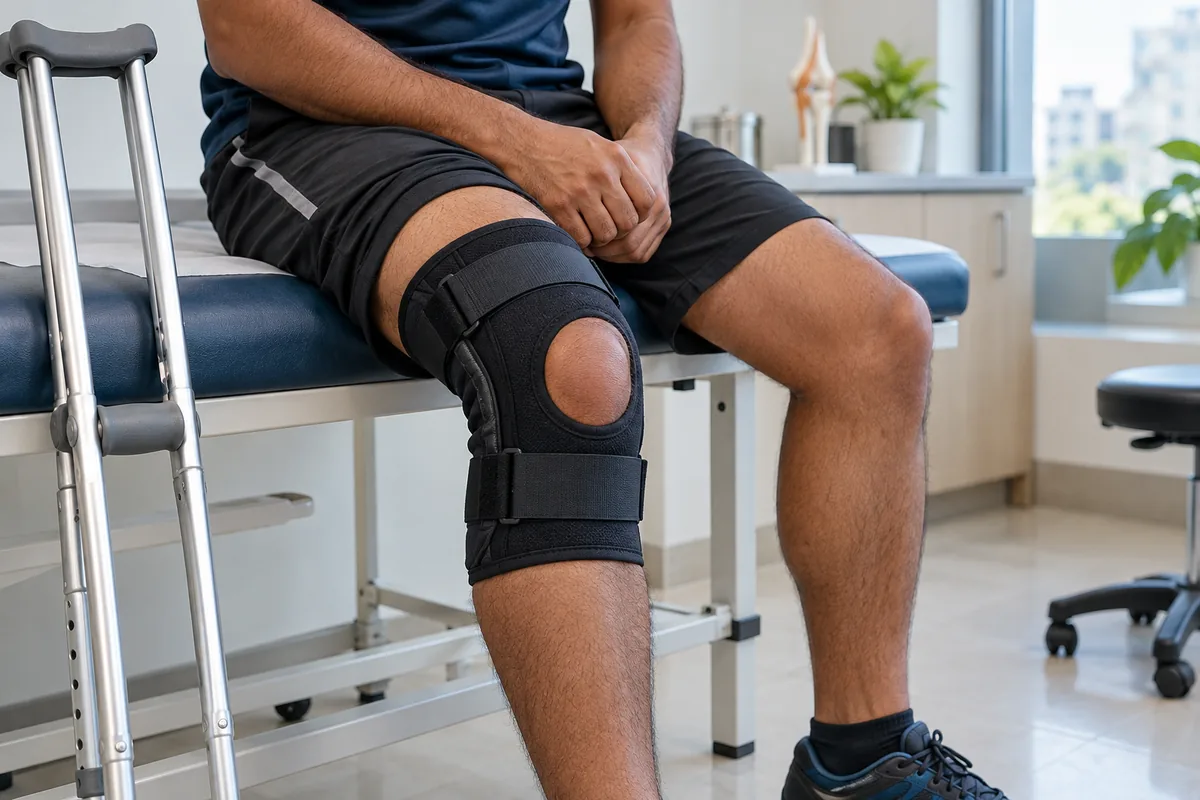
Walking aids can also improve comfort and stability for some patients.
Treatment should be guided by the extent to which arthritis affects daily life.
NICE guidance on osteoarthritis recommends therapeutic exercise and weight management when appropriate as core treatments. Joint replacement referral is considered when symptoms substantially affect quality of life and non-surgical management is ineffective or unsuitable.
This distinction is particularly useful when two joints are involved.
One joint may have significant changes on imaging but remain manageable. The other may be responsible for most of the person's difficulty.
In that situation, treatment doesn't necessarily need to be equally intensive for both joints.
Some patients never require surgery, while others eventually need replacement of one or both joints.
If Both Joints Need Replacement, Can the Operations Be Done Separately?
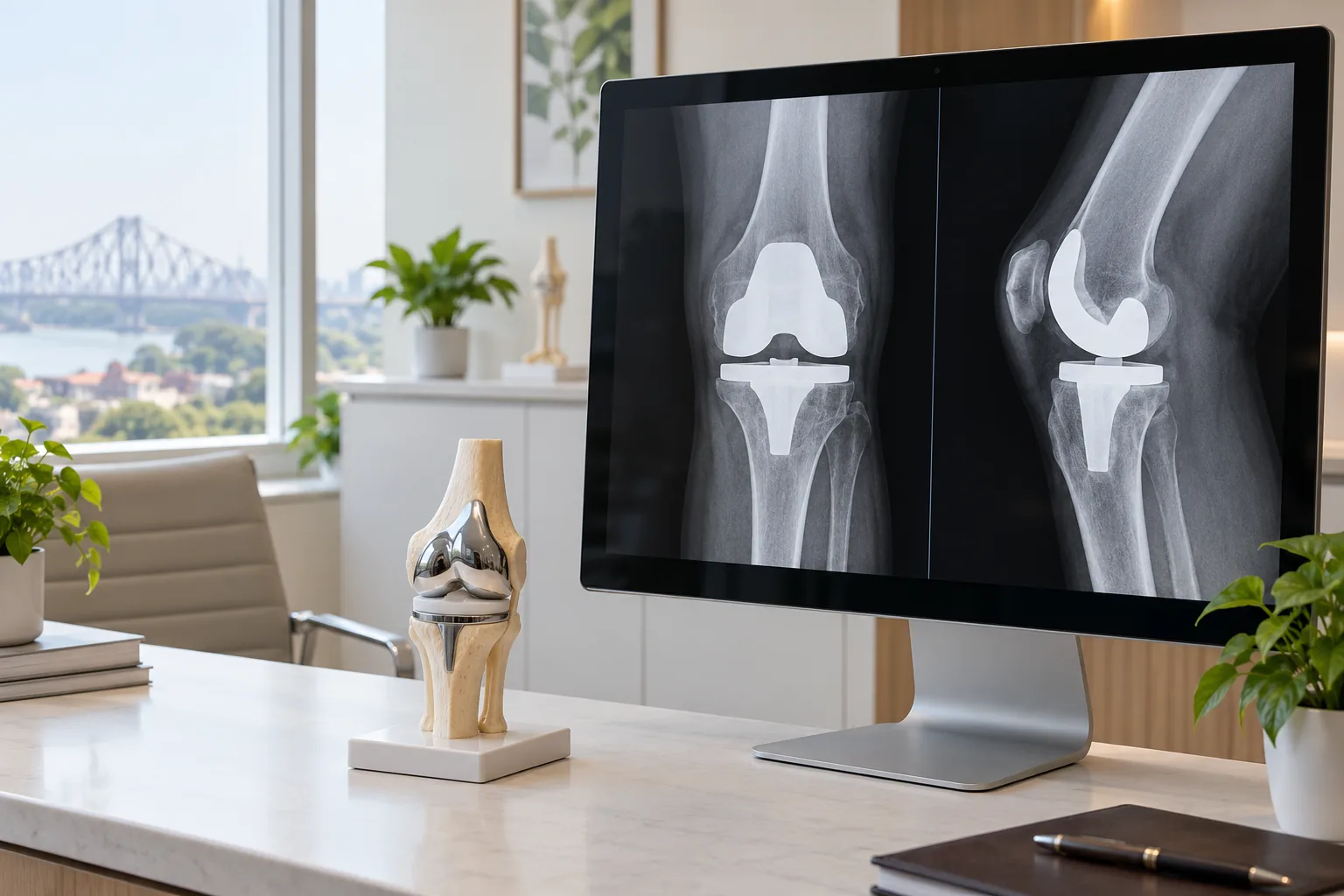
Yes. When surgery is appropriate for both joints, the operations may be planned in stages.
This means treating one joint, allowing time for recovery and then reassessing whether and when the second operation should take place.
Staging can be useful because the first operation may change the patient's symptoms and walking ability.
For example, after hip replacement, a person may discover that some of their apparent knee pain has improved. The remaining knee symptoms can then be assessed more clearly.
That doesn't guarantee the knee will no longer need treatment. Established knee arthritis may still cause pain and functional limitations.
Recovery requirements also influence the plan.
After replacement, patients need to regain movement, strength and confidence walking. If the untreated joint is severely painful, it can make rehabilitation more demanding.
The surgeon therefore considers whether the second joint is likely to interfere with recovery from the first.
There is no single waiting period that suits everyone. The interval depends on healing, medical fitness, rehabilitation progress and the condition of the untreated joint.
What If Both Joints Hurt Almost Equally?
When the hip and knee seem equally troublesome, the decision may require a closer examination of how the symptoms overlap.
The surgeon might find that the knee has substantial arthritis but that hip rotation reproduces part of the knee discomfort.
Alternatively, the hip may be stiff while the knee has significant deformity and causes most of the difficulty when standing and walking.
Neither finding should be interpreted in isolation.
The treatment discussion should explain which joint appears to be causing the greatest functional problem, whether one affects the mechanics of the other and what improvement is realistically expected from the first treatment.
Sometimes, reasonable surgeons may recommend different sequences when both approaches are clinically acceptable.
What matters is understanding the reasoning, the risks and how the untreated joint may affect recovery.
A Useful Way to Prepare for Your Arthritis Consultation
When both joints hurt, keeping a short record of your symptoms can make the appointment more productive.
For several days, notice whether the pain starts in the groin, thigh or knee. Record which activities are difficult and whether stiffness is worse after sitting, during walking or at night.
It also helps to note how far you can walk comfortably, whether you have started using a handrail more often and whether everyday activities such as dressing or getting into a vehicle have become difficult.
Bring previous reports and details of any medicines, exercises or physiotherapy programmes you've tried.
The surgeon can then compare this information with the examination findings.
If you're planning to consult a doctor for arthritis treatment in Kolkata, keeping a short record of your symptoms can make the appointment more productive.
When Should You Seek Arthritis Assessment in Kolkata?
Persistent hip or knee pain deserves assessment when it begins affecting walking, sleep, work or ordinary activities.
A worsening limp, increasing stiffness or difficulty getting out of a chair may also indicate that the existing treatment plan needs review.
When choosing an arthritis doctor in Kolkata, consider whether the clinician has appropriate qualifications and experience evaluating the type of arthritis involved. The consultation should establish which joint is contributing to your symptoms and whether non-surgical treatment remains appropriate.
Dr. Manoj Kumar Khemani is an orthopaedic surgeon associated with HealMyBones in Kolkata, with a practice that includes assessment of joint conditions.
For patients researching arthritis treatment in Kolkata, the useful starting point is an examination that establishes the type of arthritis and identifies which joint is responsible for the symptoms.
This article focuses on osteoarthritis, the degenerative form of arthritis commonly affecting hips and knees. Inflammatory conditions such as rheumatoid arthritis require a different assessment and may need medical management involving a rheumatologist.
At HealMyBones, information about arthritis care can help patients understand why treatment decisions should consider symptoms, mobility and the individual condition rather than automatically favouring surgery.
If a joint becomes suddenly hot and swollen, especially with fever, or you are suddenly unable to bear weight, seek urgent medical attention rather than waiting for a routine arthritis consultation.
FAQ
Can hip arthritis make my knee hurt even if my knee X-ray is normal?
Yes. Hip-related pain may be felt around the thigh or knee even when the knee itself has no major structural change. Restricted hip movement or pain reproduced during examination may suggest the hip is contributing, but an orthopaedic assessment is needed to identify the source.
If I have severe arthritis in both my hip and knee, will I need two replacements?
No. Imaging findings alone do not determine whether replacement is needed. A specialist assesses each joint, symptoms, daily function and response to suitable non-surgical care to discuss whether one, both or neither currently needs surgery.
Can I have knee replacement before hip replacement if both joints have arthritis?
It may be considered first when the knee causes greater disability or has findings that justify prioritising it. Hip stiffness, referred pain and rehabilitation needs can also affect the sequence. There is no fixed order for everyone; ask the surgeon how the untreated joint may affect walking and recovery.
Will treating my hip first make rehabilitation easier if my knee also has arthritis?
Treating a severely painful or stiff hip first may improve movement and make later knee rehabilitation more manageable for some people. The likely benefit depends on how much disability comes from each joint and should be discussed with the surgeon and rehabilitation team.
Before Choosing Hip or Knee Treatment, Find the Real Source of Pain
Having arthritis in two joints doesn't mean you need to make two surgical decisions immediately.
First, the doctor needs to establish where your symptoms are coming from and how much each joint affects your movement.
The hip may be contributing to pain felt around the knee. The knee may have significant arthritis of its own. Or one joint may remain manageable while the other needs more attention.
If you have been advised to consider treatment for both joints, bring your previous reports and ask how each joint was assessed, why one is being prioritised and how the proposed plan may affect walking and rehabilitation.
The most appropriate starting point is the joint—and the treatment—that best addresses your current medical findings and daily difficulties.
Medical Disclaimer
This article is for general educational purposes and does not provide an individual diagnosis, medical advice or a recommendation for hip or knee surgery.
The information primarily concerns osteoarthritis. Other causes of joint pain, including inflammatory arthritis, infection and injury, may require different investigations and treatment.
Clinical decisions depend on examination, symptoms, medical history, imaging when appropriate and individual health factors. No treatment guarantees pain relief or a particular outcome.
Seek urgent medical care for sudden severe joint pain, a hot swollen joint with fever, or an inability to bear weight, particularly after an injury.