Does a Bigger Ball Improve Stability After Hip Replacement Surgery?
During a discussion about hip replacement surgery, you may hear that the artificial ball is available in different sizes. A bigger ball can sound like an obvious choice: surely it would be harder to dislocate?
There is some truth to that idea. A larger femoral head can provide mechanical advantages, including more movement before some implant parts touch and a greater distance the ball must travel to leave the socket. But selecting an implant involves more than choosing the largest available size.
The ball works together with the artificial socket, its liner, the shape of your bones and the muscles and other tissues around the hip. The appropriate combination depends on the implant system and your individual anatomy.
The aim is not to fit the biggest ball possible. It is to select and position compatible components that suit the hip being treated.
What Is the Artificial Ball in a Hip Replacement?
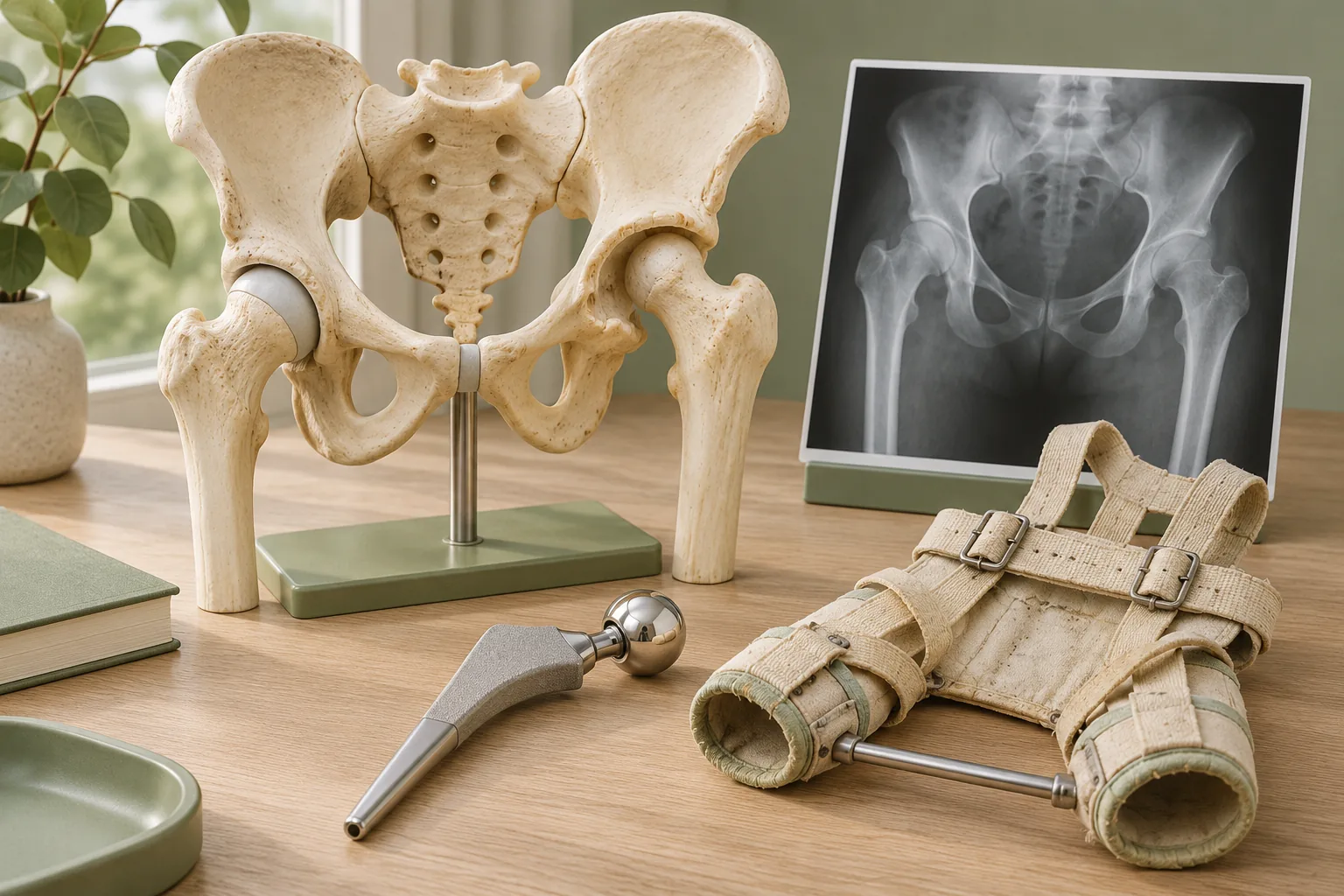
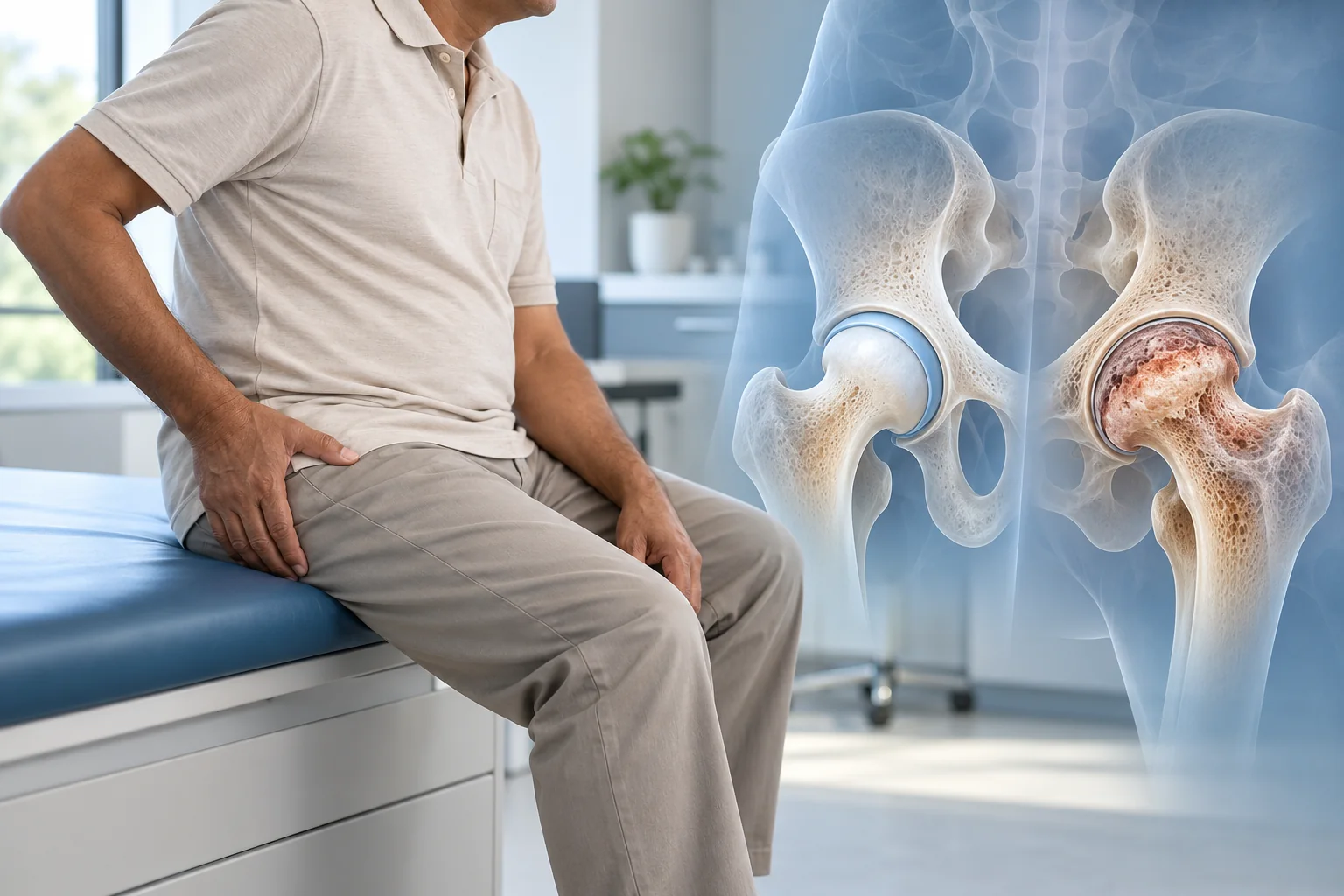
Your natural hip is a ball-and-socket joint. The rounded top of the thighbone fits into a socket in the pelvis. In a total hip replacement, the damaged joint surfaces are replaced with artificial components.
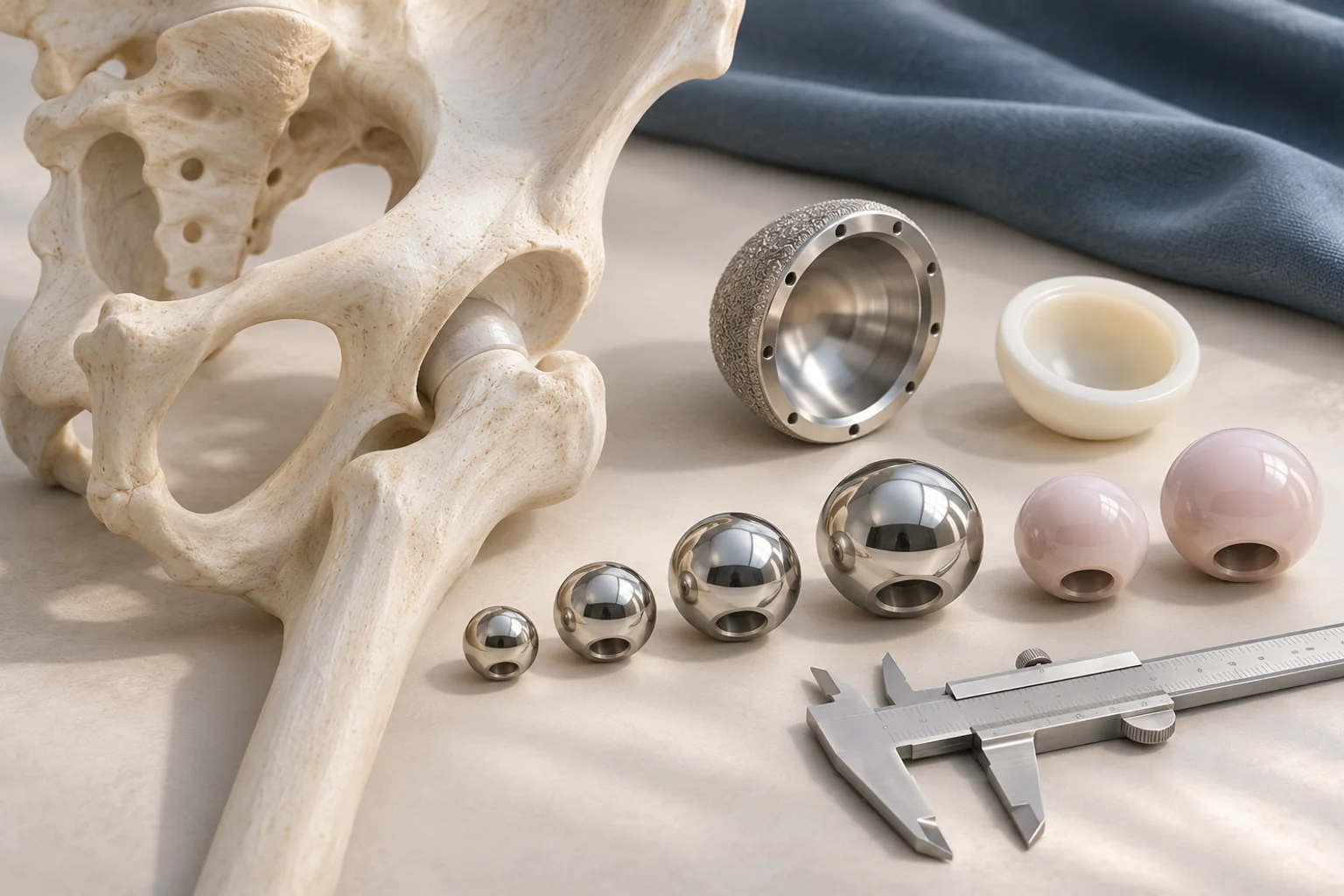
A typical replacement has a stem inside the thighbone, a ball attached to the stem, and an artificial socket fixed in the pelvis. A liner sits inside the socket and provides the surface against which the ball moves. The artificial ball is called the femoral head.
Depending on the implant system, common femoral head diameters include 28 mm, 32 mm and 36 mm; some systems offer sizes of 40 mm or more. The measurement is the width of the head across its centre. A few millimetres can affect how the components move, but the number alone does not determine whether a hip will be stable.
How Can a Larger Ball Affect Movement and Stability?
Surgeons consider the possibility of dislocation, which is when the artificial ball comes out of the socket. Head diameter is one of several factors that influence the mechanical behaviour of a replacement.
Movement before implant parts touch
As you bend or rotate your leg, the neck of the implant can approach the edge of the socket. Contact between components, called impingement, may limit further movement. With otherwise comparable component geometry and positioning, a larger head can sometimes allow more movement before that contact occurs.
Distance the ball must travel to leave the socket
Jump distance describes the distance the ball must travel before it can escape the socket. In a comparable implant arrangement, increasing head diameter can increase this distance. Socket shape and orientation, liner design and the tissues supporting the joint also matter.
A 2024 model-based analysis examined how head and neck dimensions affect range of motion and jump distance. Such calculations help explain implant mechanics, but they are not a prediction of an individual patient's outcome. A peer-reviewed review also describes how head size can affect movement, impingement, stability and bearing-related trade-offs. Read the 2024 model-based analysis and the review of femoral head diameter considerations.
A larger ball cannot correct every issue. Cup orientation, bone support, soft-tissue function and other patient-specific factors remain important to surgical planning.
What Did a 2025 Study Find About 32 mm, 36 mm and 40 mm Heads?
A 2025 analysis of the American Joint Replacement Registry included 319,531 primary total hip replacements in Medicare patients aged 65 years and older. The operations were performed from 2012 through 2020 and used 32 mm, 36 mm or at least 40 mm femoral heads.
The study reported revision for dislocation in 0.68% of the 32 mm group and 0.46% of the 36 mm group. The difference was statistically significant. For heads of 40 mm or larger, the reported rate was 0.51%; the study did not find a further reduction in revision for dislocation compared with the smaller groups.
The study also reported higher rates of all-cause revision and revision for infection in the 40 mm or larger group. The authors noted that this group included more men and patients with higher comorbidity scores, so those differences may reflect presurgical risk as well as implant choice.
These results need context. The researchers measured revision surgery for dislocation, not every dislocation; some episodes may be managed without another operation. The analysis was observational and limited to Medicare patients aged 65 and older, so it cannot establish that head size alone caused the outcomes or identify a best size for every person. Read the 2025 American Joint Replacement Registry study and its methods.
Comparing commonly used head sizes
| Head diameter | Possible consideration | Important limitation |
|---|---|---|
| 28 mm | May be used with particular component systems or anatomical requirements. | With otherwise comparable geometry, it may allow less movement before impingement than a larger head. |
| 32 mm | A commonly used size with a balance of design compatibility and movement. | Stability also depends on cup position, implant design and supporting tissues. |
| 36 mm | May provide mechanical advantages; the 2025 registry analysis found fewer revisions for dislocation than with 32 mm heads in its older Medicare population. | The finding does not mean 36 mm is the right choice for every patient or implant system. |
| 40 mm or larger | May offer additional movement in some component configurations. | The registry analysis did not show a further reduction in revision for dislocation; component compatibility and other trade-offs still need consideration. |
This is a general comparison, not a recommendation. Two people with similar symptoms may need different components because their bone dimensions, implant systems and stability considerations differ.
Why Not Simply Use the Largest Ball?
The ball has to fit inside the liner and socket selected for the reconstruction. In some component combinations, increasing the ball diameter within a fixed socket shell leaves less space for the liner. The exact relationship depends on the implant system; it should not be assumed that every larger head creates the same liner thickness or risk.
The liner is part of the bearing system. Its material, geometry and compatibility with the ball and socket must follow the implant manufacturer's specifications. Highly cross-linked polyethylene is designed to improve wear resistance compared with older conventional polyethylene, while ceramic and other bearing combinations have their own properties and design limits.
Head diameter can also affect wear and friction differently depending on the materials and construction used. A larger head should not be selected in isolation or by sacrificing a component combination that is not approved for the specific system. The surgeon plans the ball, liner and socket together.
Why Does the Socket's Position Matter?
The artificial socket is fixed in the pelvis at an orientation planned for the reconstruction. Surgeons assess its inclination and forward rotation, often called anteversion. Position can influence how the ball moves within the socket.
Pelvic movement also changes with posture. A person's pelvis may move differently when sitting than when standing, and spinal stiffness or a previous spinal fusion can affect that movement. These details can be relevant when planning hip replacement for some patients.
A larger ball cannot compensate for every concern involving cup orientation, restricted pelvic movement or inadequate soft-tissue support. Head size is one part of the plan, not a substitute for considering the whole joint.
How Do Muscles and Other Tissues Support the Hip?
The artificial components provide the joint's moving surfaces, but muscles and other tissues around the hip also help control and support movement. Their condition varies. Previous operations, long-standing pain, muscle weakness or certain neurological conditions may be relevant to an individual assessment.
The surgeon also considers how the ball, stem and socket work together with the surrounding tissues. For selected patients, a different design such as a dual-mobility construct may be discussed. It is not automatically needed or preferable for everyone; the decision depends on the person's circumstances and the available implant system.
How Is the Right Implant Combination Chosen?
Planning begins with your symptoms, medical history, examination and the reason replacement is being considered. X-rays help assess the pelvis, joint damage, bone dimensions and upper thighbone. Preoperative templating may be used to estimate component sizes and positions.
Previous operations, hip deformity, spinal movement and other relevant conditions may affect planning. During surgery, the surgeon can assess movement and stability using compatible trial components. Findings during the operation may require a change from the initial plan.
The goal is an appropriate fit and a stable reconstruction using components designed to work together. It is not to reach one target ball diameter.
What Should You Ask Before Hip Replacement Surgery?
You do not need to memorise implant measurements. It may be more useful to understand why the recommended components suit your hip.
| Question to discuss | Why it may help |
|---|---|
| What head diameter is being considered? | Helps you understand how stability and implant design were considered. |
| How do the ball, liner and socket fit together? | Explains why the largest available head may not suit every component combination. |
| Do my bones, previous operations or spine affect planning? | Identifies individual anatomical or movement considerations. |
| What is my individual dislocation risk? | Supports a realistic discussion of the factors that may affect stability. |
| What activity and rehabilitation plan should I expect? | Clarifies how movement and strength are restored after surgery. |
If you have had previous hip surgery, spinal fusion or a dislocation, or have significant muscle weakness, tell your treating team. Those details may matter more than a preference for one ball size.
Hip Replacement Surgery in Kolkata: Understanding Your Options
When researching hip replacement surgery in Kolkata, patients often compare hospitals, techniques and implant materials. Useful questions include whether surgery is appropriate for the condition, how the components will be selected and what the proposed procedure is intended to address.
Dr. Manoj Kumar Khemani is an orthopaedic surgeon associated with HealMyBones in Kolkata. A consultation can help assess your symptoms and discuss component selection, recognised risks and rehabilitation in the context of your own examination and imaging.
No implant design removes every risk. Ask the treating surgeon to explain both the potential benefits and the limitations of the recommended approach.
A Stable New Hip Depends on More Than One Measurement
A larger artificial ball can offer mechanical advantages, and research in older adults found fewer revisions for dislocation with 36 mm than 32 mm heads. But the largest available head is not necessarily the most suitable choice. The registry study did not find an additional reduction in revision for dislocation with heads of 40 mm or more, and its observational results cannot determine the best implant for an individual.
The socket, liner, component compatibility, bone anatomy, cup position and surrounding tissues all matter. Ask your orthopaedic surgeon why a particular combination has been recommended and how it fits your circumstances. The aim is a well-planned artificial hip, not simply the biggest artificial ball.
FAQ
Is a 36 mm hip replacement ball better than a 32 mm ball?
A 36 mm head may offer a stability advantage in some situations. A 2025 registry analysis found fewer revisions for dislocation with 36 mm than 32 mm heads among Medicare patients aged 65 and older, but it was observational. The appropriate size depends on your anatomy and compatible components. Ask your surgeon why a particular head is recommended.
Can a hip replacement dislocate even if a larger ball is used?
Yes. Head size is only one factor. Cup position, implant design, soft-tissue support and individual movement can also affect stability. Your surgeon can explain the factors relevant to your operation and the advice to follow during recovery.
Does a bigger artificial hip ball make the implant last longer?
A larger ball does not automatically mean a longer-lasting implant. Performance also depends on bearing materials, component compatibility, fixation, positioning and patient-related factors. Discuss the evidence and trade-offs for the implant system proposed for you.
Can I ask my surgeon to use a particular hip replacement ball size?
Yes, you can ask about implant options and share your preferences. The final selection needs to fit your bone dimensions, socket, liner and stability requirements. Ask the surgeon to explain the recommended combination and any suitable alternatives.
Medical Disclaimer
This article is for general education and is not an individual diagnosis, implant recommendation or surgical advice.
Hip replacement has recognised risks, including infection, blood clots, dislocation, fracture, nerve injury, implant wear and persistent symptoms. A particular femoral head diameter cannot guarantee stability, recovery or implant longevity.
Treatment and implant decisions should be made after assessment by a qualified orthopaedic surgeon. Seek urgent medical care for sudden severe hip pain, an obvious deformity or inability to bear weight after hip replacement, particularly after a fall.