How Childhood Hip Problems Can Affect Hip Replacement in Adulthood
You may have worn a brace as a child, had an operation, or grown up with a slight limp. Years later, hip pain may begin to affect walking, getting dressed or putting on shoes, and a doctor may mention hip replacement.
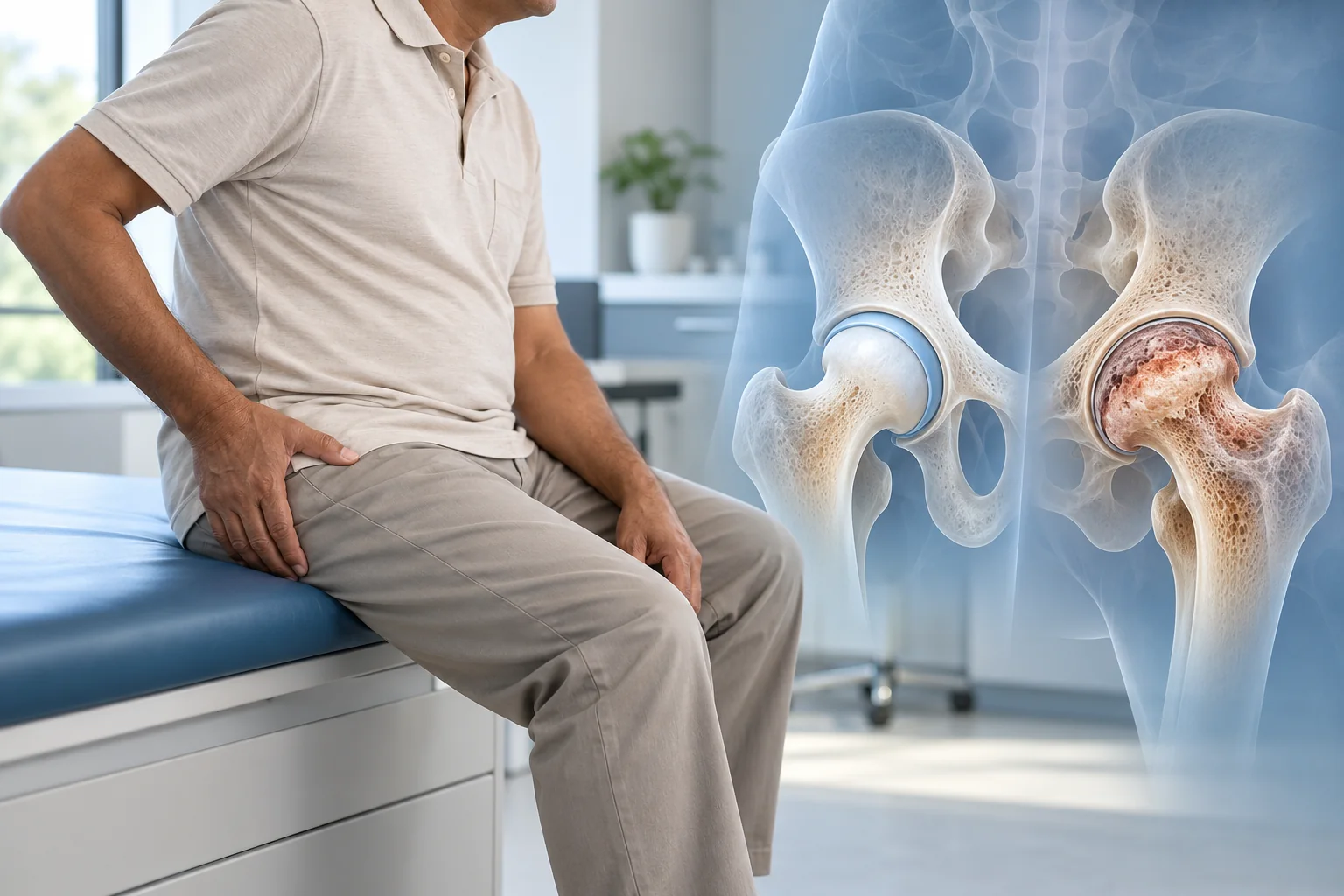
It is natural to wonder whether an operation will be different because of what happened years ago. A childhood hip condition can leave lasting changes in the socket, upper thighbone, leg length or surrounding tissues. Those changes may influence how a replacement is planned, but they do not make replacement impossible or mean that everyone needs a specialised implant.
The starting point is an individual assessment of the hip as it is now, together with your symptoms, medical history and any previous operations.
Why Can Hip Replacement Be Different After a Childhood Hip Problem?
As a child grows, a hip condition can affect how the socket and upper thighbone develop. If arthritis later becomes painful enough for replacement to be considered, the surgeon may need to assess:
- The socket: It may be shallow, small, unusually oriented or have less bone available to support a replacement cup.
- The thighbone: Its upper end may have an unusual angle or rotation, and the canal that receives a stem may be narrower than expected.
- Leg length and hip position: A difference may come from bone length, the position of the hip, pelvic tilt or soft-tissue tightness.
- Previous surgery: Healed bone cuts, scars or metalwork can affect access and implant planning.
- Muscles and other tissues: They may have adapted to the hip's position over many years.
The amount of change varies widely. A mildly shallow socket is not the same situation as a hip that remained out of its usual position for many years. A 2024 review describes why careful assessment of the socket, femur, soft tissues and prior surgery can matter when planning replacement after childhood hip disorders. Read the review on hip replacement after childhood hip disorders.
Which Childhood Hip Conditions May Still Matter?
Some people know the name of their childhood diagnosis. Others remember a cast, brace or operation but do not have the records. In some cases, the underlying difference is only recognised when imaging is taken for adult hip symptoms.
Examples include:
- Developmental dysplasia of the hip (DDH): The socket may not provide the usual coverage around the femoral head. The degree of change ranges from mild shallowness to a hip that remained partly or fully displaced.
- Perthes disease: A temporary interruption of blood supply to the growing femoral head can leave it flatter or irregular after healing.
- Slipped capital femoral epiphysis (SCFE): A displacement through the growth plate near the top of the thighbone during adolescence can alter the shape of the femoral head and neck.
These conditions do not produce identical anatomy. The history can help explain what an examination or scan shows, but the plan depends on the person's current bone shape, symptoms and overall health.
How a Shallow Socket Can Change the Plan for the Replacement Cup
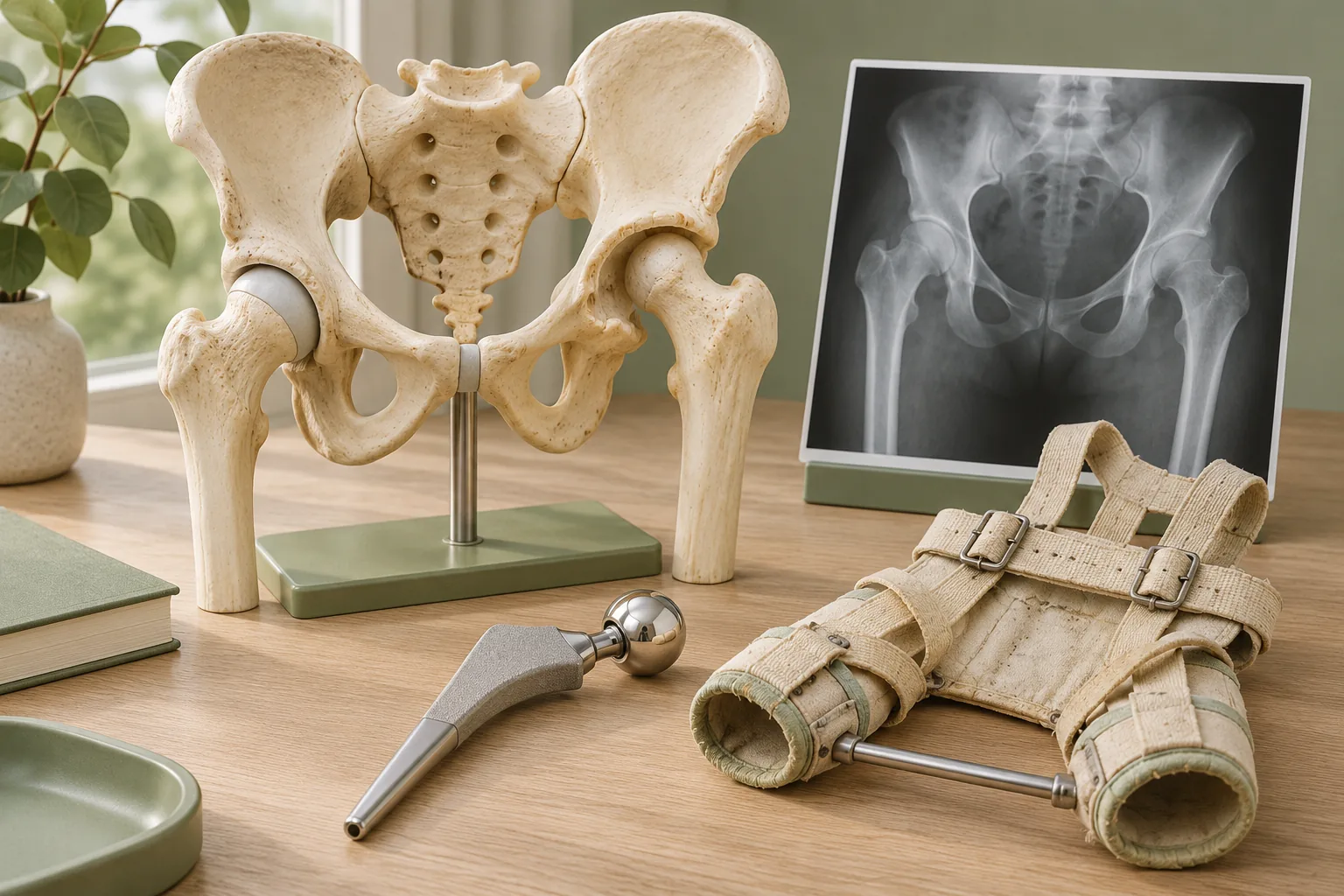
In a normally developed hip, the rounded femoral head sits inside a cup-shaped socket in the pelvis. During total hip replacement, an artificial cup must be positioned and fixed using the bone that is available.
If the socket is shallow, small or positioned differently, the surgeon may need to identify the original socket and assess how much bone can support the new cup. The appropriate cup size and fixation strategy depend on the individual anatomy; a standard measurement or implant choice is not right for everyone.
Restoring the hip centre may be one planning goal, but it must be balanced with bone support, fixation, stability and the surrounding tissues. Reviews of replacement in DDH describe the range of acetabular and femoral changes and the surgical options that may be considered. Read a review of total hip replacement in developmental dysplasia.
Why the Upper Thighbone Also Needs Careful Assessment
The other half of the hip joint is the upper thighbone, or femur. A replacement stem is usually placed inside the femur, with a ball attached at its upper end. Childhood conditions or previous corrective surgery can leave the femoral neck at an unusual angle, change the bone's rotation or narrow the internal canal.
That can affect which stem shape and size may fit. Some people can receive conventional components; others may need different options or additional reconstruction. A specialised implant is not automatically better. The surgeon considers how the components fit the bone and how the reconstructed joint may function safely and stably.
Three Examples of How Anatomy Can Influence Planning
| Possible finding | What may need assessment | How planning may differ |
|---|---|---|
| Mildly shallow socket | Socket coverage and available bone support | Cup size, position and fixation options |
| Unusually shaped or rotated thighbone | Femoral canal, neck angle and rotation | Stem fit and alignment options |
| Longstanding displacement with shortening | Hip centre, leg length, muscles and nerve safety | The amount and method of reconstruction, if surgery is appropriate |
This comparison is not a ranking of conditions. It shows why a childhood diagnosis alone does not tell the whole story: the surgeon needs to understand the present anatomy and the person's goals and symptoms.
Why Leg-Length Differences Need Individual Planning
One leg may be genuinely shorter, or it may appear shorter because of the hip's position, pelvic tilt or tight muscles. An examination and appropriate imaging help the surgeon understand the source of the difference.
After replacement, the leg may sit and move differently. The aim is to create a stable, functional reconstruction, but making both legs look exactly equal on an X-ray is not always possible or the only consideration. Muscles and nerves may have adapted to the hip's position over time, so the expected correction and its limits should be discussed before surgery.
In selected cases involving a high-riding hip, a surgeon may consider a femoral shortening procedure as part of a more complex reconstruction. This is not needed for everyone; the choice depends on the anatomy and the risks and benefits for that patient.
What If You Had Hip Surgery as a Child?
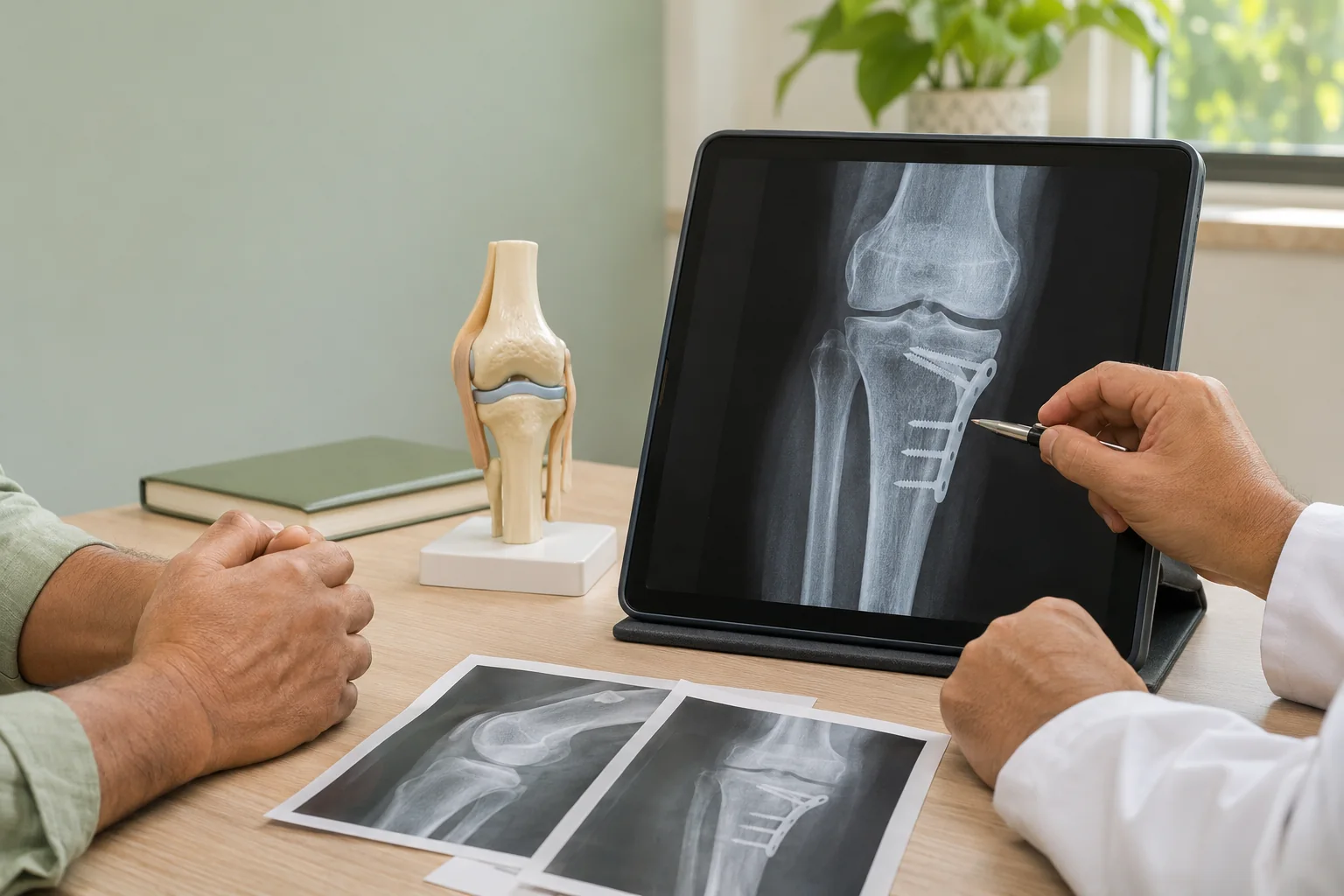
Earlier surgery can change the shape of the socket or the angle and rotation of the thighbone even when the bone healed well. Previous incisions and scar tissue may also affect the surgical approach.
A plate or screw does not automatically need to be removed just because a replacement is planned. The surgeon assesses whether it interferes with the proposed implant or access. If you cannot find old records, share what you remember, such as the approximate age at surgery, the type of cast or brace, and which side was treated. Older X-rays and operation notes can be useful when available.
Which X-Rays or Scans May Help With Planning?
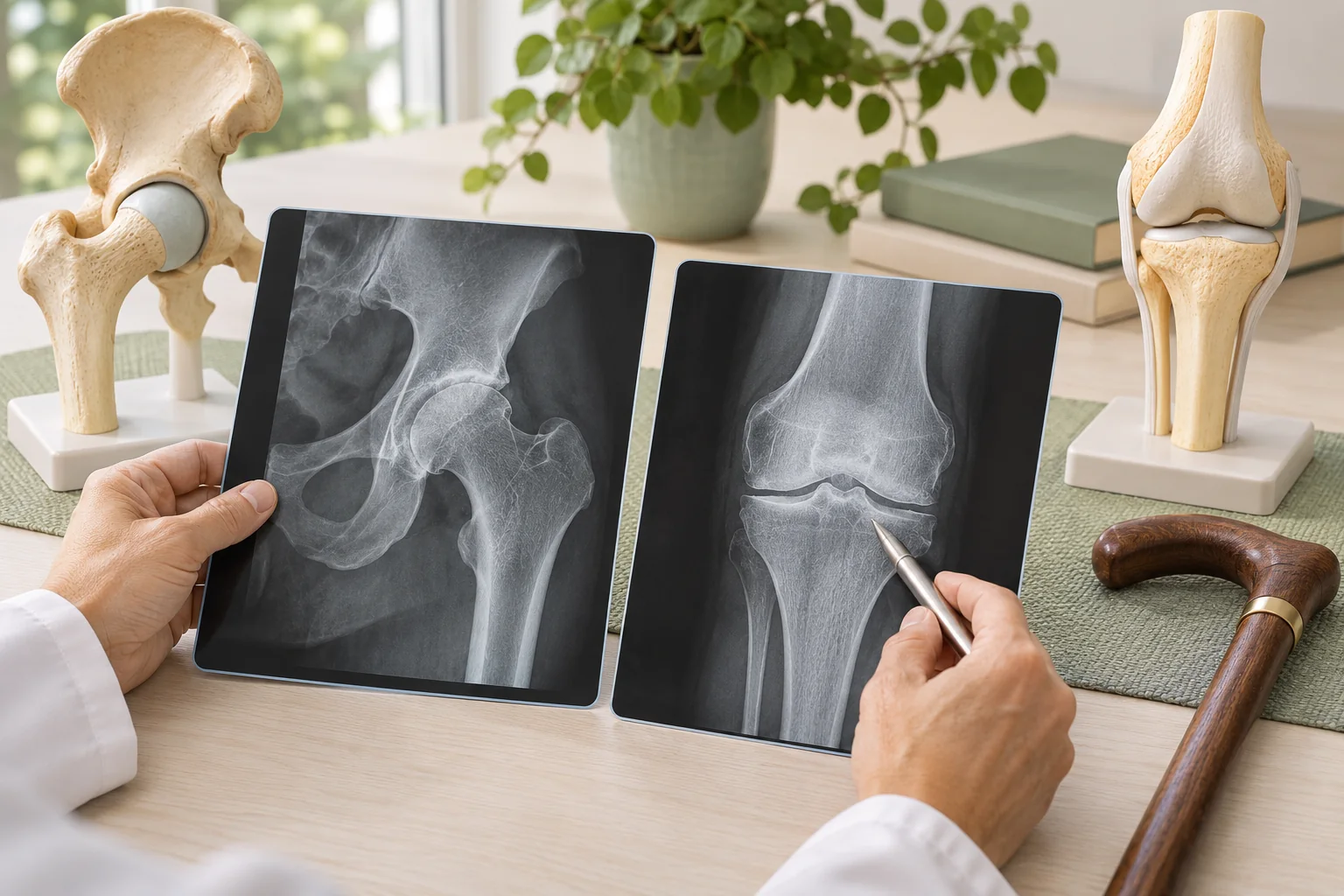
The assessment usually includes a clinical examination and appropriate hip and pelvic X-rays. Depending on the anatomy, the surgeon may also request views that show more of the femur. A CT scan can provide additional three-dimensional information about bone shape and rotation when that detail is likely to change the plan.
Not every patient needs a CT scan. A 2024 review discusses using examination, radiographs, preoperative templating and CT as an adjunct when complex bone anatomy needs further assessment. These are planning tools, not guarantees of a particular outcome.
What to Bring to a Hip Replacement Consultation
| Information or record | Why it may help |
|---|---|
| Childhood diagnosis or discharge record | May identify the original condition |
| Previous operation notes | May clarify which correction was performed |
| Old and recent X-rays | Can help compare earlier and current anatomy |
| Details of plates or screws, if known | Helps assess whether metalwork affects access or implant placement |
| A short description of your limp or shoe raise | Helps explain walking and leg-length concerns |
| Current medicines and medical history | Supports a discussion of treatment and surgical risk |
It may also help to explain whether your walking has changed recently, how far you can walk comfortably and which daily activities have become difficult. These details connect imaging findings to the problems you want help with.
Does Altered Anatomy Mean Minimally Invasive Surgery Is Better?
Not necessarily. Terms such as minimally invasive, small-incision or muscle-sparing describe aspects of surgical access. They do not correct a shallow socket or an unusually shaped thighbone by themselves.
The proposed approach should give the surgeon appropriate access to assess and prepare the bone, position the components and protect surrounding tissues. A smaller incision alone does not guarantee less pain, faster recovery or fewer complications. Ask how the suggested approach fits your anatomy and what its limitations may be.
Can You Recover After a Complex Hip Replacement?
Recovery varies with the operation, the person's health and the condition of the hip before surgery. Someone who has walked with a limp for many years may need time and rehabilitation to build strength and adjust their walking pattern. If extra bone procedures are part of the reconstruction, the surgeon may recommend specific restrictions while healing takes place.
Possible risks of hip replacement include infection, blood clots, dislocation, fracture, nerve or blood-vessel injury, differences in leg length, implant wear and the possible need for further surgery. The likelihood and relevance of these risks vary; discuss them with the treating team. NHS information on possible hip-replacement complications.
Does a Childhood Hip Condition Mean You Will Need a Replacement?
No. A childhood hip condition or an unusual-looking X-ray does not automatically mean that replacement is needed. The decision depends on symptoms, examination, daily function, imaging when appropriate, other health factors and the response to suitable non-surgical care.
NICE guidance says to consider referral for joint replacement when symptoms substantially affect quality of life and non-surgical management is ineffective or unsuitable. The decision should be based on clinical assessment rather than an X-ray finding alone. Read NICE guidance on osteoarthritis and joint-replacement referral.
Choosing a Hip Replacement Surgeon in Kolkata
If you are considering replacement after a childhood hip condition, ask how the socket, upper thighbone, leg-length difference, previous surgery and muscle function affect the proposed plan. It is reasonable to ask whether additional imaging is needed, which implant options are being considered, what improvement is realistic and which limitations may remain.
Dr. Manoj Kumar Khemani is an orthopaedic surgeon associated with HealMyBones in Kolkata. An individual consultation can help assess whether the symptoms are coming from the hip, whether replacement is appropriate and what the person's anatomy may mean for planning.
A childhood hip problem does not make every replacement unusually complex, and it does not automatically require surgery. The history is useful because it helps the treating team understand the hip the person has lived with and plan around the findings that matter now.
FAQ
Can I have hip replacement if I was born with a shallow hip socket?
Hip replacement may be possible, but the surgeon needs to assess the socket's bone support and the shape of the upper thighbone. X-rays and, when the findings may change the plan, CT imaging can help with individual planning.
Will hip replacement correct a limp I have had since childhood?
It may improve walking when pain or restricted hip movement contributes to the limp, but muscle weakness, nerve problems, bone-length differences and long-standing movement habits can affect the result. Ask the surgeon what change is realistic for your specific findings.
Will I need a special implant because I had hip surgery as a child?
Not necessarily. Some people can receive conventional components. The surgeon considers the current bone shape, any retained metalwork and whether a different component or additional reconstruction is appropriate.
Is hip replacement more complicated after childhood hip dysplasia?
It can require more detailed planning when the socket, thighbone or surrounding tissues have developed differently. The degree varies from person to person, so an orthopaedic assessment is needed to explain which findings matter for a particular operation.
Your Childhood Hip History Should Be Part of Today's Plan
If a hip problem from childhood affects you now, do not assume that every replacement follows the same plan. The socket, upper thighbone, previous operations and years of adaptation can all be relevant, but the degree of change varies.
Bring any old records you can find and ask the surgeon to explain what the current examination and images show, why a particular plan is being considered, what improvement is realistic and what limitations may remain. The goal is an individual decision based on current symptoms and anatomy, not simply the name of a childhood diagnosis.
Medical Disclaimer
This article provides general educational information and is not an individual diagnosis, medical advice or a recommendation for hip replacement.
Childhood hip conditions and their effects vary. Not everyone needs a replacement, a specialised implant or additional reconstruction. Treatment decisions depend on symptoms, examination, appropriate imaging, surgical history and overall health. No technique guarantees pain relief, equal leg length or a particular recovery outcome.
Consult an appropriately qualified orthopaedic surgeon about your own condition. Seek urgent medical care for sudden severe joint pain, a hot swollen joint with fever, or an inability to bear weight, particularly after an injury.