A twisted knee can feel harmless in the first few minutes, especially if the pain is not severe. But knee swelling after twist injuries can give an early clue about what may have happened inside the joint. Swelling that appears quickly, especially within the first two hours, may suggest a different injury pattern from swelling that develops slowly later in the day or the next morning.
What does rapid knee swelling after a twist usually mean?
Rapid swelling after a knee twist may suggest bleeding or fluid build-up inside the joint. This can happen with an ACL injury, significant ligament sprain, bone bruise, meniscus injury, cartilage damage, or a combined internal knee injury.
A practical first check:
| Swelling pattern | What it may suggest | Likely evaluation pathway |
|---|---|---|
| Swelling within 1–2 hours | ACL injury, internal bleeding, bone bruise, major ligament injury | Early orthopedic review, stability tests, X-ray if needed, MRI if internal injury is suspected |
| Swelling within 24 hours | ACL injury or combined knee injury may be considered | Clinical examination, swelling control, imaging decision |
| Swelling next day | Meniscus injury, sprain, joint irritation, overload response | Examination for joint-line pain, locking, catching, and movement restriction |
| Swelling with locking | Possible meniscus tear or loose body | Mechanical symptoms should be evaluated |
| Swelling with giving way | Possible ligament instability | ACL and collateral ligament tests may be needed |
| Swelling with inability to bear weight | Bone injury or severe soft-tissue injury may need exclusion | X-ray or urgent assessment may be advised |
Patients with painful swelling, instability, difficulty walking, or repeated giving-way after a twist may need a structured evaluation for a suspected knee ligament injury that connects ACL assessment, meniscus signs, imaging needs, and safe return-to-activity planning.
The real-life pattern: “I twisted my knee, then it ballooned”
This story is common.
A football player changes direction and feels a pop. A badminton player lands awkwardly. Someone slips on the stairs and twists the knee inward. For the first few minutes, they try to walk it off.
Then the swelling starts.
That timing matters.
At Heal My Bones, patient education around knee ligament injuries often starts with one simple detail: when the swelling began. Not because timing alone gives the diagnosis, but because it helps decide how carefully the knee should be examined.
A knee that swells rapidly after a twisting injury deserves a different level of attention from a knee that feels sore but stays mostly dry for the first few hours. Both can hurt. Both can limit movement. But the injury pattern may not be the same.
What causes immediate swelling after a knee twist?
Immediate or very early swelling may happen when the injury causes bleeding or rapid fluid build-up inside the knee joint. This can occur with ACL injury, significant ligament sprain, bone bruise, cartilage injury, or combined internal damage.
The American Academy of Orthopaedic Surgeons explains that swelling after an ACL injury commonly develops within 24 hours, and MRI can help doctors look for associated soft-tissue injuries such as meniscus or cartilage damage. Patients who want a neutral reference can read the AAOS guide on anterior cruciate ligament injuries.
The patient’s memory of the injury is useful. A pop, sudden swelling, giving-way, locking, or difficulty bearing weight can help the doctor decide what to examine first.
The table cannot confirm the injury, but it can help patients explain the swelling pattern more clearly during consultation.
How do ACL and meniscus injuries differ?
ACL and meniscus injuries can both happen after twisting, but they often behave differently.
An ACL injury is commonly linked with a sudden pivot, landing, or direction change. The patient may feel or hear a pop. Swelling can come quickly. The knee may feel loose, unstable, or unreliable during turning movements.
A meniscus injury often creates pain along the joint line. The knee may catch, click, lock, or feel stuck during bending and straightening. Swelling may appear later, although a traumatic meniscus tear can also become swollen early.
Real knees do not always follow textbook patterns.
An ACL tear and meniscus tear can happen together. A patient may have both swelling and locking. Another patient may walk after the injury but still have instability later. That is why the evaluation should not stop after hearing one symptom.
Patients searching for an ACL injury doctor in Kolkata should describe the swelling timing, pop sensation, walking ability, locking, giving-way, and sports activity at the time of injury. These details help separate ligament instability from meniscus-related mechanical symptoms.
What should patients do during the first day?
The first day should focus on protection, swelling control, and avoiding actions that make the injury worse.
A safe first-day approach usually includes:
- stop sports or high-load activity
- avoid repeated twisting or testing of the knee
- rest the leg
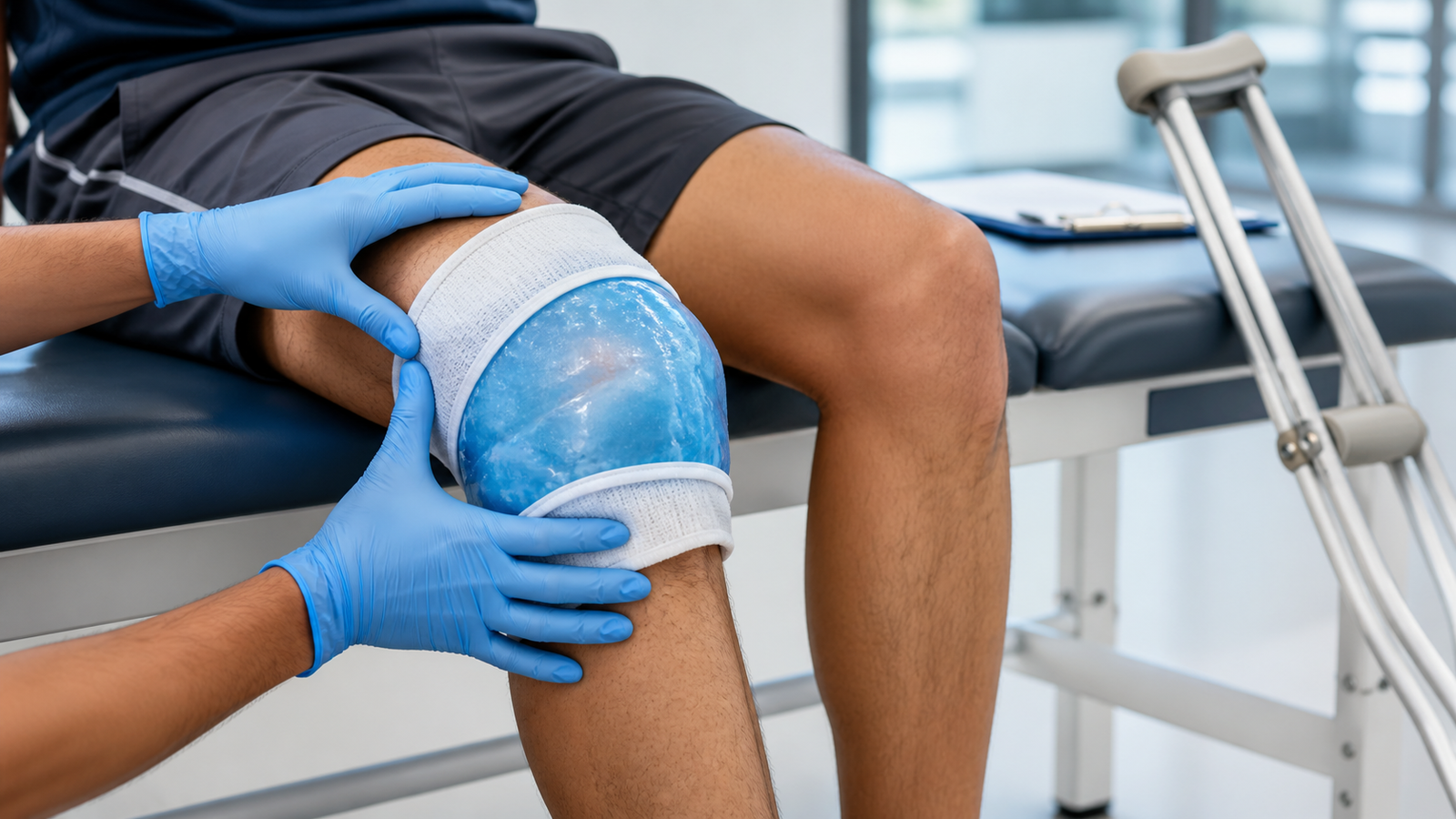
- apply ice wrapped in cloth
- keep the knee elevated when possible
- avoid massage over acute swelling
- avoid forceful bending if the knee feels locked
- use support if walking feels unsafe
- seek medical review if swelling is rapid or weight-bearing is difficult
Do not force the knee to “prove” it is fine.
Many patients make the injury worse by repeatedly bending, twisting, squatting, or trying to jog after the first pain settles. Pain can reduce for a short time while swelling and instability remain.
Painkillers should also be used carefully, especially for patients with kidney disease, acidity, blood-thinner use, heart disease, uncontrolled blood pressure, or other medical conditions. A qualified doctor should guide medicine use when there is doubt.
When is MRI useful after a twisting knee injury?
MRI is useful when the doctor suspects internal soft-tissue injury such as ACL tear, meniscus tear, cartilage injury, or bone bruise that cannot be seen clearly on plain X-ray. It is not needed for every mild twist, but it becomes more relevant when swelling, instability, locking, or persistent pain suggests a deeper injury.
The American College of Radiology guidance on acute knee trauma states that radiographs are usually the first imaging study when a fall or twisting injury is linked with focal tenderness, effusion, or inability to bear weight. If no fracture is seen and meniscus or ligament injury is suspected, MRI is useful for evaluating internal knee damage. Patients can review the ACR summary on acute trauma to the knee.
The sequence matters.
A doctor may first examine the knee, check walking ability, look for swelling, test ligament stability, and decide whether X-ray is needed. MRI is then considered when the clinical picture suggests an internal injury or when symptoms do not match a simple sprain.
When should a ligament specialist doctor examine the knee?
A ligament specialist doctor in Kolkata should examine the knee when swelling appears quickly after a twist, the knee gives way, walking is difficult, or the patient cannot return to normal movement after rest.
Medical review becomes more important when there is rapid swelling, a pop during injury, difficulty bearing weight, locking, catching, repeated instability, or swelling that keeps returning after activity.
Patients searching for an ACL injury doctor in Kolkata, best ACL surgeon in Kolkata, or ligament specialist doctor in Kolkata should ask how the doctor checks swelling timing, instability, locking, MRI need, and safe return to sport. The first visit should not jump directly to surgery; it should first confirm the injury pattern.
Dr. Manoj Kumar Khemani may be relevant for patients who need evaluation of acute knee swelling, suspected ACL injury, meniscus signs, and ligament instability after a twist.
The aim of the consultation is simple: find out whether the knee is safe, unstable, locked, or likely to need imaging before activity resumes.
The Heal My Bones website explains ligament injuries in a way that helps patients understand why swelling timing, instability, MRI decisions, and sports-return planning should be connected.
Expert asset: First-two-hours knee swelling tracker
An original planning-flow diagram can make this blog stronger as a patient education resource.
Suggested diagram layout:
Twist or Pivot Injury ⬇ First 2 Hours: Check swelling speed ⬇ Can weight be placed on the leg safely? ⬇ Check for pop, giving-way, locking, or catching ⬇ Clinical knee examination ⬇ X-ray or MRI decision based on findings ⬇ Safe activity and follow-up plan
Suggested caption for the diagram:
“Swelling timing helps guide the next step.”
This gives readers a simple visual framework without making them self-diagnose.
FAQ
Should I ice my knee if it swells quickly after a twist?
Ice can help reduce pain and swelling after an acute knee twist. Wrap the ice pack in cloth and avoid applying ice directly to the skin or using it for too long at one time. Seek medical review if swelling is rapid, walking is difficult, or the knee feels unstable.
Can I walk if my knee swelled after twisting it?
Walking should be limited if the knee is swollen, painful, unstable, or unable to bear weight normally. Continuing to walk on a significant ligament or internal knee injury can increase pain and delay proper assessment. Use support if needed and get the knee examined before returning to sports or heavy activity.
Do knee braces help after a suspected ACL or ligament injury?
A knee brace may help protect the joint temporarily, but it does not confirm the diagnosis or repair the injury. The right support depends on swelling, instability, walking ability, and the suspected ligament pattern. A doctor can advise whether bracing, imaging, physiotherapy, or further treatment is needed.
When should MRI be done after knee swelling from a twist?
MRI is usually considered when examination suggests ACL injury, meniscus tear, cartilage injury, bone bruise, locking, giving-way, or persistent swelling. X-ray may be checked first when there is tenderness, major swelling, or inability to bear weight. Bring injury details and previous reports so the doctor can decide whether MRI is needed.
Practical next step
The first two hours after a twisting knee injury can say a lot.
Not everything is an emergency. Not every swollen knee means an ACL tear. But rapid swelling, instability, locking, or inability to walk should not be treated casually.
A smart next step is to remember the timeline: when the twist happened, when swelling started, whether walking was possible, and whether the knee felt unstable.
That information helps the doctor choose the right evaluation pathway.
Medical Disclaimer
This article is for general educational purposes only and should not be taken as personal medical advice, diagnosis, or treatment recommendation. Knee swelling, ACL injuries, meniscus tears, ligament sprains, MRI decisions, braces, medicines, physiotherapy, surgery, and return-to-sport plans vary from patient to patient. Please consult a qualified orthopedic doctor with your symptoms, injury details, reports, medical history, current medicines, and examination findings before making any treatment decision.