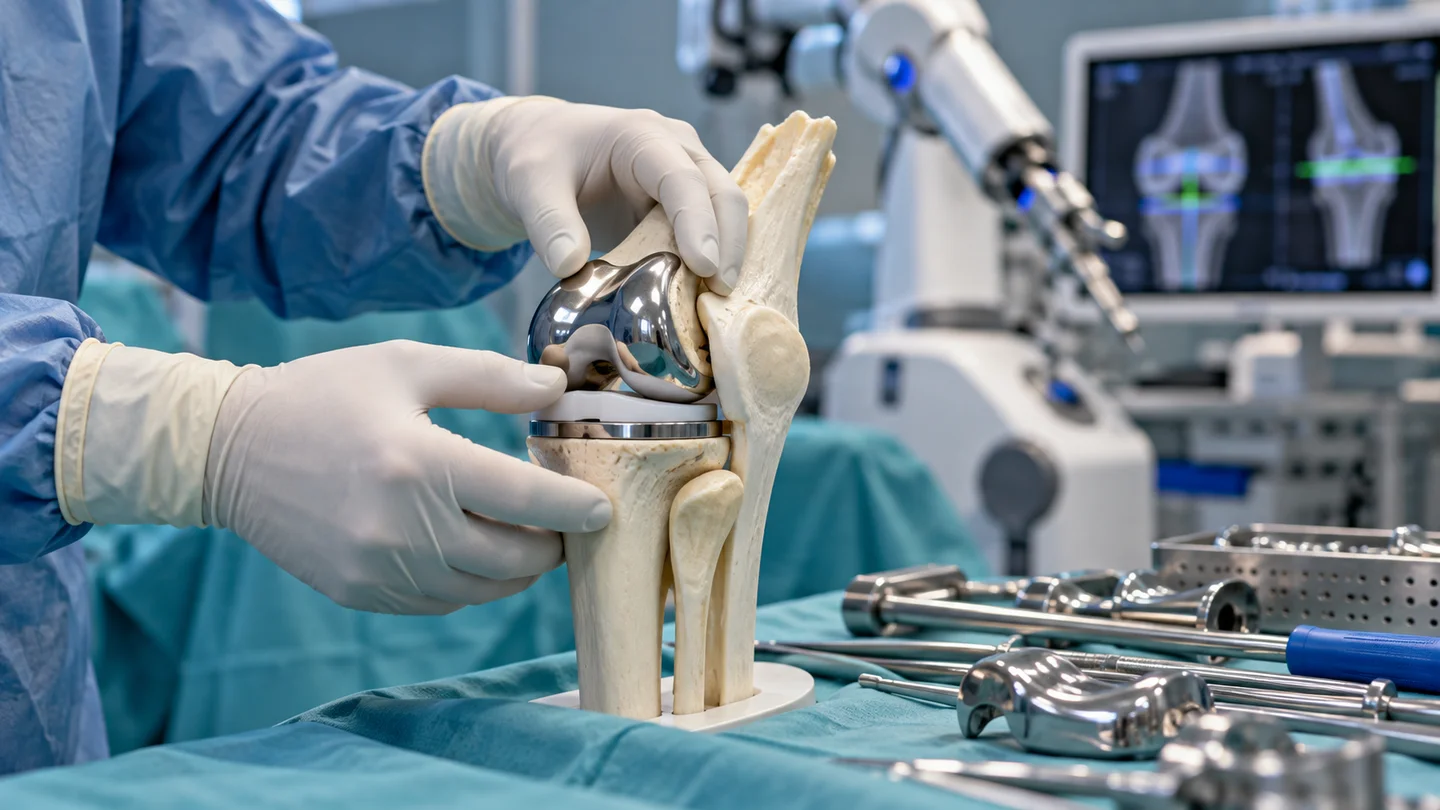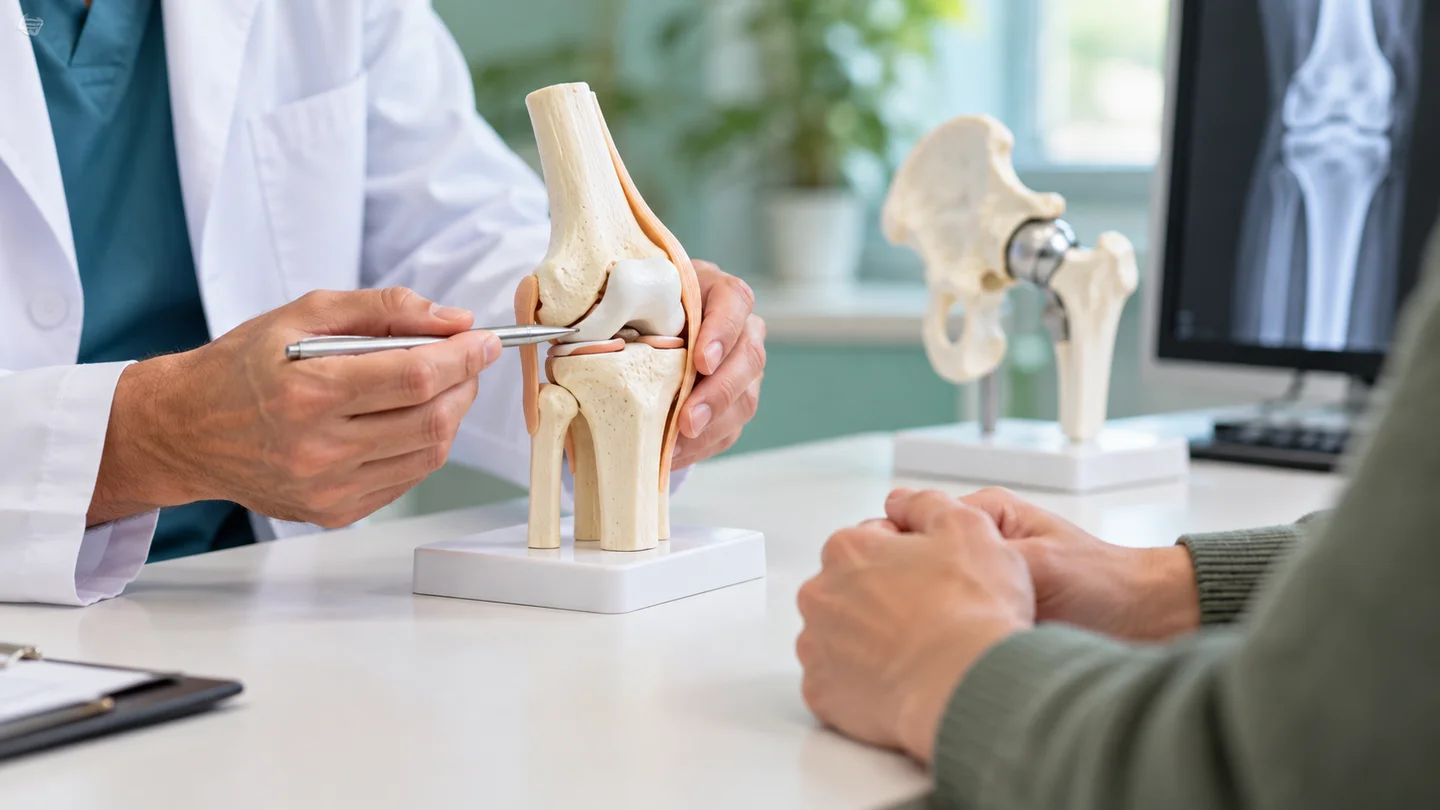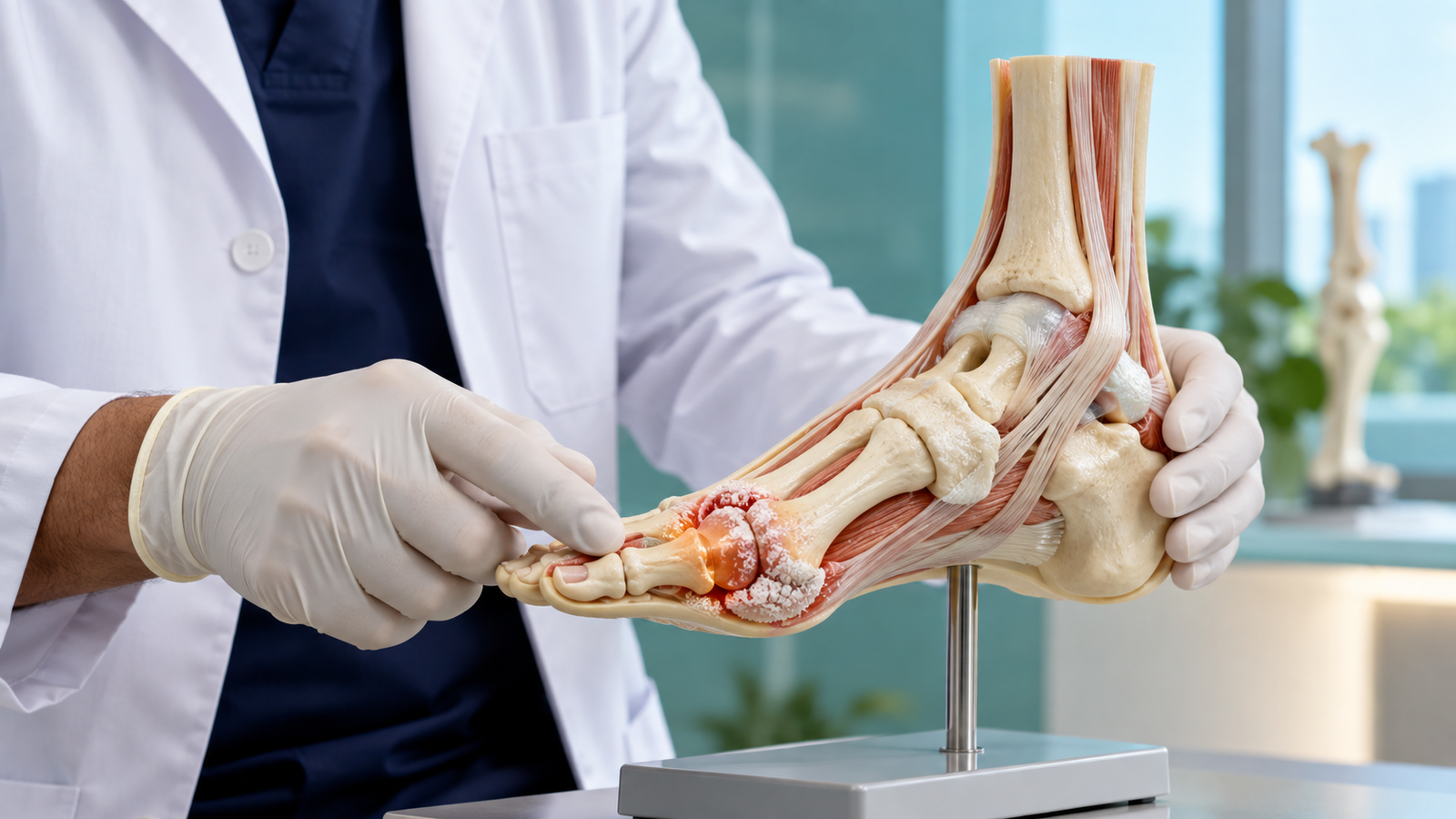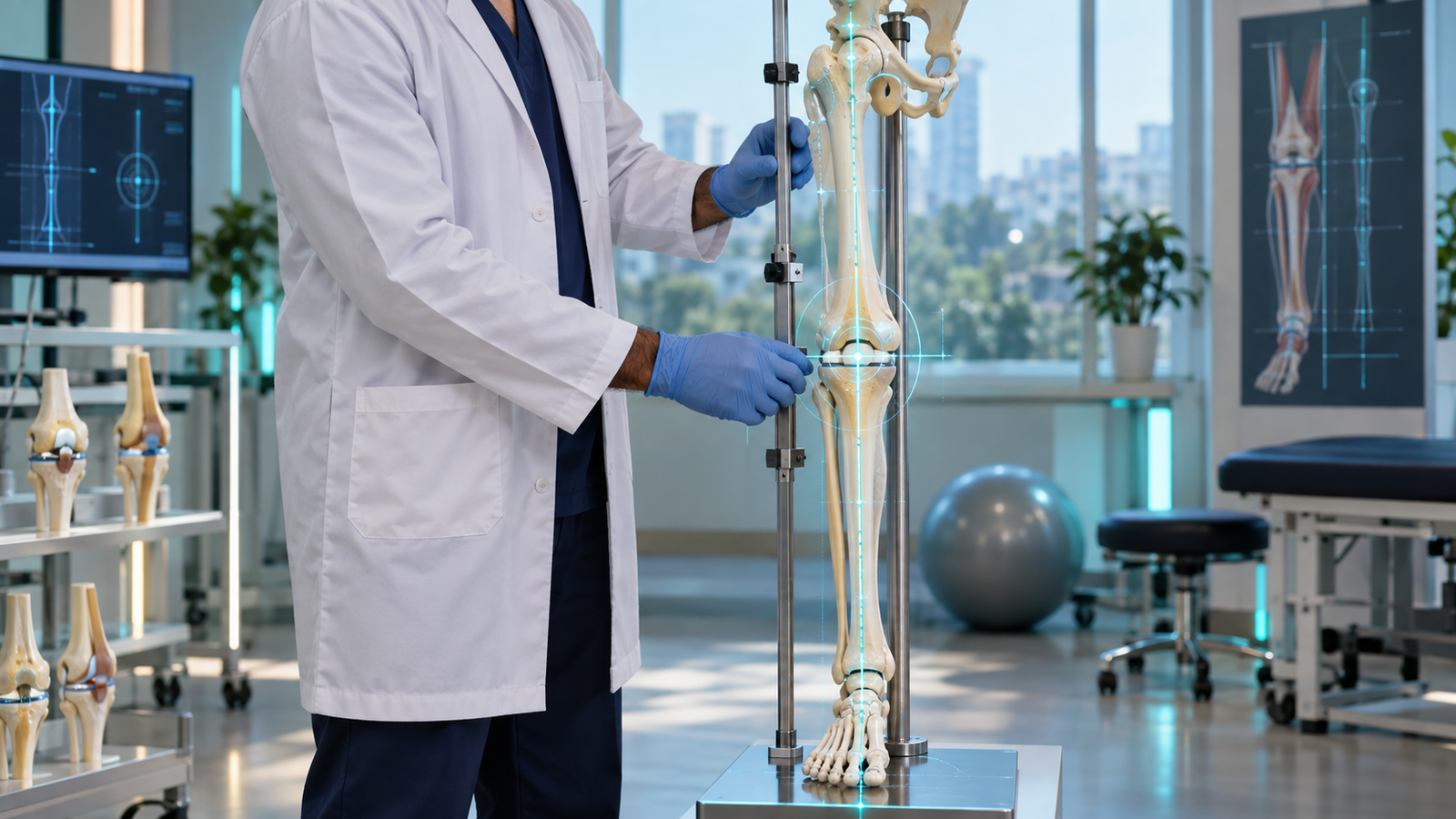
A painful knee with arthritis is one problem. A painful knee that has become visibly bowed or knock-kneed needs a more careful surgical plan. In robotic knee replacement surgery, severe deformity can change bone alignment, ligament balance, implant positioning, walking mechanics, and the way the surgeon prepares the knee before replacement.
Can a badly bent knee be replaced?
A badly bowed or knock-kneed arthritic knee can often be replaced if the patient is medically suitable and the deformity can be planned safely. The planning is more detailed because severe deformity affects the bone shape, soft-tissue balance, leg axis, and implant positioning.
Key planning checks usually include:
| What is checked | Why it matters in severe deformity |
|---|---|
| Bow-leg or knock-knee angle | Shows how far the leg axis has shifted |
| Bone loss pattern | Helps identify where the joint has collapsed |
| Ligament tightness | One side may be contracted or shortened |
| Ligament looseness | The opposite side may be stretched or weak |
| Knee stiffness | Affects movement and implant balancing |
| Walking pattern | Shows how the deformity affects function |
| X-ray or scan planning | Helps map alignment and component position |
Patients with advanced arthritis, visible bowing, walking difficulty, or uneven knee loading may need deformity-focused robotic knee replacement planning that connects imaging, alignment assessment, ligament balance, implant positioning, and surgeon-led decision-making.
The patient concern: “My knee is not straight anymore”
Many patients do not describe their problem in medical language.
They say, “My leg is bending outward.” They say, “My knees are touching.” They say, “One knee looks more curved than the other.” Some notice that one shoe wears out faster on one side. Others feel their walking has become uneven.
That visual change matters.
A knee can become bowed when the inner side of the joint wears down more. This is often called a varus deformity. A knee can turn inward or become knock-kneed when the outer side wears more. This is called a valgus deformity.
The issue is not cosmetic alone.
A bent arthritic knee changes how body weight passes through the joint. It can affect balance, walking confidence, ligament tension, pain pattern, and the way knee replacement must be planned. On the Heal My Bones website, this topic is explained because many patients think arthritis only means cartilage damage. In severe cases, the knee is not only worn out. It may be mechanically unbalanced.
Why does arthritis deform the knee?
Arthritis can deform the knee when one part of the joint wears faster than the other. As cartilage and bone surfaces collapse unevenly, the leg axis may slowly shift.
In a bow-leg pattern, the inner side of the knee often carries more pressure. In a knock-knee pattern, the outer side may be more affected. Over time, the ligaments around the knee adapt to that changed position.
One side becomes tight. The other side may become loose.
That is where planning becomes harder.
A surgeon cannot simply replace the worn surface and ignore the bend. The knee has to be assessed as a moving structure. Bone cuts, implant position, soft-tissue balance, and final alignment all need to work together.
AAOS notes that total knee replacement may help relieve pain, correct leg deformity, and restore knee alignment and function in suitable patients. It also mentions that total knee replacement may be recommended for some patients with bowed knee deformity.
Does severe deformity make knee replacement more complex?
Yes, severe deformity can make knee replacement more complex.
A straight arthritic knee and a badly bent arthritic knee do not always need the same planning approach. In a deformed knee, the surgeon may need to assess bone loss, ligament tightness, ligament looseness, joint gaps, stiffness, and whether the knee can be balanced safely.
For example, a patient with long-standing bow-leg arthritis may have tight tissues on the inner side and stretched tissues on the outer side. A patient with knock-knee arthritis may show a different pattern. If these details are missed, the knee may not feel stable even when the implant position appears acceptable on imaging.
Severe deformity affects the full surgical workflow:
- how the X-ray or scan is studied
- how the leg axis is measured
- how much correction is planned
- how bone cuts are calculated
- how ligament balance is checked
- how implant size and position are selected
- how stability is tested through movement
The goal is not only to make the leg look straighter. The goal is to create a stable, functional knee that matches the patient’s anatomy and daily needs.
How is alignment assessed before surgery?
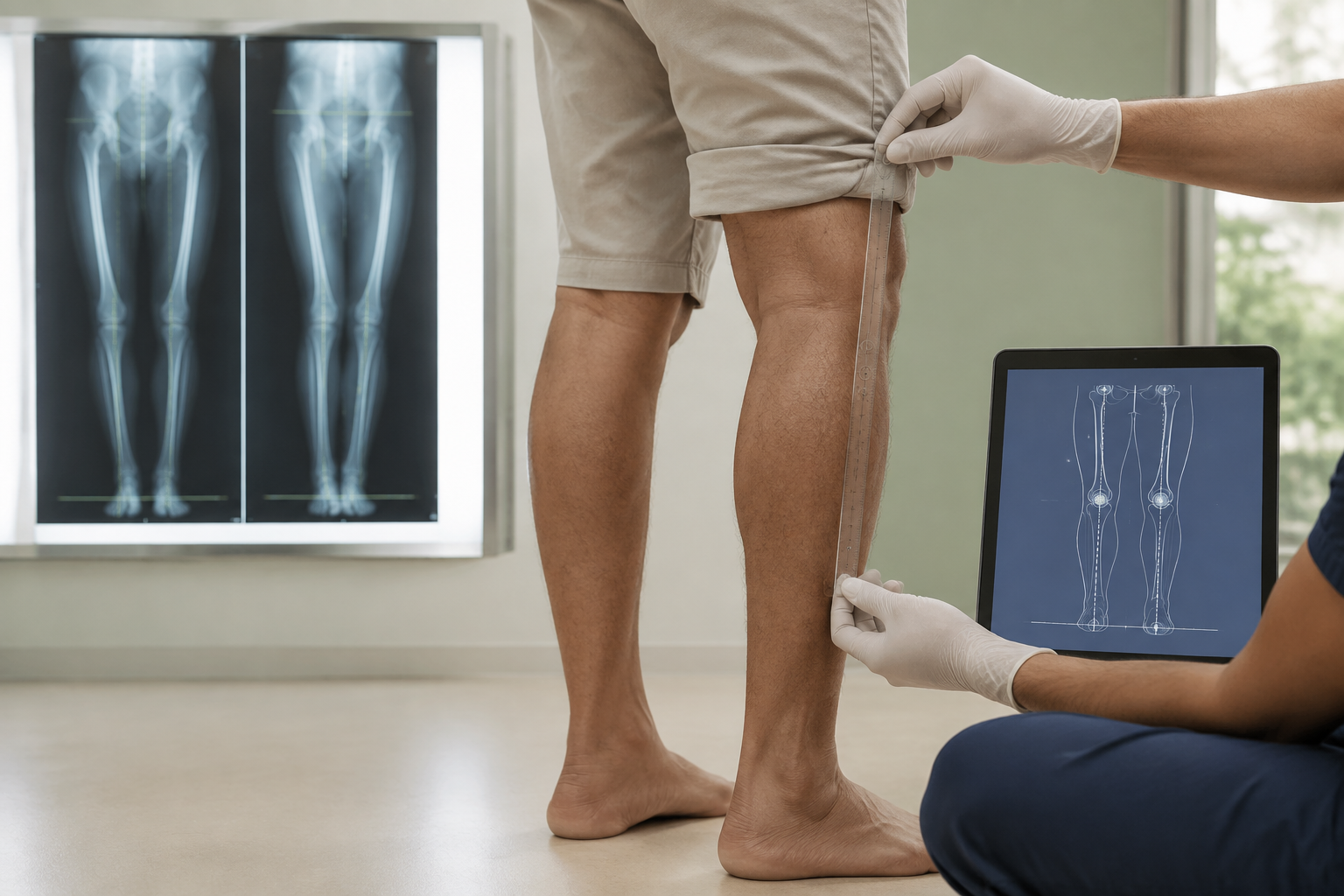
Alignment is assessed by studying how the hip, knee, and ankle relate to each other when the patient stands, walks, and bears weight. The surgeon may review standing X-rays, long-leg alignment views, knee X-rays, clinical examination findings, and platform-specific planning data.
The examination matters as much as the image.
The surgeon checks whether the deformity is fixed or partly correctable. A flexible deformity may behave differently from a rigid one. Knee stiffness, swelling, muscle weakness, and walking pattern also add useful information.
In severe deformity, planning should answer three practical points:
- where the joint has worn down
- how far the leg axis has shifted
- whether the soft tissues can be balanced safely after correction
Patients searching for a knee replacement surgeon Kolkata should look for clear explanations around these points instead of only hearing that advanced technology is available.
Where robotic knee replacement surgery can assist in severe deformity
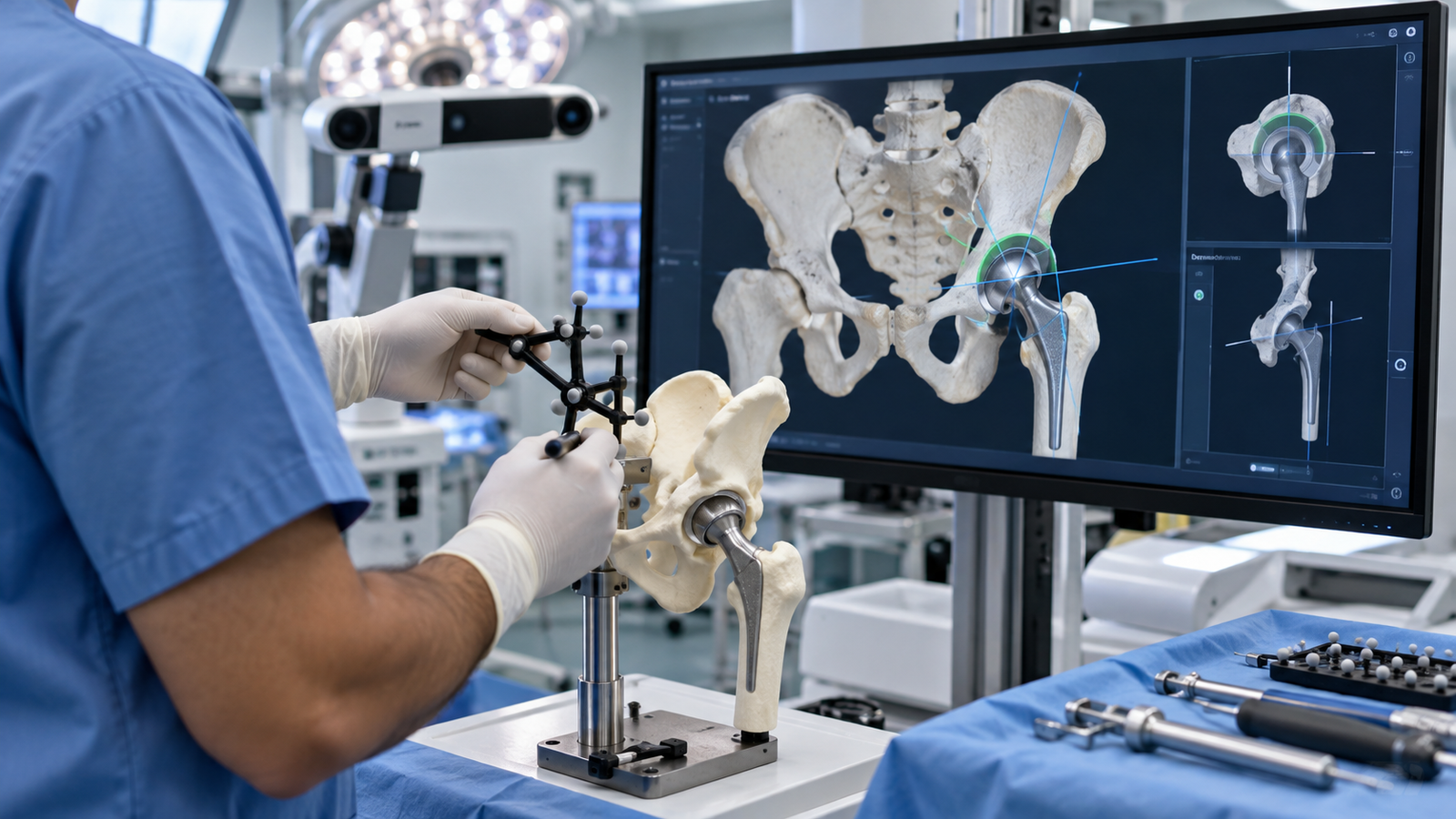
Robotic-assisted planning can help the surgeon map alignment, assess component position, review bone preparation, and work within a planned surgical framework. Depending on the system, imaging or intraoperative mapping may be used to create a digital plan before bone preparation.
AAOS explains that robotic-assisted joint replacement may involve special imaging before surgery to create a customized 3D plan, depending on the robotic platform used.
For severe deformity, the value is not the word “robotic.” The value is planning discipline.
Robotic assistance may help the surgeon think through:
- how much deformity correction is planned
- where the implant components may sit
- how bone preparation relates to alignment
- whether joint gaps look balanced
- how the knee behaves during trial movement
- whether the plan needs adjustment during surgery
Still, the system does not replace the surgeon.
The surgeon remains responsible for deciding whether the patient is suitable, how much correction is appropriate, how the ligaments should be balanced, and whether the final knee feels stable.
Varus vs valgus: why the planning changes
Bow-leg and knock-knee deformities create different mechanical problems.
| Deformity type | Common patient description | Planning concern |
|---|---|---|
| Varus knee | “My leg is bowing outward” | Inner-side wear, medial tightness, outer-side laxity |
| Valgus knee | “My knee is turning inward” | Outer-side wear, lateral tightness, different ligament balance |
| Fixed deformity | “The leg does not straighten even when I try” | More complex correction and soft-tissue assessment |
| Flexible deformity | “It looks bent while standing but partly corrects” | Alignment may be planned differently |
| Deformity with stiffness | “I cannot fully bend or straighten the knee” | Motion and gap balance need closer review |
This distinction matters because two patients may both need replacement, but their planning details may be very different.
A robotic knee replacement surgeon in Kolkata should be able to explain whether the deformity is varus, valgus, fixed, flexible, mild, moderate, or severe. That language helps patients understand the problem without turning the consultation into a technology pitch.
Original asset idea: varus vs valgus planning diagram
A strong visual asset can make this topic much easier for patients.
Suggested diagram title:
“Bowed Knee vs Knock-Knee: Why Planning Changes”
Suggested labels:
Left side: Varus / Bow-leg pattern
- inner-side joint wear
- shifted weight-bearing line
- tight medial tissues
- stretched outer-side tissues
Right side: Valgus / Knock-knee pattern
- outer-side joint wear
- inward knee angle
- tight lateral tissues
- different soft-tissue balancing need
Middle section: Planning checks
- alignment axis
- bone loss
- implant position
- ligament balance
- walking function
This kind of diagram gives the page original information gain. It helps patients see that severe deformity planning is about alignment and balance, not only surgical technology.
Why surgeon judgment still matters
Robotic systems can assist planning, but they do not decide everything.
Severe deformity often involves details that need experienced judgment. A digital plan may show alignment, component position, and bone resection targets, but the surgeon still checks the real knee during surgery.
The surgeon assesses bone quality, ligament tension, range of motion, joint gaps, deformity correction, and trial implant stability. If the knee does not behave as expected, the plan may need surgeon-led adjustment.
That is why patients comparing robotic joint replacement surgery in Kolkata should avoid choosing only by the presence of a machine. The better question is whether the surgeon can explain how the technology fits the patient’s deformity, arthritis pattern, and walking limitation.
What should patients in Kolkata ask before choosing robotic knee surgery?
Patients searching for robotic knee replacement surgery in Kolkata or a robotic knee replacement surgeon in Kolkata should ask how severe deformity is measured before surgery. The consultation should explain bow-leg or knock-knee alignment, ligament balance, implant positioning, and whether robotic planning is suitable for that patient’s knee.
People comparing robotic joint replacement surgery in Kolkata should avoid choosing only by the word “robotic.” A better consultation explains how the surgical plan changes when the knee is badly bent, stiff, unstable, or unevenly worn.
Patients searching for robotic orthopedic surgery in Kolkata may also come across broad claims about advanced technology. For a deformed arthritic knee, the safer focus is more specific: how the knee alignment will be assessed, how ligament balance will be handled, and what decisions remain surgeon-led.
Dr. Manoj Kumar Khemani may be relevant for patients who want evaluation of advanced knee arthritis with visible deformity, walking difficulty, stiffness, or alignment concerns. The role of the consultation is to connect the patient’s knee shape with surgical planning, not to treat robotic technology as a standalone promise.
The Heal My Bones resource is designed to help patients understand that planning quality matters as much as technology availability.
FAQ
Can a badly bowed knee be replaced with knee replacement surgery?
A badly bowed knee can often be replaced if the patient is medically suitable and the deformity can be planned safely. Severe deformity may require closer assessment of bone loss, ligament balance, stiffness, and alignment before surgery. Patients should bring standing X-rays and previous treatment records for a proper planning discussion.
Does a knock-knee deformity make knee replacement harder?
A knock-knee deformity can make knee replacement more complex because the outer-side tissues, ligament balance, and bone wear pattern may differ from a bow-leg knee. The surgeon must assess whether the deformity is fixed, flexible, mild, moderate, or severe before deciding the plan. A detailed examination and imaging review help guide the next step.
Can robotic planning correct a bent arthritic knee automatically?
Robotic planning does not automatically correct a bent knee. It may help the surgeon map alignment, bone preparation, and implant positioning, but the correction still depends on surgeon judgment and the patient’s knee condition. Patients should ask how the deformity will be assessed and what decisions remain surgeon-led.
Should I choose a surgeon only because robotic technology is available?
A patient should not choose surgery only because robotic technology is available. Severe deformity needs evaluation of arthritis stage, alignment, ligament balance, medical fitness, implant planning, and recovery expectations. The safer approach is to ask how the surgeon uses planning tools for the patient’s specific knee shape.
Practical next step
A bowed or knock-knee arthritis pattern is not just a worn joint. It is a planning problem.
The patient’s knee shape, walking pattern, stiffness, ligament balance, X-ray findings, and medical condition all affect the decision. Robotic assistance may support planning in selected cases, but the plan still belongs to the surgeon.
The next step is simple: do not ask only whether robotic surgery is available.
Ask how your deformity will be measured, how alignment will be planned, how ligament balance will be checked, and how the final decision will be made for your knee.
Medical Disclaimer
This article is for general educational purposes only and should not be taken as personal medical advice, diagnosis, or treatment recommendation. Knee deformity, arthritis severity, robotic planning, implant positioning, surgical suitability, alignment correction, risks, recovery, and rehabilitation vary from patient to patient. Please consult a qualified orthopedic surgeon with your symptoms, X-rays, medical history, current medicines, and physical examination findings before making any treatment decision.