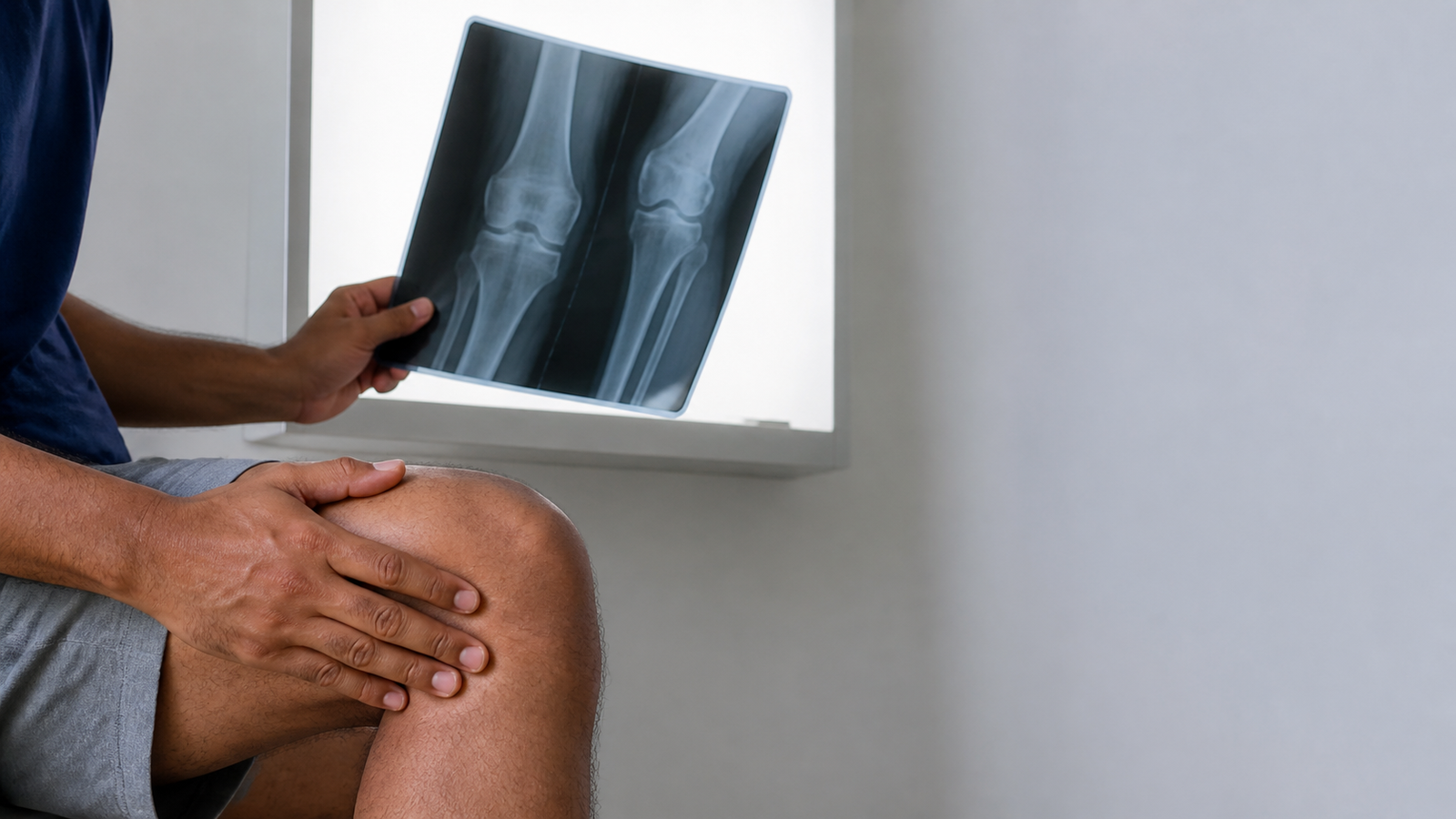
An X-ray report can say “mild arthritis,” but the knee may still hurt badly during stairs, walking, sitting or standing, or sleep. This is why patients with knee pain with mild arthritis should not assume the pain is imaginary or that one report has explained everything.
At Heal My Bones, the focus is not only on what the X-ray says. The bigger question is how the knee behaves in real life — swelling, walking distance, stair pain, night pain, muscle strength, and daily function.
Why can a “mild” X-ray still hurt badly?
A mild X-ray can still hurt badly because knee pain does not come only from visible joint-space narrowing or bone changes. Swelling, kneecap mechanics, muscle weakness, inflammation, nerve sensitivity, body weight, walking load, and daily activity can all affect pain intensity.
Patients whose report looks mild but whose symptoms feel severe may benefit from a clinical review of knee symptoms, function, and X-ray findings before continuing the same painkillers or exercises without reassessment.
Key reasons pain may feel worse than the report:
- The knee may swell after activity.
- The kneecap may not be tracking smoothly.
- Thigh and hip muscles may not be supporting the joint well.
- Stairs may overload the painful part of the knee.
- Nerves may become more sensitive after long-term pain.
- The X-ray may not show every soft-tissue or cartilage-related issue.
- Daily load may be higher than the knee can currently tolerate.
A report is useful. It is not the full story.
The common patient worries: “If it is mild, why am I limping?”
This is where many patients feel confused.
They come with an X-ray report that says “mild osteoarthritis” or “early degenerative change.” The family may say, “Then why are you walking so slowly?” Sometimes the patient also starts doubting the pain.
But the knee is not used only for standing still in an X-ray room.
It has to manage stairs, uneven roads, low chairs, bathroom movements, sudden turns, long standing hours, and body weight. A report may describe the joint surface, but it cannot fully measure how the knee handles daily life.
That is why mild-looking arthritis on an X-ray can still cause major discomfort.
Why can knee pain with mild arthritis feel severe?
Knee pain with mild arthritis can feel severe when inflammation, load, muscle imbalance, swelling, or kneecap mechanics are driving the symptoms more than the visible X-ray changes.
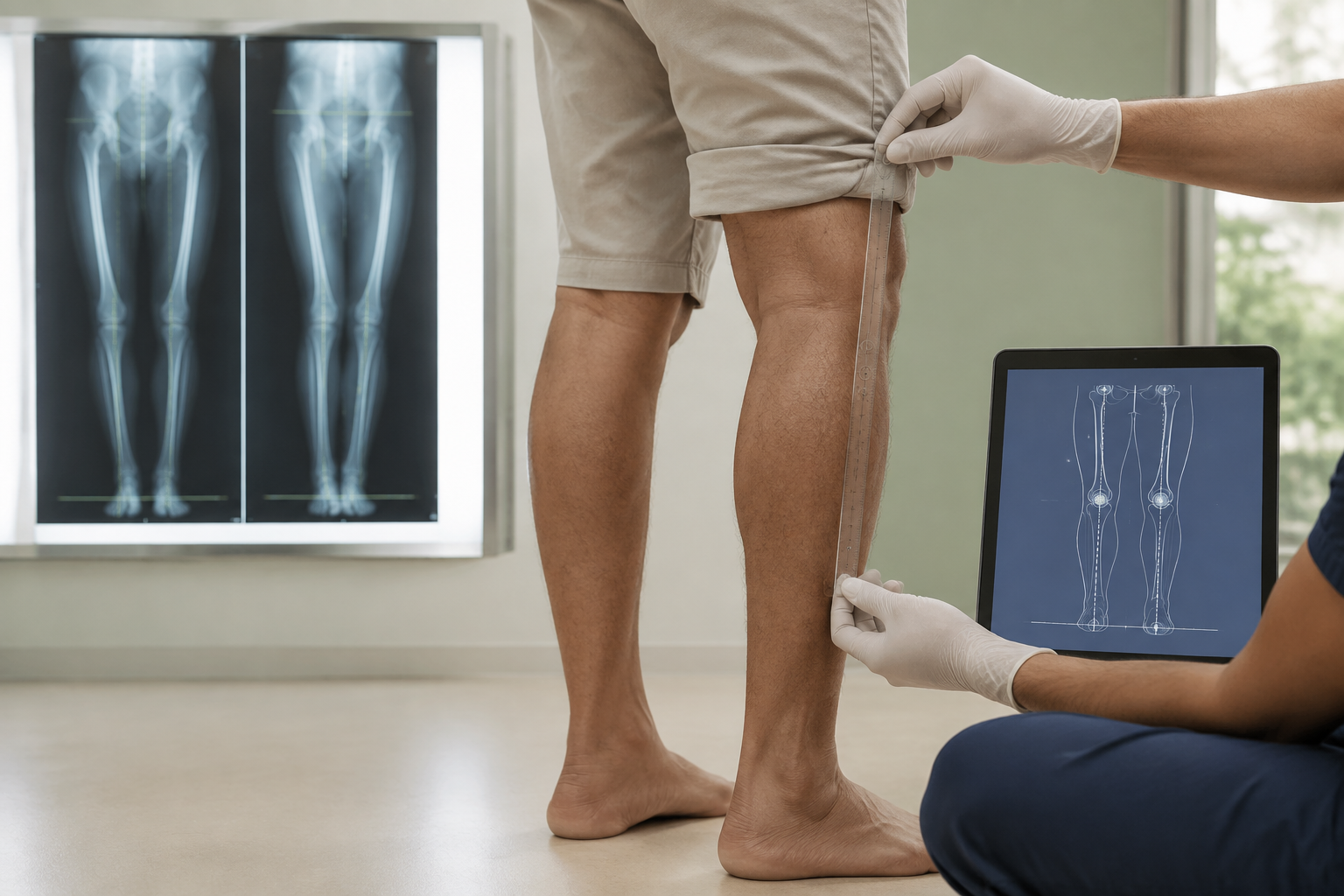
The X-ray mainly shows bone alignment, joint space, bone spurs, and structural changes. It does not fully show muscle control, joint irritation, cartilage surface sensitivity, walking pattern, or pain response.
NICE explains that changes seen on X-ray, MRI, or ultrasound often have a poor link with osteoarthritis symptoms. Minimal imaging changes can still be linked with substantial pain, while some people with structural changes may have fewer symptoms. Its guidance on osteoarthritis diagnosis is a useful reference for patients trying to understand this mismatch.
This is why the better question is not only, “How bad is the X-ray?”
The better question is, “What is the knee unable to do now?”
What else can cause knee pain when the X-ray looks mild?
Several factors can make knee pain worse even when arthritis changes early.
One common reason is muscle weakness. If the thigh and hip muscles are not supporting the knee properly, the joint may take more pressure during walking, stair climbing, and standing from a chair.
Kneecap mechanics can also matter. Pain in the front of the knee, especially while climbing stairs, squatting, or sitting for a long time, may be linked to how the kneecap moves over the joint.
Swelling gives another clue. A knee that becomes puffy after activity may be irritated inside the joint. The swelling can make the knee feel tight, heavy, stiff, or unstable.
Pain sensitivity can also increase over time. When discomfort continues for weeks or months, the nervous system may become more reactive. The pain then feels stronger than the X-ray wording suggests.
Other causes may need consideration too, such as meniscus irritation, ligament strain, referred pain from nearby areas, inflammatory arthritis, or a recent injury pattern. This does not mean every patient needs an MRI. It means the knee needs a proper examination.
X-ray finding, symptom pattern, and possible next evaluation
| X-ray finding | Symptom pattern | Possible next evaluation |
|---|---|---|
| Mild joint-space narrowing | Pain after walking or standing | Check walking load, alignment, swelling, and muscle strength |
| Small bone spurs | Stiffness after rest | Review arthritis stage, movement, and exercise tolerance |
| Mild arthritis but severe stair pain | Pain in front of the knee | Assess kneecap tracking and quadriceps strength |
| Mild report but repeated swelling | Knee becomes puffy after activity | Examine inflammation, irritation, or internal joint problems |
| Mild changes with night pain | Pain disturbs sleep | Review inflammation, overuse, and other causes |
| Pain much worse than report | Walking, stairs, or work getting limited | Reassess diagnosis and treatment response |
The table is not a diagnosis, but it helps patients see why a mild report may still need a proper clinical review.
Why daily function matters more than one report line
Function matters because treatment decisions should be based on how the knee affects daily life.
Two patients can have similar X-rays and very different symptoms. One may walk comfortably for 40 minutes. Another may struggle with stairs, swelling, and disturbed sleep. Their treatment plans should not be identical just because the report uses the same word: “mild.”
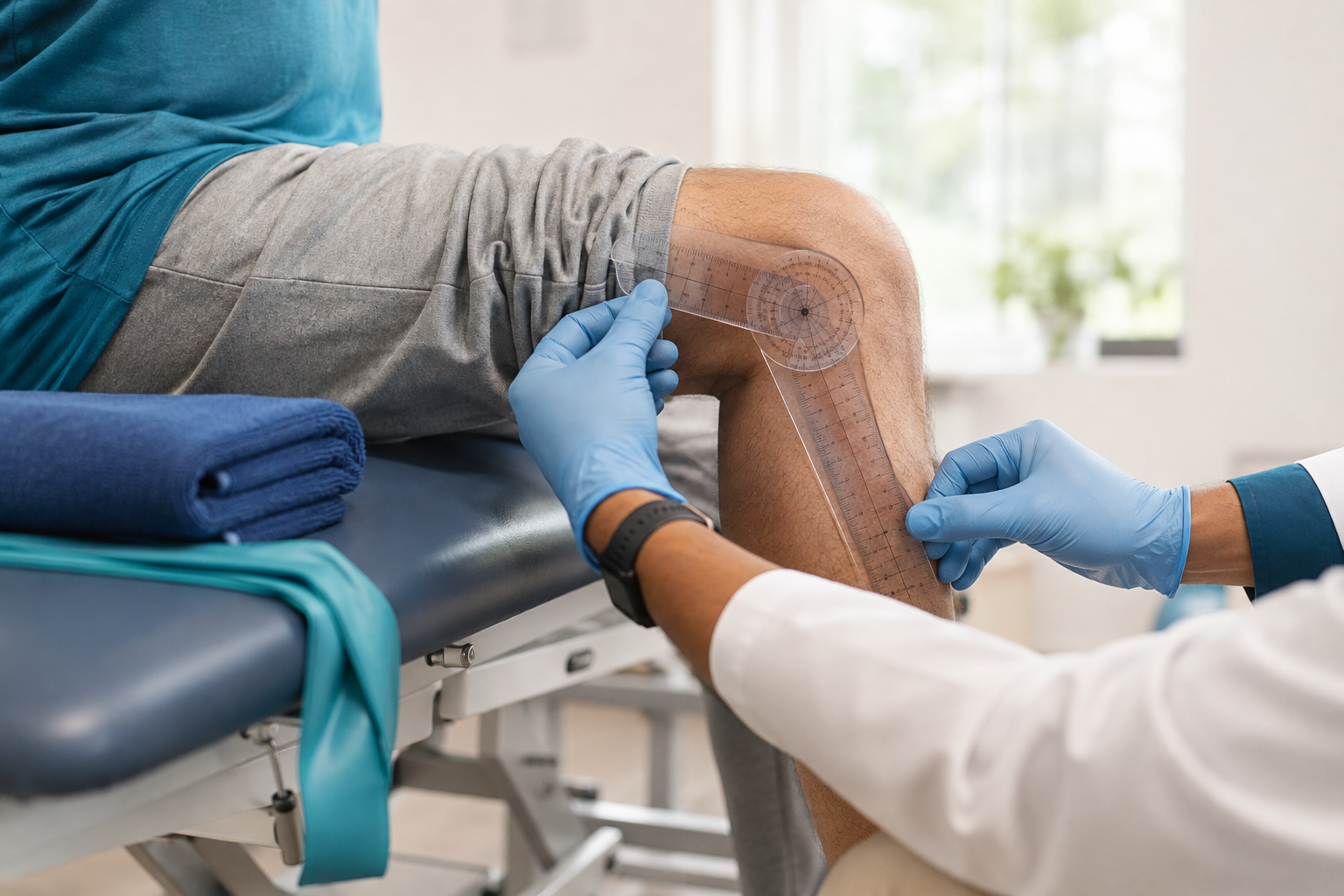
A useful knee assessment should check:
- walking distance
- stair pain
- swelling after activity
- pain while getting up from a chair
- knee bending and straightening
- night pain
- muscle strength
- walking pattern
- response to previous medicines or physiotherapy
NIAMS explains that osteoarthritis diagnosis may involve medical history, physical examination, lab tests when needed, and imaging such as X-rays or MRI in selected cases. Its guide on osteoarthritis diagnosis and treatment gives a patient-friendly overview of how doctors evaluate joint symptoms.
The report matters, but the patient’s walking, swelling, sleep, and stair function often decide the next step.
When does an MRI make sense if the X-ray says mild?
MRI is not automatically needed for every patient with a mild arthritis report.
It may be considered when symptoms do not match the X-ray, pain follows injury, swelling keeps returning, the knee locks, instability is present, or the doctor suspects a meniscus, ligament, cartilage, or soft-tissue problem.
MRI can show structures that X-ray cannot show clearly. That includes meniscus, ligaments, cartilage, and surrounding soft tissues. But the test should answer a clinical question.
For many patients, the first step is still examination. The doctor needs to understand whether the pain pattern fits osteoarthritis, kneecap pain, meniscus irritation, ligament involvement, or another condition.
When should an osteoarthritis doctor reassess the knee?
An osteoarthritis doctor should reassess the knee when pain feels stronger than expected, swelling keeps returning, walking distance is reducing, night pain appears, or medicines and exercises are no longer giving enough relief.
Patients searching for an osteoarthritis knee doctor in Kolkata should look for an evaluation that connects the X-ray report with swelling, walking distance, stair pain, knee movement, muscle strength, and daily function.
Patients searching for a knee pain doctor in Kolkata or knee specialist in Kolkata should explain the gap clearly: what the X-ray says, how much the knee hurts, whether swelling appears, and which daily movements are becoming difficult.
A knee arthritis doctor in Kolkata may also review whether the current treatment plan is too general. One patient may need better strengthening and load management. Another may need swelling control. Another may need further evaluation because the pain pattern does not fit the report.
Dr. Manoj Kumar Khemani may be relevant for patients whose knee pain, swelling, and function loss do not match a simple “mild” report. The Heal My Bones website can help patients understand when knee symptoms need reassessment rather than repeated self-medication.
What treatment choices are considered when pain and X-ray do not match?
Treatment should be based on the reason the knee hurts, not only on the grade written in the report.
A patient may need guided physiotherapy, strengthening, load reduction, walking modification, weight management where appropriate, pain-control medicines, topical treatment, bracing, footwear advice, or injections in selected cases.
If symptoms are severe, persistent, or unusual, the doctor may also discuss whether further imaging or a broader evaluation is needed.
Osteoarthritis treatment in Kolkata should not mean jumping to the strongest option first. It should mean matching treatment to the patient’s pain pattern, report, daily limitations, medical history, and safety needs.
A mild X-ray does not mean the pain is imaginary. It means the knee should be assessed beyond the report.
What should patients track before consultation?
Patients can make the consultation more useful by tracking what the knee does during normal daily life.
A simple note can include when pain is worst, whether stairs hurt more than flat walking, whether swelling appears after activity, how long walking is comfortable, whether the knee locks or gives way, whether night pain is present, and which medicines helped or failed.
These details often tell the doctor more than one line in an X-ray report.
If the knee hurts more after market walking, office stairs, puja sitting, bathroom movement, or long standing, mention that clearly. Real-life pain patterns help shape better treatment decisions.
FAQ
Can knee pain be severe even if my X-ray shows mild arthritis?
Knee pain can be severe even when an X-ray shows mild arthritis because pain is affected by inflammation, swelling, muscle weakness, kneecap mechanics, nerve sensitivity, and daily joint load. X-rays show bone and joint-space changes, but they do not fully measure how the knee behaves during stairs, walking, sitting, or activity. Patients should get reassessed if pain, swelling, or function loss feels worse than the report suggests.
Do I need an MRI if my knee X-ray says mild osteoarthritis?
MRI is not needed for every mild osteoarthritis report. It may be considered when there is repeated swelling, locking, instability, injury history, severe unexplained pain, or suspicion of meniscus, ligament, cartilage, or soft-tissue damage. The next step is a clinical examination to decide whether MRI will actually change treatment planning.
Why does my mildly arthritic knee swell or hurt at night?
A mildly arthritic knee can swell or hurt at night when the joint is irritated by activity, inflammation, overloading, or another internal knee problem. Night pain becomes more concerning when it repeatedly disturbs sleep, appears with swelling, or does not improve with basic care. Patients should mention sleep pain, activity pattern, and swelling timing during consultation.
What treatment is best when the X-ray looks mild but pain is high?
The best treatment depends on why the pain is high despite mild X-ray findings. The plan may include strengthening, physiotherapy, load reduction, medicine review, swelling control, bracing, injections in selected cases, or further evaluation if symptoms do not match the report. Patients should avoid choosing treatment only from the X-ray grade and focus on pain pattern, function, and examination findings.
Practical next step
If your X-ray says “mild” but your knee pain is limiting stairs, walking, sleep, or daily work, do not dismiss the pain and do not panic over the report.
Bring the X-ray, prescriptions, pain pattern, swelling history, activity limits, and previous treatment details to an orthopedic consultation. The goal is to understand why the knee hurts so much and whether the current plan needs to be changed.
Medical Disclaimer
This article is for general educational purposes only and should not be taken as personal medical advice, diagnosis, or treatment recommendation. Knee pain, osteoarthritis severity, X-ray findings, MRI needs, swelling, night pain, medicines, injections, physiotherapy suitability, and treatment choices vary from patient to patient. Please consult a qualified orthopedic doctor with your symptoms, reports, medical history, current medicines, and physical examination findings before making any treatment decision.