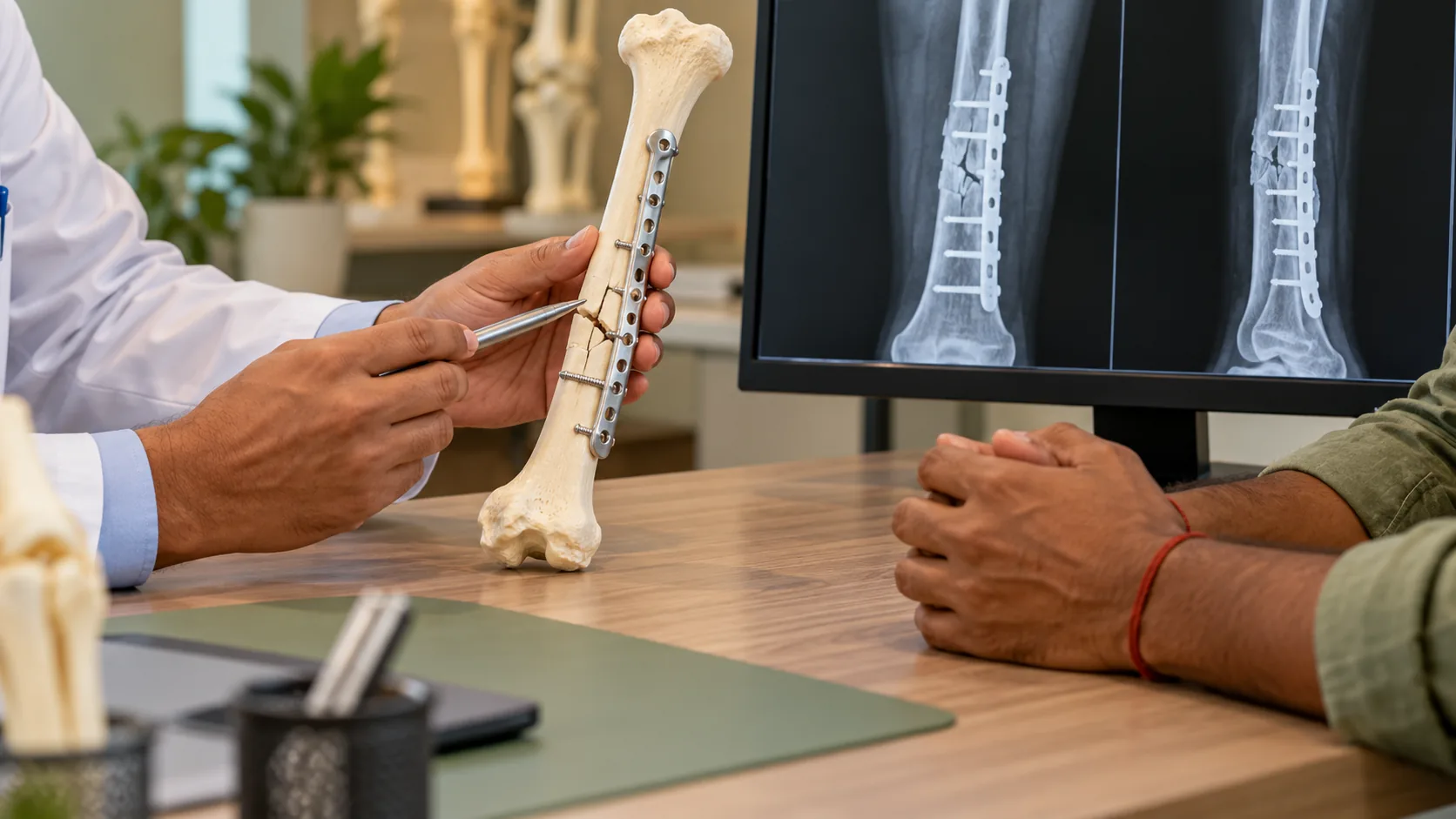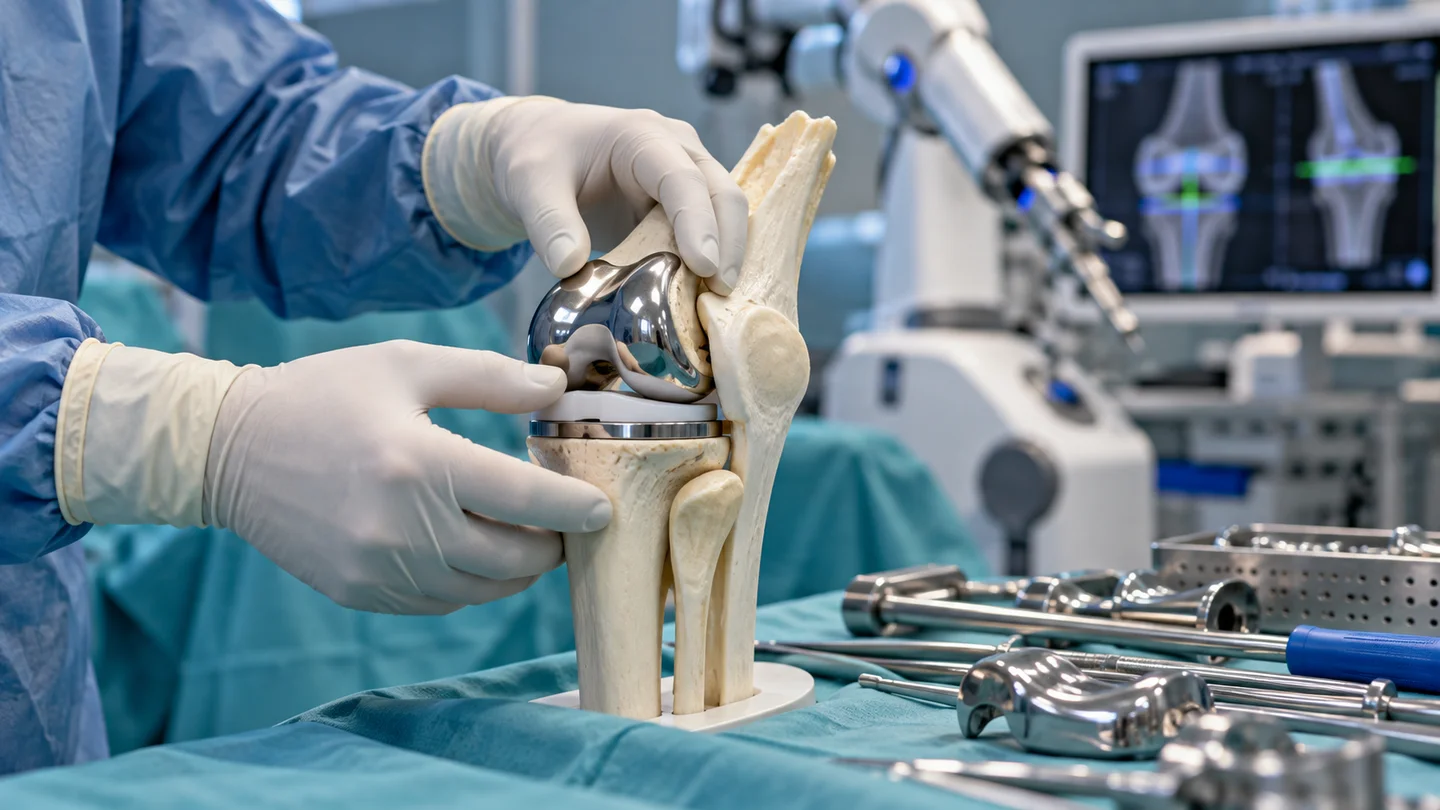

Hip replacement surgery involves replacing a damaged hip joint with an artificial prosthesis to reduce pain and improve mobility.
The step-by-step process
Performed under general anesthesia, the major steps include:
- Positioning the patient and making an incision.
- Removing the damaged joint and shaping the bone.
- Placing the prosthesis (metal or ceramic ball and socket).
- Ensuring proper alignment and closing the incision.
Post-operative care for hip replacement
Recovery requires a specific rehabilitation program. Initially, patients move their legs to prevent blood clots. Gradually, they progress to walking and leg strengthening exercises. With dedication, most patients make a full recovery.
Have questions?
Consult an orthopedic surgeon to determine if hip replacement surgery is the right solution for your chronic hip pain.
Whether you're considering a procedure or simply looking to maintain better bone health, understanding the latest medical insights helps you make informed decisions about your care.
Share Article: