
During AR knee replacement, the surgeon may see selected digital information layered into the surgical view, such as alignment cues, instrument position, bone-cut guidance, or navigation feedback. The technology can support planning and precision, but it does not make decisions on its own. The surgeon remains responsible for interpreting the information, checking the knee, and deciding each surgical step.
What appears in the surgeon’s view during AR knee replacement?
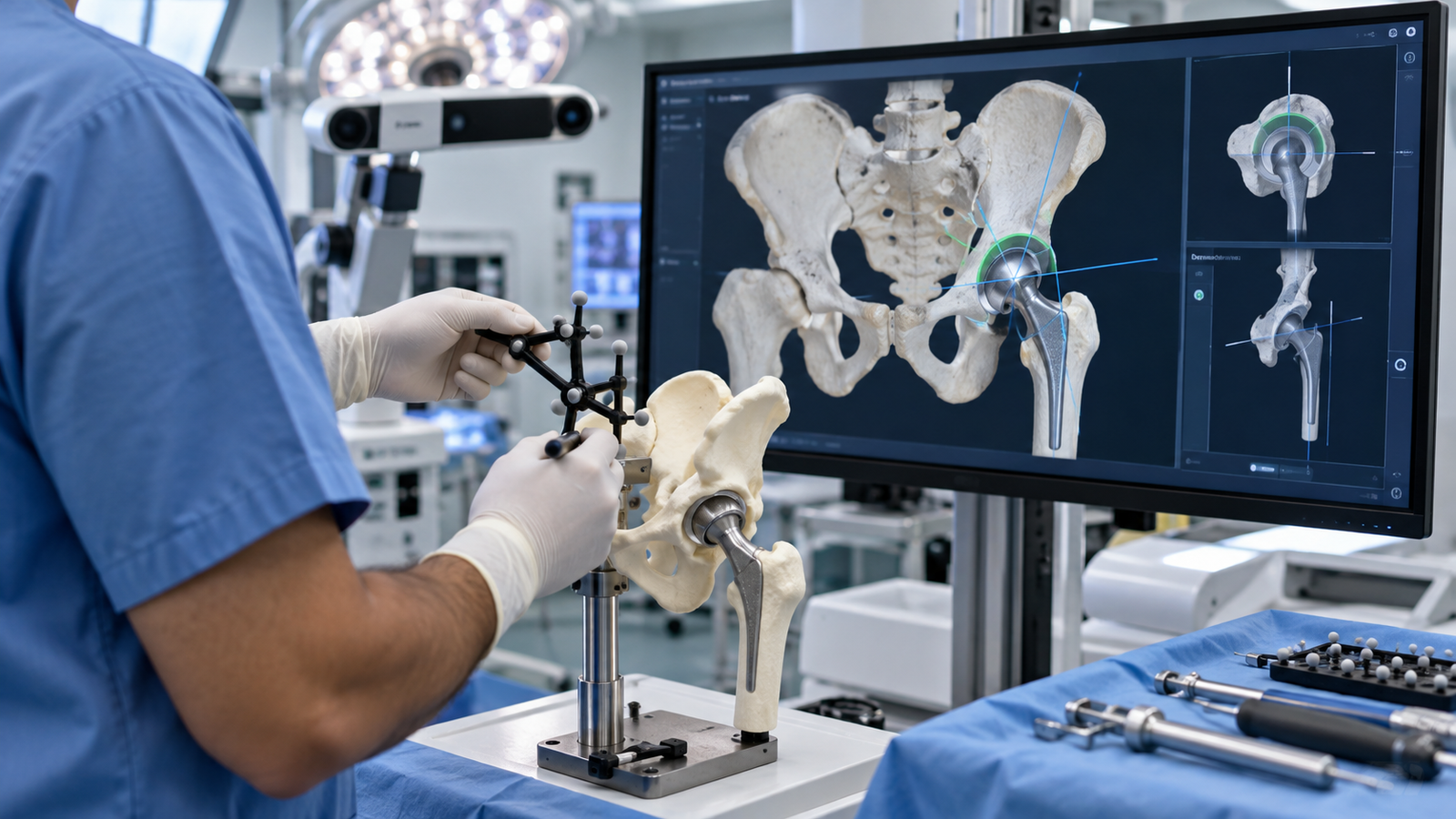
AR systems can display selected guidance data while the surgeon is operating. Depending on the platform, this may include alignment lines, instrument position, cutting-plane references, bone landmarks, implant-position cues, or real-time navigation feedback.
Patients exploring advanced knee replacement surgery Kolkata options may benefit from understanding how surgeon-led AR guidance during knee replacement works in relation to alignment planning, surgical navigation, implant positioning, and intraoperative decision-making.
| Digital information shown | What it may help the surgeon check |
|---|---|
| Alignment axis | Whether the leg and knee alignment are matching the plan |
| Instrument position | Whether surgical tools are placed in the intended direction |
| Bone landmarks | Key anatomical points used for navigation |
| Cutting-plane guidance | Planned direction and angle for bone preparation |
| Implant-position cues | Planned orientation of knee components |
| Real-time navigation feedback | Whether surgical steps are staying within planned parameters |
For patients, the clearest way to understand AR is this: the display can guide the view, but the surgeon still interprets what matters.
The patient question: “Is the surgeon looking at the knee or a screen?”
This is a common doubt.
Many patients hear “augmented reality” and imagine a futuristic operation where the surgeon is looking away from the knee while a machine takes over. That is not the right way to understand it.
In an AR-assisted workflow, the surgeon may still work directly on the real knee while seeing digital information through a headset, screen, tablet, or navigation display. The format depends on the system being used.
A patient does not need to understand every line on the AR display, but they should understand who interprets it, who controls the instruments, and who makes the final surgical decisions.
That answer should always come back to the surgeon.
What does AR add to knee replacement planning?
AR can add a visual guidance layer to the operation.
Instead of relying only on manual instruments and visual estimation, the surgeon may receive navigation support that shows how tools, bone landmarks, or planned cuts relate to the intended surgical plan. This may help during alignment checks, implant-position planning, and controlled bone preparation.
The FDA describes orthopedic augmented reality devices as systems that provide visual guidance during orthopedic procedures where stereotaxic navigation is used. Patients who want a regulatory reference can read the FDA’s page on orthopedic augmented reality device classification.
The useful patient takeaway is simple. AR may help the surgeon see selected planning information during the operation, but clinical judgment still decides how that information is used.
Does AR operate independently?
No. AR does not operate independently.
It does not replace the surgeon’s hands. It does not automatically cut bone. It does not choose the implant by itself. It does not guarantee a result.
It is a guidance and navigation aid.
The surgeon still checks the patient’s knee movement, deformity, bone quality, ligament balance, stability, alignment, and implant fit. If the digital information and the real knee do not match perfectly, the surgeon must interpret the situation and decide what is clinically appropriate.
That distinction protects patients from confusing digital guidance with automated surgery.
Digital information shown vs decisions retained by the surgeon
| AR display may show | Surgeon still decides |
|---|---|
| Alignment guide | Whether alignment suits the patient’s anatomy and plan |
| Instrument direction | Whether tool placement is safe and appropriate |
| Bone-cut reference | Whether the planned cut matches the real knee situation |
| Implant-position cue | Final component position and balance |
| Navigation feedback | How to respond if feedback differs from surgical findings |
| Planned parameters | Whether adjustments are needed during surgery |
| Visual overlay | How to interpret the overlay with actual bone and tissue findings |
This table is not meant to make AR sound automatic. It shows the opposite. Digital guidance supports surgical decision-making; it does not remove it.
How is alignment checked during AR-assisted knee surgery?
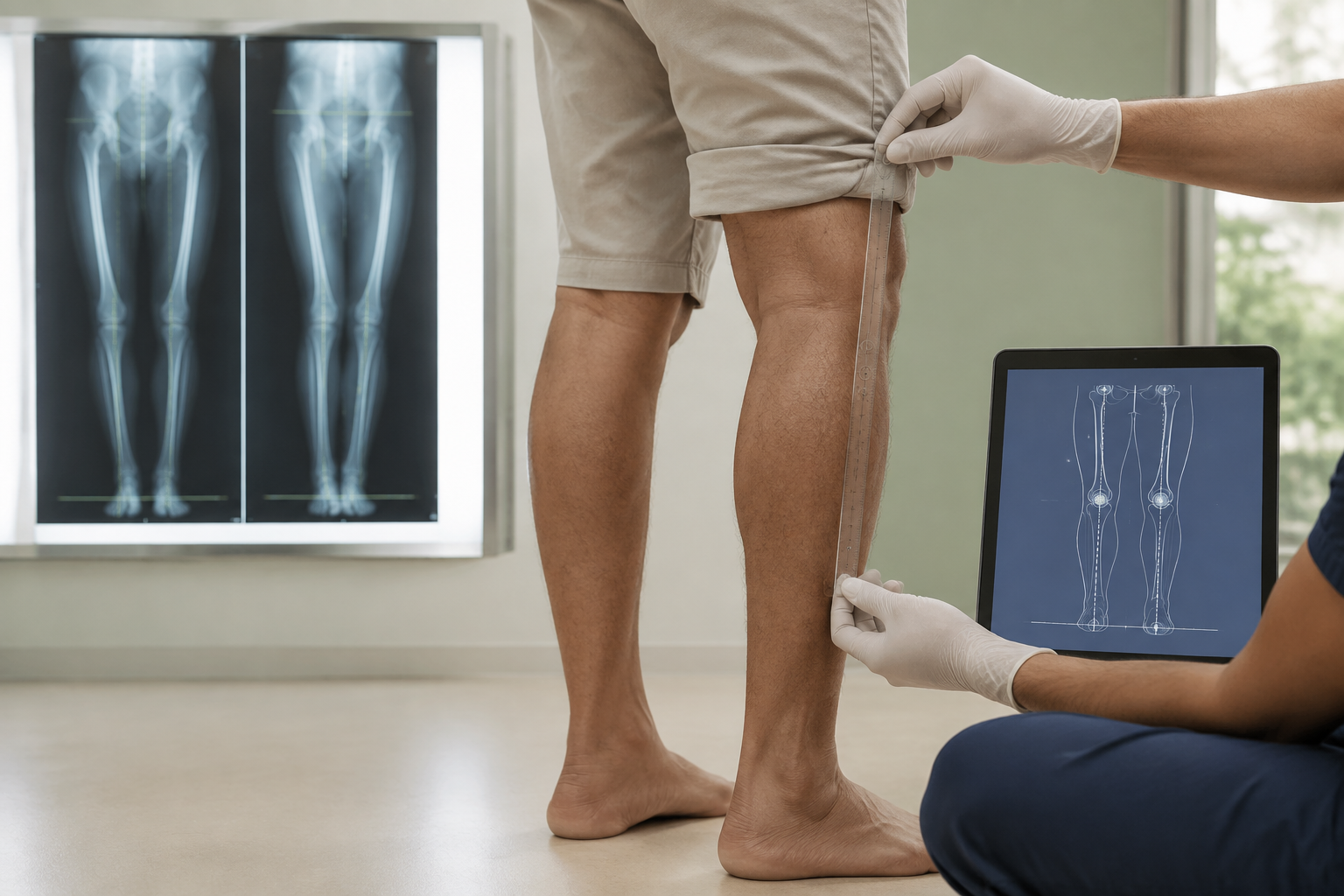
Alignment may be checked using digital landmarks, navigation references, instrument tracking, bone landmarks, and intraoperative measurements. The exact method depends on the AR platform and surgical workflow.
In practical terms, the system needs to understand where the knee and instruments are in space. It may use trackers, markers, sensors, registration steps, or mapped anatomical points. Once the system recognizes the knee and tools, it can help show whether the planned alignment and instrument positions are being followed.
AAOS/FDA discussion on AR, VR, and robotic tools notes that AR can overlay digital guidance into the surgeon’s field of view and assist with alignment and instrument positioning in real time. Patients can read the AAOS overview on AR, VR, and robotics in orthopaedics for broader context.
Still, alignment is not only a number on a display.
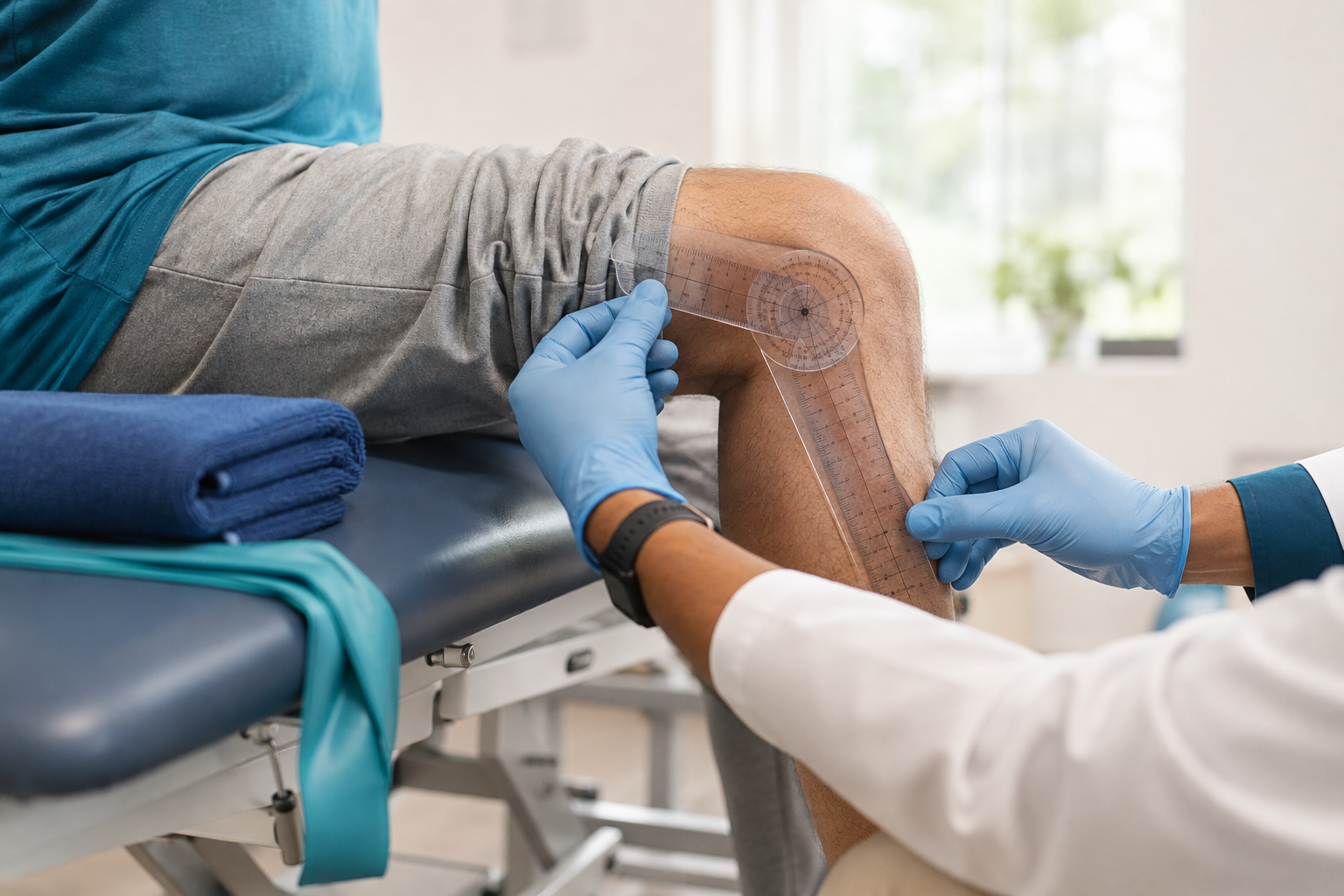
The surgeon also has to assess soft-tissue balance, knee range of motion, stability, trial implant behaviour, and whether the knee feels balanced after preparation.
Expert visual: what an annotated AR view can show
A helpful illustration for this blog should avoid a dramatic surgery scene. It should show a simplified surgeon-view layout.
Suggested labels for the original annotated illustration:
- Real knee anatomy — the actual surgical field
- Alignment axis — a digital line showing planned leg alignment
- Instrument tracker — the tool-position reference
- Bone-cut guide — planned cutting direction
- Implant-position cue — where the component is expected to sit
- Surgeon decision zone — reminder that interpretation remains surgeon-led
This kind of expert asset helps patients understand the workflow without needing technical training. It also makes the blog more useful than a generic article that only says “advanced technology improves precision.”
Which patients may be evaluated for advanced technology?
Patients may be evaluated for advanced knee replacement technology when knee arthritis is severe enough for replacement discussion and when the surgeon feels digital navigation may support planning and execution.
This does not mean every patient with knee pain needs AR. The first question is still clinical: is knee replacement appropriate at all?
A proper evaluation should review:
- pain severity
- walking distance
- stair difficulty
- deformity or bowing
- X-ray findings
- previous treatment response
- medical fitness
- knee stiffness
- patient expectations
- daily activity needs
Patients comparing AR/VR knee replacement in Kolkata should ask what information appears in the surgeon’s view, how alignment is checked, and which decisions remain with the surgeon. Patients searching for advanced knee replacement surgery in Kolkata should also ask whether the technology is suitable for their arthritis stage, deformity, stiffness, and walking limitation.
When does surgeon-led planning matter most?
Surgeon-led planning matters at every stage because the display is only one part of the operation.
The surgeon must decide whether the patient is suitable, how the knee should be aligned, how bone preparation should be performed, how the implant position should be checked, and whether intraoperative adjustments are needed.
Dr. Manoj Kumar Khemani may be relevant for patients who want to understand whether AR-assisted planning is appropriate for their arthritis pattern, deformity, stiffness, and walking limitation. The role of the consultation is to connect the technology with the patient’s actual knee problem, not to use advanced tools as a marketing label.
The Heal My Bones website helps patients understand AR and VR knee replacement as surgeon-guided technology, not a replacement for medical judgment.
FAQ
Does the surgeon wear a headset during AR knee replacement?
The surgeon may use a headset, screen-based interface, or another AR/navigation display depending on the system. Different platforms show guidance in different ways, so the viewing method is not the same everywhere. Patients should ask which system is being used and what information the surgeon sees during the operation.
Is AR knee surgery more accurate than standard knee replacement?
AR-assisted systems may help the surgeon check alignment, instrument position, and planned bone preparation more precisely in selected workflows. Accuracy depends on registration, tracking, platform design, surgeon experience, patient anatomy, and how the information is interpreted during surgery. Patients should ask how accuracy is measured and what role the surgeon plays in final decision-making.
Does AR decide the knee implant size or position?
AR does not independently decide the final implant size or position. The system may support planning or guidance, but the surgeon checks anatomy, bone quality, alignment, ligament balance, and knee stability before finalizing decisions. Patients should ask how implant planning is done and whether adjustments can be made during surgery.
Does AR change recovery after knee replacement?
AR may support surgical planning and alignment, but recovery still depends on the patient’s health, pain control, physiotherapy, muscle strength, wound healing, and medical fitness. The technology used during surgery does not remove the need for rehabilitation and follow-up. Patients should discuss realistic recovery steps, not only the surgical tool being used.
Practical next step
Patients interested in AR-assisted knee surgery should not focus only on the device name.
Ask what the surgeon sees. Ask what the system measures. Ask what decisions remain with the surgeon. Ask whether the technology is suitable for the patient’s knee deformity, arthritis stage, stiffness, and daily limitations.
A good consultation should make the role of technology clearer, not more confusing.
Medical Disclaimer
This article is for general educational purposes only and should not be taken as personal medical advice, diagnosis, or treatment recommendation. AR-assisted knee surgery, implant planning, alignment decisions, surgical suitability, risks, recovery, physiotherapy, and treatment choices vary from patient to patient and depend on the surgeon’s assessment, medical history, reports, examination findings, and the technology platform used. Please consult a qualified orthopedic surgeon before making any treatment decision.